Yes, I Can
Anna Akhmatova wrote Requiem during the Stalinist terror, while her son sat in the camps. She could not write it down. Instead she and a small circle of friends memorized each poem and burned the paper. The poems survived.
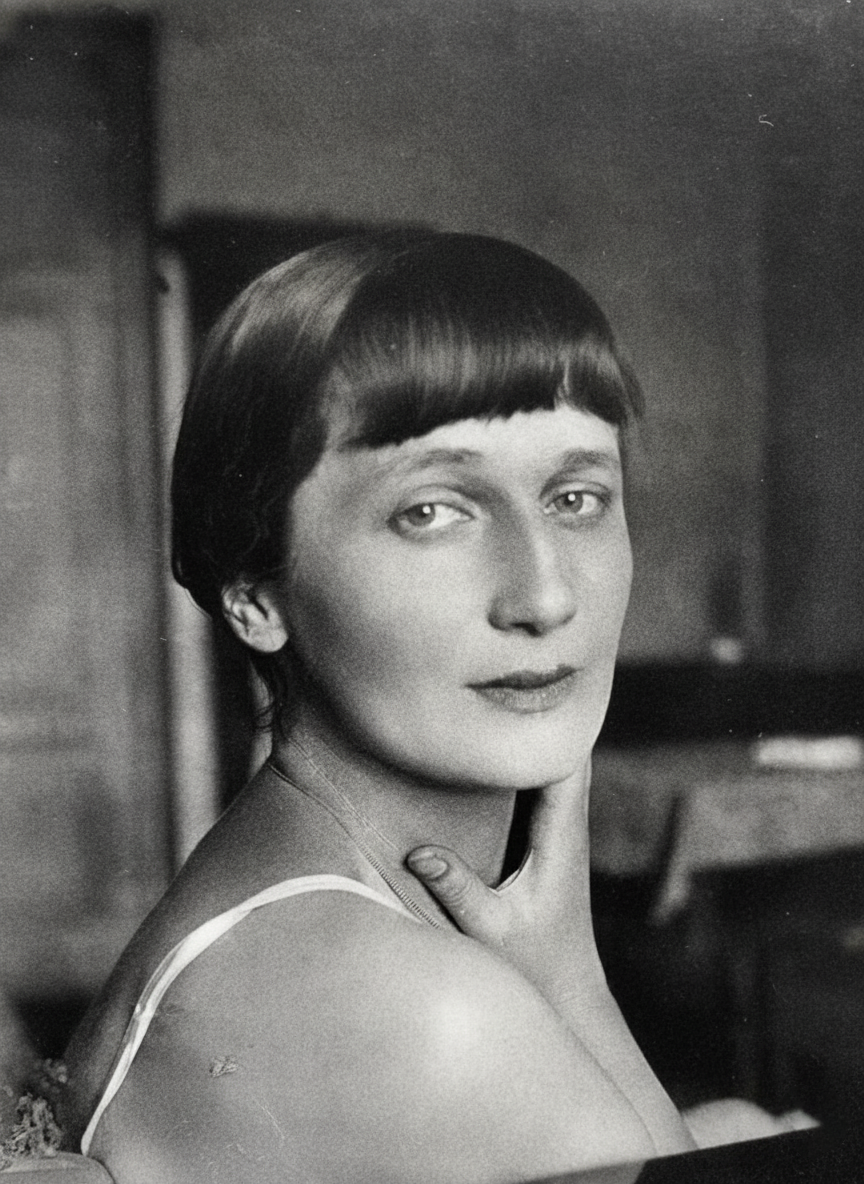
In 1935, Anna Akhmatova began writing poems she could not write down. Her son was in prison, the secret police were watching her apartment, and a sheet of paper with the wrong words on it could mean death. So she wrote the poems in her head, shared them one at a time with a small circle of trusted friends, and when the words were memorized, they burned the paper. This is how Requiem was preserved: not in an archive, not in a desk drawer, but in the memories of a handful of people in Leningrad during the worst years of Stalin's terror.
The scene Akhmatova used as the dedication to the whole cycle is simple and exact. She was standing in a prison line in Leningrad — as she did for months, trying to deliver parcels to her son Lev — when a woman recognized her. The woman leaned toward her and whispered, as if even a question was dangerous: "Can you describe this?" Akhmatova thought for a moment, then answered: "Yes, I can." The woman's face changed. That exchange — the whisper, the pause, the answer — became the moral premise of the cycle. Akhmatova had given her word. The poems were the word being kept.
The son and the terror
Lev Gumilev was the son of two poets. His father, Nikolai Gumilev, was a founder of the Acmeist movement, one of the significant figures of pre-revolutionary Russian poetry. He was shot by the Bolsheviks in 1921, when Lev was nine years old. Lev grew up under this shadow: the son of an executed counter-revolutionary, in a state that kept files on such things.
He was arrested for the first time in 1935. He was released, but re-arrested in 1938, this time sentenced to the labor camps with a death sentence that was later commuted. He survived the camps and the war, was arrested again in 1949, and was not fully rehabilitated until 1956. His mother spent much of the 1930s and 1940s in the exhausting, degrading work of trying to help him: standing in lines at prison offices, filing petitions, trying to get word of where he was. Requiem is addressed to this experience — to the waiting, the fear, and the absolute helplessness of a mother before a state that does not acknowledge her.
Akhmatova was not herself arrested during the Terror years, but she lived under surveillance. Her apartment in the Fountain House in Leningrad — she was a tenant in a large communal space — was monitored. Visitors were noted. The NKVD was not subtle about it. She and her friends, when they met, communicated sometimes in writing and burned the notes, or mimed conversations to avoid speaking aloud near walls or windows. This was the daily texture of her life during the years she was writing the poems.
The method of preservation
Akhmatova composed Requiem between 1935 and 1940, adding a prose preface and an epilogue by 1943. The individual poems were not written as a unified sequence from the start; they accumulated, poem by poem, through the worst years of the Yezhovshchina — the Great Terror named for Nikolai Yezhov, head of the NKVD from 1936 to 1938 — and continued into the early 1940s.
The method of preservation was the same each time. Akhmatova would compose a poem, write it out, show it to a small number of trusted people, wait while they memorized it, and then burn the paper. Her principal collaborator in this was Lydia Chukovskaya, the writer and editor who visited Akhmatova regularly and committed many of the poems to memory. Chukovskaya later wrote her account of those years in The Akhmatova Journals, a record of their conversations across more than three decades. For the Terror years, the journals are fragmentary — Chukovskaya herself could not keep full notes — but they preserve the texture of the time.
In the terrible years of the Yezhov terror, I spent seventeen months in the prison lines in Leningrad.
Akhmatova herself memorized all the poems. She carried the entire cycle in her head through the siege of Leningrad, through evacuation to Tashkent, through the postwar years. The poems existed nowhere on paper. They existed in the memories of perhaps a dozen people — and in hers.
What the poems say
Requiem is a cycle of ten numbered poems, bracketed by a prose dedication, an introduction, and a two-part epilogue. The prose dedication describes the prison lines; the introduction sets the scene — the stars of death stood above them, and innocent Russia writhed under boots. The numbered poems move through stages: the arrest, the sentence, the wait, the prayer, the approach of madness, and finally the crucifixion — the last section, in which the mother watching her son suffer is placed alongside the Virgin Mary watching the Crucifixion, without editorial comment.
The identification is stark and the theology is not conventional. Akhmatova was Russian Orthodox but the placement of a Soviet mother beside the Gospel story is not devotional so much as structural: she is saying that what happened in Leningrad in 1937 and 1938 was of that order of suffering, and that the mothers standing in those lines were of that order of witness.
The verse is classical in form — Akhmatova never abandoned meter and rhyme even when many of her contemporaries had moved on. The plainness of the language does a great deal of the work. "Mountains bow before this grief" — the opening of one of the central poems — is a line that operates almost without metaphor. Mountains, grief. The grammar is simple. The weight falls where it is placed.
The first publication and the aftermath
The poems circulated in samizdat — handwritten or typewritten copies passed from reader to reader — in the Soviet Union for years before any publication. The first book publication came in 1963, in Munich, through the émigré press Tovarishchestvo Zarubezhnykh Pisatelei. Akhmatova was alive. She had not authorized this publication and reacted to it with complicated feelings — the poems were out in the world, which was what she had wanted, but the circumstances of the publication were beyond her control and could have had consequences for Lev, who was still alive in the Soviet Union.
She died in March 1966, at the age of seventy-six. The Soviet publication of Requiem came in 1987, more than twenty years after her death and more than forty years after the poems were written, in the journal Oktyabr during the glasnost period. The delay is a fact that the poems themselves predicted: their preservation against exactly this possibility — suppression, destruction, silence — was the whole method of their composition.
What survived was what twelve people held in their heads through the worst years of the century in one country. The archive was human. It proved sufficient.