Anna Akhmatova
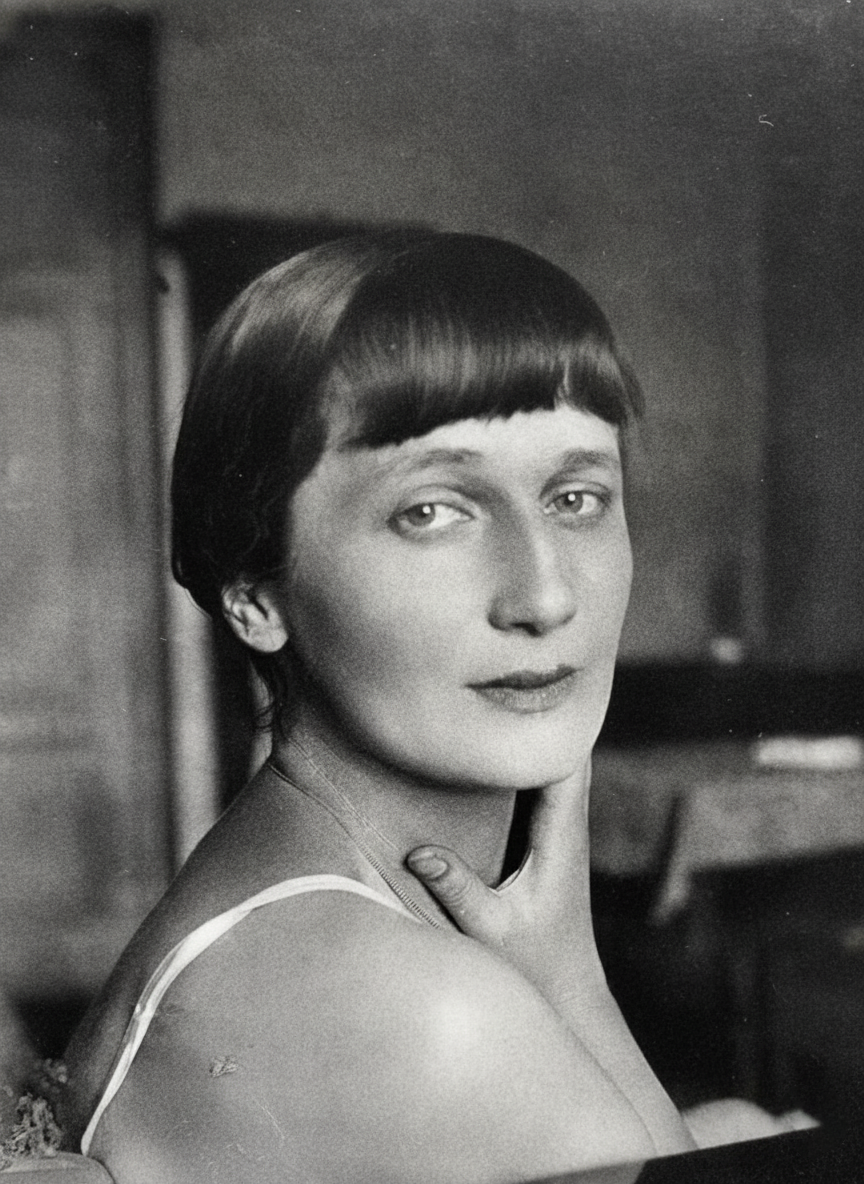
Russia's preeminent twentieth-century poet bore witness to Stalinist terror through verse of compressed grief — her pen name adopted, her manuscript memorised, her silence refused.
Anna Akhmatova wrote some of the most precise and devastating lyric poetry in the Russian language — and spent decades unable to publish it. The Soviet state suppressed her work, arrested her son, and expelled her from the Writers' Union. She responded by committing her most dangerous verses to memory, recruiting trusted friends to do the same, and outlasting the men who tried to silence her.
Formation and early fame
Born Anna Andreyevna Gorenko in 1889 near Odesa, she took the pen name Akhmatova from a Tatar ancestor to spare her father embarrassment at having a poet in the family. She came of age in St Petersburg's Silver Age literary circles, where she was already regarded as one of the most gifted voices of her generation. With Nikolai Gumilev, whom she married in 1910, and Osip Mandelstam, she co-founded the Acmeist movement — a reaction against Symbolism's obscure mysticism, insisting instead on clarity, concrete imagery, and disciplined craft. Her debut collection, Evening (1912), was followed by Rosary (1914) and White Flock (1917), each refining an intimate, first-person lyric mode that felt radically direct.
Terror and witness
The Revolution changed everything. Gumilev was arrested and shot by the Bolsheviks in 1921. Akhmatova's work was first censored in the 1920s, then effectively banned. The worst came in the 1930s, when her son, the historian Lev Gumilev, was arrested multiple times by Soviet authorities. She stood in the prison queues outside Leningrad's Kresty Prison for seventeen months, hoping to pass packages and messages to him. It was in those queues that she conceived Requiem — a cycle of poems recording the mass arrests, the separation of families, and the bureaucratic machinery of Stalinist terror. Because publication was impossible, the poems were memorised by a small circle of friends and existed nowhere on paper. They were published abroad, in Munich, only in 1963.
In 1946 Stalin's cultural commissar Andrei Zhdanov singled her out for attack in the decree that bore his name, calling her poetry alien to the Soviet people. She was expelled from the Writers' Union and effectively driven from public literary life for years.
I am not one of those who left the land to the mercy of its enemies. Their flattery leaves me cold, my songs are not for them to praise.
Craft and method
Akhmatova's mature voice was built on restraint: short lines, exact nouns, the weight of what is left unsaid. She mistrusted decorative language the way the Acmeists mistrusted Symbolism — poetry should handle lived experience with the precision a craftsman brings to material. Poem Without a Hero (Poema bez geroya), her long autobiographical work begun in 1940 and revised across two decades, shows the scope her compressed lyric mode could achieve when given room: it is part elegy, part vision, part reckoning with St Petersburg before the catastrophe.
Rehabilitation and recognition
After Stalin's death and the partial thaw under Khrushchev, Akhmatova was gradually rehabilitated. She received the international Etna-Taormina Prize in Italy in 1964, and was nominated for the Nobel Prize in Literature in both 1965 and 1966. She did not live to see Requiem published in the Soviet Union; that did not happen until 1987, more than two decades after her death near Moscow on 5 March 1966.
Stories
All stories →