The First Naturalist
[object Object]
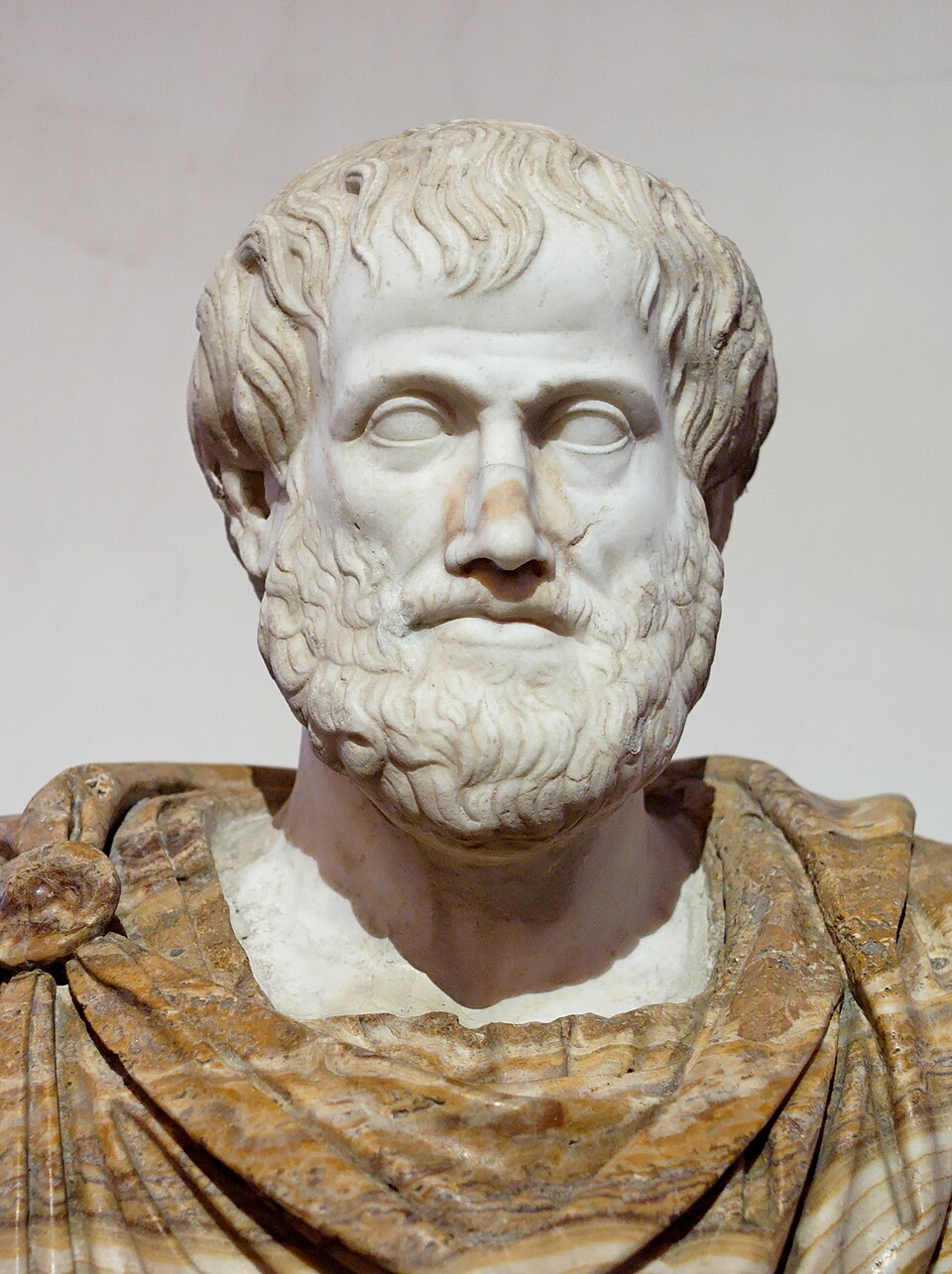
In the summer of 335 BC, Aristotle rented buildings in the grove of Apollo Lyceus on the eastern edge of Athens and began teaching. He was forty-nine years old, had spent twenty years at Plato's Academy, had tutored Alexander of Macedon, and had, in the intervening years, done something that would prove more consequential than either: he had gone to an island and looked very carefully at animals. The school he founded that summer — the Lyceum — was built on the habit of looking.
Nobody before Aristotle had attempted a systematic account of all living things. There had been natural observation — Hippocratic writers noted the progress of disease, farmers knew their animals — but no one had tried to gather the whole of animal life into a single description, to find its categories, and to explain how the parts of creatures relate to their functions and their ways of life. Aristotle did all of this, and did it with an empirical rigour that would not be matched in biology for nearly two thousand years.
The ground was laid not in Athens but on Lesbos. After Plato's death in 347 BC, Aristotle left the Academy — it passed to Plato's nephew Speusippus, and Aristotle either was not offered or did not seek the headship. He travelled east: first to Assos, on the coast of present-day Turkey, where a former Academy student, Hermias, held political power and invited him to work. He married Pythias, Hermias's niece, there. Then he moved across the strait to Lesbos, which had a sheltered lagoon — the Kalloni lagoon — and an exceptionally rich marine life. With his student and future successor Theophrastus, who was from Lesbos and knew the place, Aristotle spent two years observing.
The lagoon as laboratory
What he produced from those years is remarkable in its detail. The Historia Animalium — a survey of animal life running to ten books — describes the behaviour, anatomy, reproduction, and habitat of roughly five hundred species. It includes cetaceans (he correctly identified dolphins and whales as mammals, noting that they breathe air and suckle their young), cephalopods observed at close quarters in the Aegean, insects, birds, fish, and the dissected anatomy of many of them. Many of the descriptions are accurate enough that modern biologists can identify the species.
His method was not solitary contemplation. He gathered information systematically from people who worked with animals — fishermen who knew the behaviour of fish in different seasons, beekeepers who understood the organisation of hives, farmers who had observed the gestation of livestock. He combined these reports with his own direct observation and with systematic dissection. He watched the development of chick embryos by opening eggs at regular intervals — one of the first recorded uses of a serial experimental protocol in biology.
We should venture on the study of every kind of animal without distaste; for each and all will reveal to us something natural and something beautiful.
The classifications he arrived at were genuinely original. He drew the central distinction between animals with blood and animals without — a distinction that maps, imperfectly but substantially, onto the modern distinction between vertebrates and invertebrates. Within the blooded animals he distinguished those that give birth to live young from those that lay eggs; within the bloodless animals he identified crustaceans, cephalopods, insects, and what he called "testacea" — shelled creatures including molluscs. These are not arbitrary groupings. They reflect real structural differences that later taxonomy would confirm, refine, and ultimately explain in terms of evolutionary history that Aristotle did not have access to.
What the Lyceum was
When Aristotle returned to Athens in 335 BC and founded the Lyceum, he brought the research programme with him. The school occupied rented premises in the grove — Athens's citizens, not being Athenian-born, Aristotle could not own property in the city — and it was organised differently from the Academy. The Lyceum had a library and a collection of specimens: maps, natural objects, material that made it resemble, at least in spirit, a research institution rather than a discussion circle.
The name "Peripatetic" given to Aristotle's school and followers comes either from the Greek peripatein (to walk about) — Aristotle reportedly taught while walking in the covered walkway (peripatos) of the Lyceum — or simply from that architectural feature of the space. Both explanations appear in ancient sources. Teaching was not confined to a single method: Aristotle seems to have given morning lectures of a technical, dense kind (what survive as his treatises) and more accessible evening discussions for a wider audience.
The errors and what they cost
Aristotle was also wrong about important things, and it is worth being clear about what. He believed the heart was the seat of thought and sensation; the brain, in his account, was a cooling organ for the blood. He believed that some insects and fish arose through spontaneous generation — appearing from mud or dew without parents. He had a teleological framework that shaped his descriptions: parts of animals exist for a purpose, and he was inclined to explain structures by their function rather than by mechanism. These errors were not random guesses; they followed from his philosophical framework and from the limits of what unaided observation can determine.
What they mean in practice is that his biology was both more accurate than anything before it and a ceiling that was not broken through for a very long time. His authority was so great that spontaneous generation — which he endorsed — was not systematically disproved until the work of Francesco Redi in the seventeenth century and Louis Pasteur in the nineteenth. The parts of his biology that were right persisted; so did the parts that were wrong, because for centuries the texts carried both equally.
The works themselves came to Europe through a complicated transmission: Aristotle's writings were taken to Rome by Sulla after the conquest of Athens in 86 BC, edited by Andronicus of Rhodes in the first century BC into something like the corpus we have, translated into Arabic by Islamic scholars in the ninth and tenth centuries, and retranslated into Latin from Arabic in the twelfth and thirteenth centuries — arriving in European universities as the authoritative account of the natural world at exactly the moment those universities were being established.
A quotation he left unwritten
After Alexander's death in 323 BC, Athens turned hostile to Macedonian connections. Aristotle, who had spent years at the Macedonian court and tutored its king, was in danger. An impiety charge was filed against him — the same charge that had killed Socrates seventy-six years before. He left for Chalcis, in Euboea, where his mother had come from and where he had property. Ancient sources record that he said he was leaving so that Athens would not "sin twice against philosophy." Whether the words are exactly his, they capture the situation. He died in Chalcis in 322 BC, the year after he fled, probably of a stomach ailment. He was sixty-two.
What he left was a method as much as a body of knowledge. The method: go and look; gather testimony from those who know; dissect; compare; classify by structural similarity, not by appearance alone; explain parts by their functions; and be honest about what you cannot determine. It is not the modern scientific method, which depends on controlled experiment and quantitative measurement that Aristotle had no access to. But it is recognisably scientific in spirit, and nothing like it had existed before. The five hundred species he described in the lagoon and the dissecting rooms of the Lyceum were the first entry in a catalogue that naturalists have been adding to ever since.