The Last Orchard
Anton Chekhov finished The Cherry Orchard in the autumn of 1903, knowing he would not live long. He called it a comedy. Stanislavski staged it as a tragedy. Both were right, and the argument between them is still going.
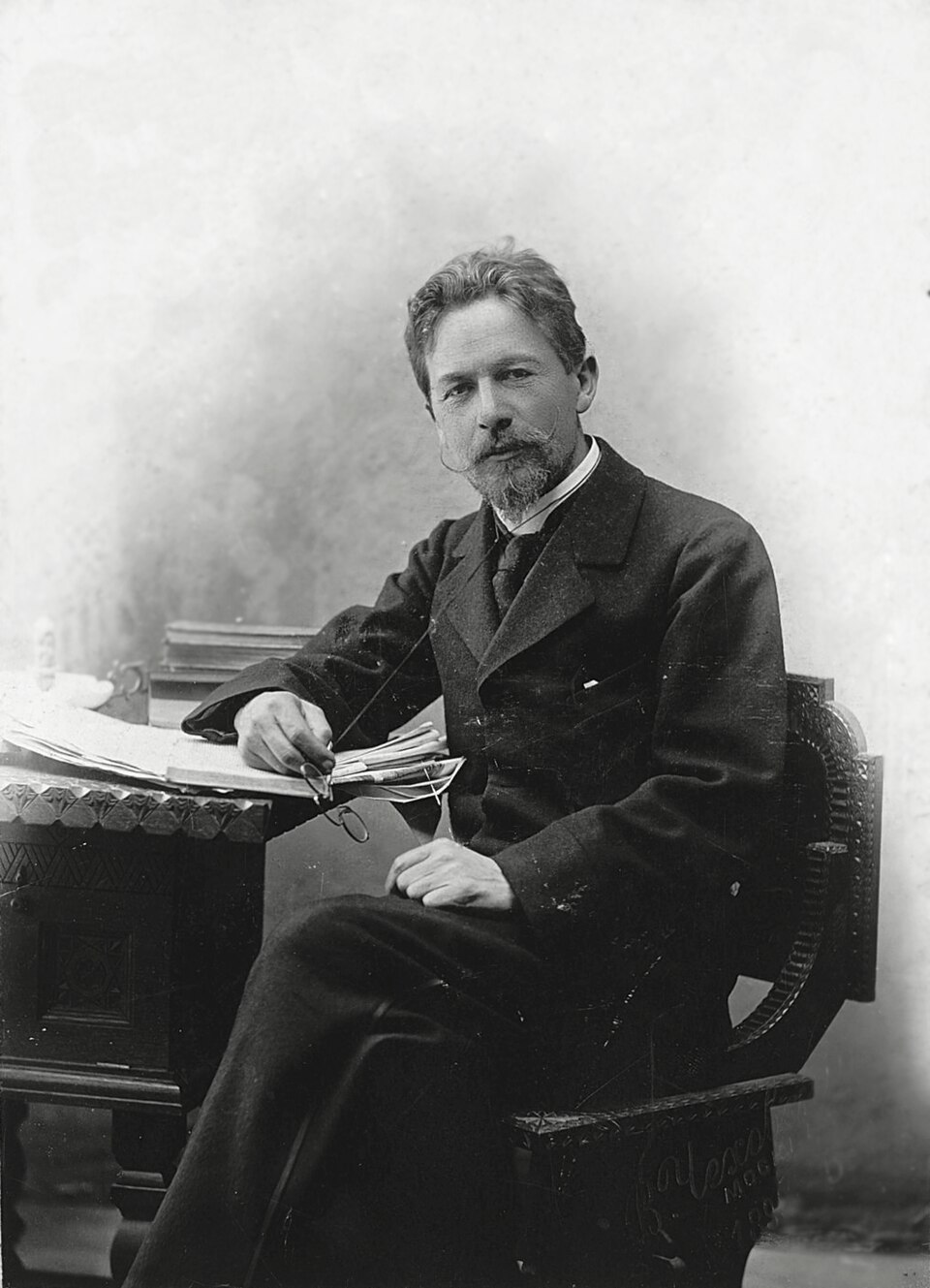
Anton Chekhov wrote The Cherry Orchard in fragments, working around his illness, sending pages to Moscow from Yalta where he had gone to breathe easier. He finished it in the autumn of 1903. He knew it was his last play. He told his publisher it was a comedy — even a farce — and went to his grave insisting on that. The Moscow Art Theatre made it one of the saddest evenings in the Russian theatre, and the argument about which of them was right has never entirely stopped.
The tuberculosis that would kill Chekhov had been present, in some form, for most of his adult life. He had trained as a doctor, which meant he understood the disease with a precision unavailable to most of its victims. When he coughed blood for the first time in a memorable public episode — at a restaurant in Moscow in 1897 — he admitted the obvious to himself without drama, as he admitted most things. He went to Yalta in the Crimea because the climate was warmer and kinder to his lungs than Moscow, and he spent the last years of his life writing there while the city he loved was elsewhere.
It was in Yalta that most of The Cherry Orchard took shape, from around 1901 onward, though writing it was slow and intermittent. His health made sustained work difficult. The correspondence of those years records a man managing illness as a daily administrative problem while trying to maintain the concentration required for serious creative work. Letters to Olga Knipper, the actress who was both his wife and the Moscow Art Theatre's leading player — and who would originate the role of Lyubov Ranevskaya — describe the state of the manuscript, the weather in Yalta, his symptoms, and his thoughts about the play in roughly equal proportion.
The Play He Was Inventing
The Cherry Orchard is about the sale of an estate. Lyubov Ranevskaya, a landowner who has been living abroad, returns to her family property to find it deep in debt. The solution proposed by Lopakhin, a merchant whose family had once been serfs on the same land, is simple and practical: sell the cherry orchard for development, build summer cottages, clear the debt. Ranevskaya and her brother Gaev cannot bring themselves to act on this advice. They delay, dream, and talk. Lopakhin buys the orchard at auction. At the play's end, the household disperses, and offstage the sound of axes begins.
What Chekhov was building, across the drafts, was a structure that held all of this without tipping it in any fixed emotional direction. Ranevskaya is sympathetic, but she is also feckless. Lopakhin is practical and efficient, but his victory is not triumphant — he is bewildered by it himself, aware that he has bought the land where his ancestors laboured. The student Trofimov talks endlessly about the radiant future without being able to do anything in the present. Gaev is absurd and loving and ineffectual. Chekhov arranged these figures so that the audience could not fully laugh at them or fully grieve with them.
I called the play a comedy, and even a farce in places — and I firmly stick to this.
This was not modesty or perversity. Chekhov genuinely believed that what he had written was comic in the same way life is comic: full of people who fail to do the obvious thing, who talk past each other, who grieve and laugh in the same moment. He had made a career out of this observation. His stories and earlier plays are full of characters who mean well and accomplish little, who are neither villains nor heroes but simply human, which is to say partial and a little absurd. He thought The Cherry Orchard was his fullest statement of that view.
Stanislavski's Tragedy
Konstantin Stanislavski — co-founder of the Moscow Art Theatre, the director who would stage the premiere, and one of the most consequential theatre-makers of the century — read the play and saw something different. He wrote to Chekhov with enthusiasm, but his enthusiasm was for a work of devastating sorrow. When rehearsals began, he staged it accordingly: slow, mournful, with long pauses and a heavy atmospheric weight. The great Moscow Art Theatre had built its reputation on exactly this kind of production. It had made The Seagull famous, saved it from disaster, and it knew how to find the grief in Chekhov's work.
Chekhov protested, repeatedly and without effect. He wrote letters objecting to the slowness, the weeping, the weight. He argued that his characters were not tragic figures, that Lopakhin in particular should be played for some lightness. Stanislavski understood what Chekhov was saying and continued staging it his way, convinced that he had found something in the text that its author could not see.
This disagreement — an author telling a director that the interpretation is wrong, the director proceeding anyway — is common enough in the theatre. What makes this case unusual is that both positions have proved defensible through more than a century of subsequent production. The play has been staged as broad comedy, as elegy, as political allegory, as domestic realism, and in versions that try to hold all of these at once. None of them is definitively wrong. The structure Chekhov built holds them all.
The Premiere and the Tribute He Didn't Want
The premiere was on January 17, 1904 — Chekhov's name day, and also, by the calendar then in use, his birthday. He was forty-three years old and visibly unwell, and the Moscow Art Theatre had arranged, without telling him fully what was planned, a celebration of his twenty-five years as a writer. Between the third and fourth acts, the performance was halted. Chekhov was brought onstage. Speeches were given, tributes were read, wreaths were presented. He stood through it looking ill and uncomfortable; photographs of the period show a man who has become very thin.
He had not wanted a celebration. His letters from the period before the premiere express anxiety about his health, anxiety about the production, and a characteristic desire not to make more of things than they were. The tribute was well meant, and the hall was full of people who admired him genuinely. That he stood through it while clearly suffering is the kind of scene he would have found exactly right for one of his plays — the ceremony organized in the wrong moment, the honoree not quite able to receive it, everyone sincere and slightly wrong simultaneously.
The Last Months
Chekhov left Moscow in the spring of 1904, his condition worsening. He went to the German spa town of Badenweiler, where his doctors believed the air might help. It did not. He died there on July 15, 1904, six months after the premiere of his last play.
His death, by the account of his wife, who was with him, was characteristically undramatic. He had been feverish. A doctor came. Chekhov asked for champagne — he had not had any for a long time. He drank. He made a quiet comment to his wife. He lay down and died. It was around three in the morning.
His body was transported back to Moscow in a refrigerated railway car that had been used, until recently, to carry oysters. There is no record of Chekhov having commented on this arrangement.
The cherry orchard in the play is cut down at the end, offstage, its destruction made audible rather than visible. The estate is sold, the characters scatter, and the old caretaker Firs — who has been forgotten, left behind in the locked house — is heard murmuring to himself in the empty rooms. Chekhov built the ending so precisely that its tonal register remains, more than a century later, genuinely difficult to name. It is not tragic in the strict sense, because no one who mattered has died. It is not comic, because nothing has been resolved. It is something more specific than either: the sound of things ending that were already long past their end, registered by a man who understood exactly what he was writing and also knew that he would not be around for the argument.