The Patent Clerk's Four Papers
In 1905 Albert Einstein was a twenty-six-year-old patent clerk in Bern with no university post and no laboratory. Over the course of one year he submitted four papers to Annalen der Physik. Each one would have made a career. Together they reset the foundations of physics.
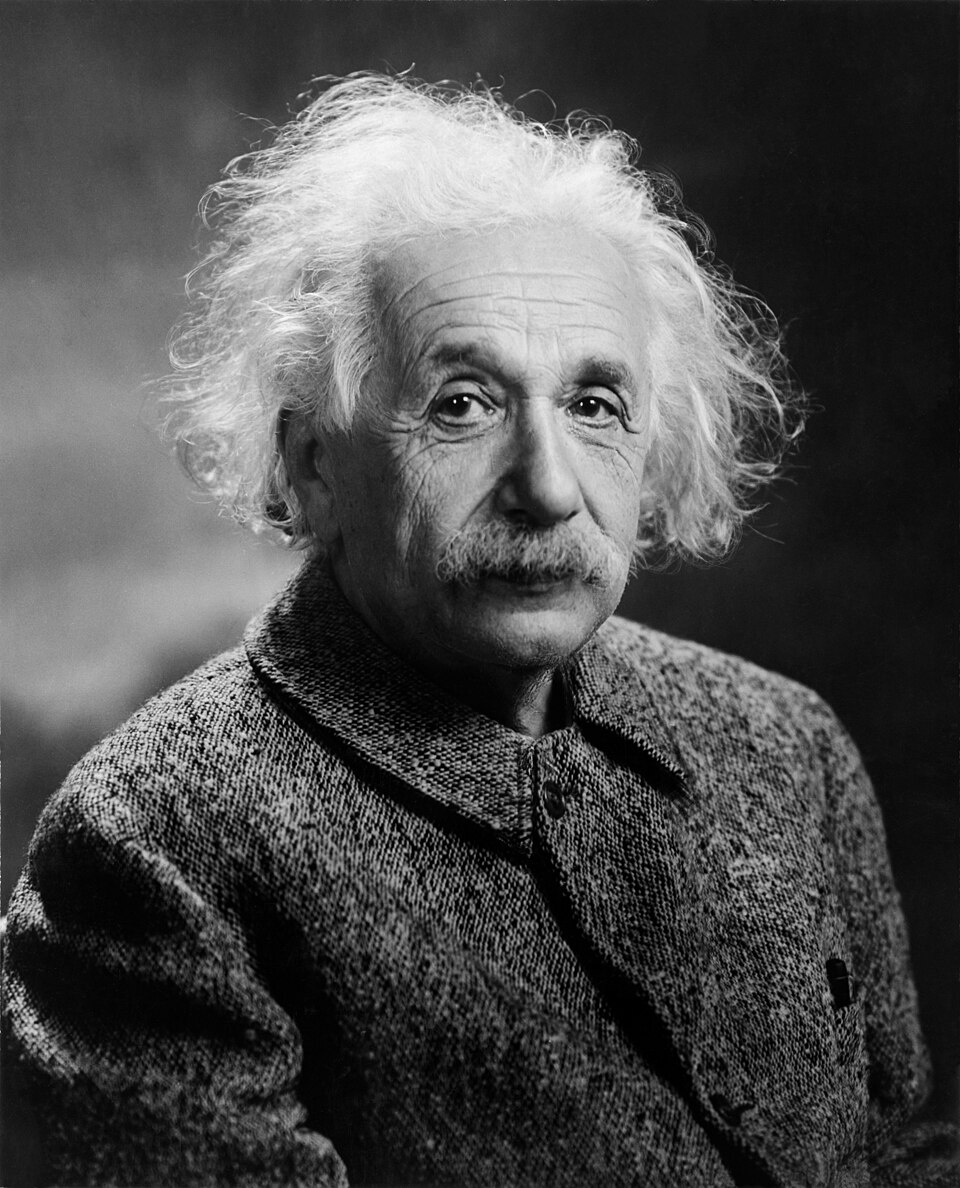
In the spring and summer of 1905, a young man employed as a patent examiner in Bern submitted four papers to the same German physics journal. He had no laboratory, no research position, and no university title. He was twenty-six years old. Each paper addressed a different unsolved problem at the frontier of physics; each proposed a solution that was, in its own domain, foundational. That one person produced all four in a single year is still, more than a century later, the most concentrated burst of scientific creativity in the history of the discipline.
Albert Einstein had graduated from the Eidgenössische Technische Hochschule in Zürich in 1900, but finding a permanent academic position proved harder than he expected. He applied for assistantships, wrote letters, and waited. The position that finally came, in 1902, was not in a university but in the Swiss Federal Patent Office in Bern — as Technical Expert (Third Class), responsible for evaluating applications for electromagnetic devices and mechanical patents. He found the work manageable, and the thinking it required — strip a claimed invention to its essential principle, test whether the claim was clear and the mechanism sound — congenial to his mind.
By 1905 he had been at the patent office for three years. He had married Mileva Marić, a fellow physics student, in 1903; their first son, Hans Albert, had been born in 1904. He read and discussed physics with a small circle of friends he called the Olympia Academy — Paul Habicht, Maurice Solovine, and others — a self-organised reading group that worked through Mach, Hume, and Poincaré. He had published a few papers already, on thermodynamics, none of them particularly noticed. But in 1905 he had been thinking hard about three problems that had been accumulating in him for years, and they all broke open at once.
The First Paper: Light Behaves Like Particles
The first paper reached Annalen der Physik on March 18, 1905. Its title — "Über einen die Erzeugung und Verwandlung des Lichtes betreffenden heuristischen Gesichtspunkt" — translates roughly as "On a Heuristic Point of View Concerning the Production and Transformation of Light." The word "heuristic" in the title is notable: Einstein was signalling that he knew what he was proposing was not yet a settled theory but a working assumption, a way of reading the evidence that seemed to account for it better than existing frameworks.
The problem it addressed was the photoelectric effect: certain metals, when illuminated by light of short enough wavelength, emit electrons. The frequency of the light matters; the intensity does not. Bright red light produces nothing; faint ultraviolet light produces electrons. This was entirely inexplicable by the classical wave theory of light. Waves should accumulate energy continuously, and intensity should determine whether the threshold for emission is crossed.
Einstein's proposal was radical. Light, he argued, comes in discrete packets — quanta of energy, each with energy proportional to the light's frequency. When a quantum strikes an electron, it either has enough energy to release it or it does not; intensity just determines how many quanta there are, not how much energy each one carries. The mathematics predicted the exact relationship between frequency and the maximum energy of emitted electrons — a prediction that Robert Millikan spent years trying to disprove experimentally, and eventually confirmed to high precision by 1916.
This paper was the one Einstein himself later called "very revolutionary." It was also the one for which he was awarded the Nobel Prize in Physics — in 1921, sixteen years after publication.
The Second: Atoms Are Real
The second paper, received on May 11, addressed Brownian motion: the erratic, jittery movement of small particles suspended in a liquid, first observed by the botanist Robert Brown in 1827 watching pollen grains under a microscope, and unexplained for eight decades. Einstein showed that the motion follows precisely from the thermal agitation of the molecules in the surrounding liquid — that if you assume liquids are made of molecules moving randomly with a certain average kinetic energy, the observed statistics of particle movement can be derived exactly.
The significance extended beyond explaining one puzzling phenomenon. In 1905 the atomic theory of matter, though widely used in chemistry and thermodynamics, was still contested on philosophical grounds; some prominent physicists — notably Ernst Mach — held that atoms were mathematical fictions useful for calculation but not necessarily real entities. Einstein's Brownian motion paper provided a way to measure the actual size of molecules and to calculate Avogadro's number from macroscopic observations. Jean Perrin confirmed the predictions experimentally by 1908. After that confirmation, the existence of atoms was no longer a serious question.
The Third: Time Is Not What We Thought
The third paper, "Zur Elektrodynamik bewegter Körper" — "On the Electrodynamics of Moving Bodies" — arrived at the journal on June 30. It is the special relativity paper, the longest of the four at thirty pages, and in some respects the most audacious: it required discarding assumptions so fundamental that most physicists had not thought to question them.
The problem it addressed was a long-standing tension between Maxwell's equations for electromagnetism, which implied a fixed speed for light in a vacuum, and Newtonian mechanics, which required velocities to add. If you run towards a light source, classical mechanics says the light should appear to travel faster relative to you. Experiments — most famously the Michelson-Morley experiment of 1887 — had found no such effect. Light's speed appeared constant regardless of the motion of the observer.
Einstein took this experimental result seriously rather than explaining it away. He proposed two postulates: that the laws of physics are the same for all observers in uniform motion (the principle of relativity), and that the speed of light in a vacuum is constant for all such observers regardless of their motion. From these two postulates, followed through mathematically, a series of consequences emerged: moving clocks tick slowly (time dilation), moving objects are shorter in the direction of motion (length contraction), and simultaneity is relative — two events that appear simultaneous from one reference frame do not appear so from a frame moving with respect to the first.
The paper contained not a single footnote or literature citation — not because Einstein was unaware of prior work, but because he had derived everything from first principles and the prior literature, with its various patches on a framework he was replacing, was beside the point.
The Fourth: Mass and Energy Are One
The follow-up paper, a mere three pages, reached the journal on September 27 and appeared in Annalen der Physik in November 1905. It asked a narrow question — whether the relativity principle had implications for the inertia of a body — and derived a relationship that remains the most recognisable equation in physics: the energy content of a body at rest equals its mass multiplied by the square of the speed of light. E = mc². A small quantity of mass is equivalent to an enormous quantity of energy, by a factor of c² — approximately 9 × 10¹⁶ metres squared per second squared.
The fourth work is only a rough draft at this point, and is an electrodynamics of moving bodies which employs a modification of the theory of space and time.
Einstein had described all four papers to his friend Conrad Habicht in a letter from May 1905, written before any of them were published. He knew they were connected. He called the photoelectric paper "very revolutionary" and the relativity work something that "employs a modification of the theory of space and time" from which the mass-energy result would follow. The letter is one of the rare primary documents in which he described the burst of work while it was happening.
The Visit from Planck's Assistant
The academic appointment came later than the physics. Einstein was appointed privatdozent at the University of Bern in 1908, and associate professor at the University of Zürich in 1909 — four years after the miracle year. The patent office had given him something a university post might not have: time to think without the pressure of departmental politics, grant applications, or the expectation that his work would advance an established research programme.
The reception of the papers was not immediate, but it was not long delayed. Max Planck, whose own quantum hypothesis of 1900 the photoelectric paper was extending in a radical direction, recognised the importance of the relativity work quickly and cited it in his own subsequent publications. He sent his assistant, Max von Laue, to Bern to meet Einstein in person. Laue, expecting to meet a professor, was directed to a waiting room. He did not immediately recognise the young man who came to collect him as the author of the paper he had come to discuss.
The four papers he produced that year are still the measure against which the concentrated output of scientific genius is assessed. Any one of them would have been a significant contribution. Together, in a single calendar year, they established the quantum nature of light, confirmed the existence of atoms, replaced the Newtonian conception of absolute space and time, and derived the equivalence of mass and energy. The man who produced them rode the tram to work in the morning and thought about physics on the way.