No One Admitted After the Film Begins
Alfred Hitchcock made Psycho on the cheap, with his television crew, in black and white, and then refused to let anyone into the theater late. He was engineering a new kind of cinema experience — one where the audience had no idea what was about to happen to them.
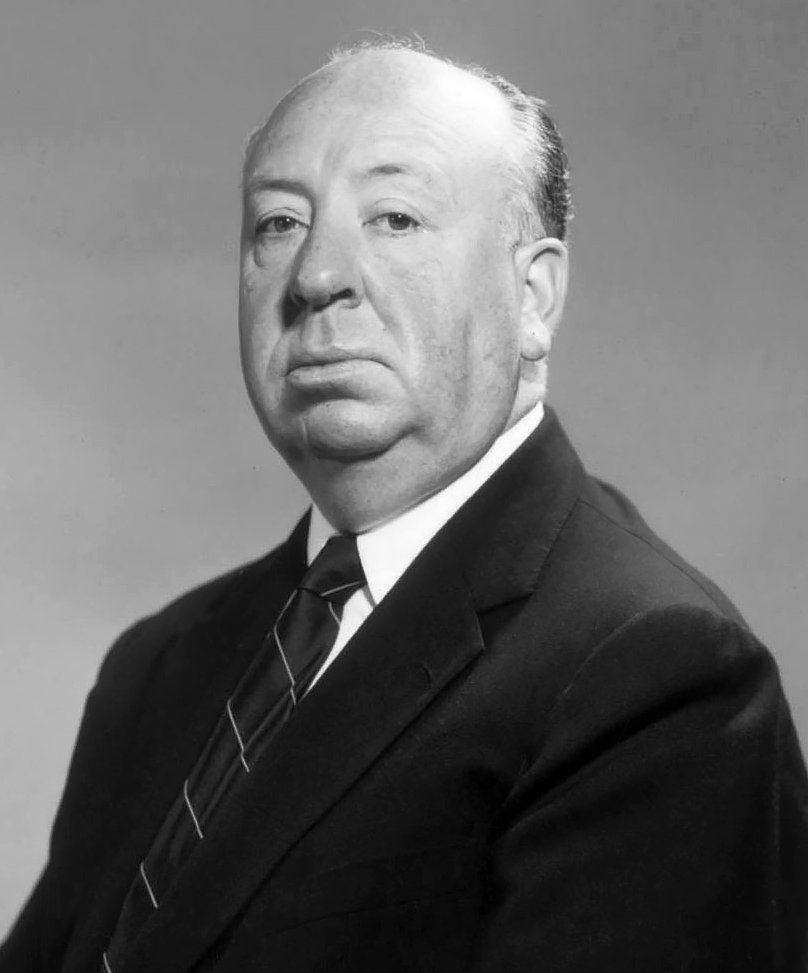
In the autumn of 1959, Alfred Hitchcock paid $9,500 for the rights to a paperback novel that had alarmed its readers and bought up as many copies of it as he could find, so that no one would know the ending before they reached the theater. He then made the film with a budget of $800,000 — far below what a director of his standing would normally spend — using his television production crew. The result was the most profitable film of his career and among the most influential ever made.
The novel was Robert Bloch's Psycho, published in 1959 and loosely inspired by the case of Ed Gein, the Wisconsin killer whose farmhouse had contained the remains of multiple women and whose crimes had become public in 1957. Bloch's version centered on Norman Bates, a motel keeper living with his possessive mother, and on the fate of a woman who stops there while fleeing with stolen money. Hitchcock read it in a single sitting, recognized its potential immediately, and moved to acquire it before word spread.
The television strategy
The decision to use his crew from Alfred Hitchcock Presents, his television anthology series, was both economical and deliberate. These were people who worked fast, who were accustomed to shooting in tight spaces with minimal setups, and who could complete a scene without the long, careful rhythms of a major studio production. Hitchcock wanted the film to feel different from his recent work — rawer, more immediate.
He also chose to shoot in black and white. Partly this was budget: color stock was more expensive. But Hitchcock had a specific instinct about the subject matter: the graphic violence he was planning, including a sustained sequence in a shower that would end in a woman's death, would be more disturbing — or perhaps more bearable — without color. Blood reads differently in black and white. It reads more like cinema, less like an accident.
Shooting took place primarily on the Universal lot, with some location work, from November 1959 into early 1960. The set for the Bates Motel and the house behind it was constructed on the back lot and would remain there for decades. Hitchcock directed with characteristic precision but unconventional detachment — he spent much of production seated behind monitors and drapes, watching the playback rather than standing beside the camera.
I was horrified to see that Hitchcock had reduced himself to the level of a TV director by making Psycho on a shoestring budget, and I was completely wrong.
Anthony Perkins was cast as Norman Bates, Janet Leigh as Marion Crane — the woman with the stolen money who stops at the motel — with Vera Miles and John Gavin in supporting roles. Leigh would later write at length about the production; she and Hitchcock worked well together and she was unaware, until seeing a rough cut, of exactly how much of her performance would hinge on the shower scene.
Seven days in the shower
The shower sequence occupies approximately three minutes of screen time. It took seven days to film. The complexity was not in Janet Leigh's performance — she was largely reacting to spray and direction — but in the construction of the sequence itself, which Hitchcock and editor George Tomasini assembled from approximately 70 camera setups and 77 cuts.
The editing rhythm produces something unusual: the viewer is almost never certain exactly what they have seen. The knife enters the frame; the body moves; water runs; the geometry shifts. In purely technical terms Marion Crane's skin is never shown being cut, and there is no sustained image of the wound — the mind fills in what the cuts between shots omit. This precision was intentional. Hitchcock was interested in the mechanics of horror: what the camera withholds, he understood, is often more powerful than what it shows.
A body double, Marli Renfro, appeared in some shots. Leigh was present throughout the shoot and appears in the majority of the footage, but Hitchcock wanted certain angles covered without requiring his lead actress to take every position. The use of a double was not publicly disclosed for years.
The sequence was originally planned without music. Hitchcock had decided that silence — nothing but shower noise and the stab — would be more effective. Bernard Herrmann disagreed and, on his own initiative, composed a cue for strings alone: the shrieking, slashing passage now inseparable from the scene. When Hitchcock heard it, he reversed his position immediately, later telling Herrmann that the music had contributed as much as thirty percent to the effect of the scene. He doubled his composer's fee.
The audience as the subject
Hitchcock understood that Psycho was doing something new with the contract between film and viewer, and he managed the release accordingly. Marion Crane, the character Janet Leigh plays, is established in the opening reels as the film's protagonist — the person whose story the audience has agreed to follow. She has a boyfriend, a job, a plan, moral complications. Then, at the forty-five-minute mark, she is killed. The film that began around her continues without her.
This had almost never been done. Hitchcock had prepared the audience to invest in one story and then removed its subject. The effect was disorienting in a specific way: viewers could no longer predict the grammar of what they were watching. If the protagonist could be killed that early, anything could happen.
He was also careful about the conditions of reception. He announced publicly — and enforced — a policy that no one would be admitted to a screening after it had begun. Theaters maintained lines outside, and uniformed guards stood at the doors. This was, among other things, a practical measure: a viewer who entered after Marion's death would spend the rest of the film confused about the setup. But it was also theater. The queues became part of the event. People waited, wondered, speculated. By the time they entered, they were already primed.
A promotional film Hitchcock made himself, delivered in his characteristic deadpan, instructed exhibitors on the policy and described the film without revealing its events. It is a piece of marketing, but it is also a performance — one more layer in a campaign designed to make the experience of Psycho feel unlike the experience of any other film.
What it changed
The commercial result was decisive. Psycho grossed approximately $50 million in its initial release against a production budget of $800,000. Hitchcock retained a large share of the profits. He donated the negative to Universal in lieu of taking a directing fee.
Its influence on subsequent film was harder to tabulate but equally clear. The practice of killing a protagonist early — or of using a star to draw audiences into a story that would subvert their expectations — became a tool available to later filmmakers because Hitchcock had demonstrated it worked. The use of extreme cutting to construct a scene of violence, rather than showing violence directly, became a language. The slasher genre that developed through the 1970s and 1980s is descended directly from Psycho, though its successors tend to lack both Hitchcock's formal rigor and his interest in the viewer's psychology over the victim's suffering.
Herrmann's score, similarly, established a template. Strings-only scores had existed before, but the particular effect of high, rapid string figures as a signal of menace entered popular consciousness through Psycho and has been referenced — consciously and otherwise — in film music ever since.
What Hitchcock had done, in the end, was demonstrate that a film could treat its audience not as people to be entertained but as people to be manipulated — and that the audience, if they understood the game was being played, would come willingly. The lines outside theaters were not despite the waiting. They were part of what he was selling.