The Rain and the Village
Seven Samurai was supposed to take six weeks to film. It took a year. Toho ran out of money. Monsoon rains washed out sets. Kurosawa waited months for exactly the weather he wanted. The result was the most expensive Japanese film ever made, and the one that defined what a Japanese film could be.
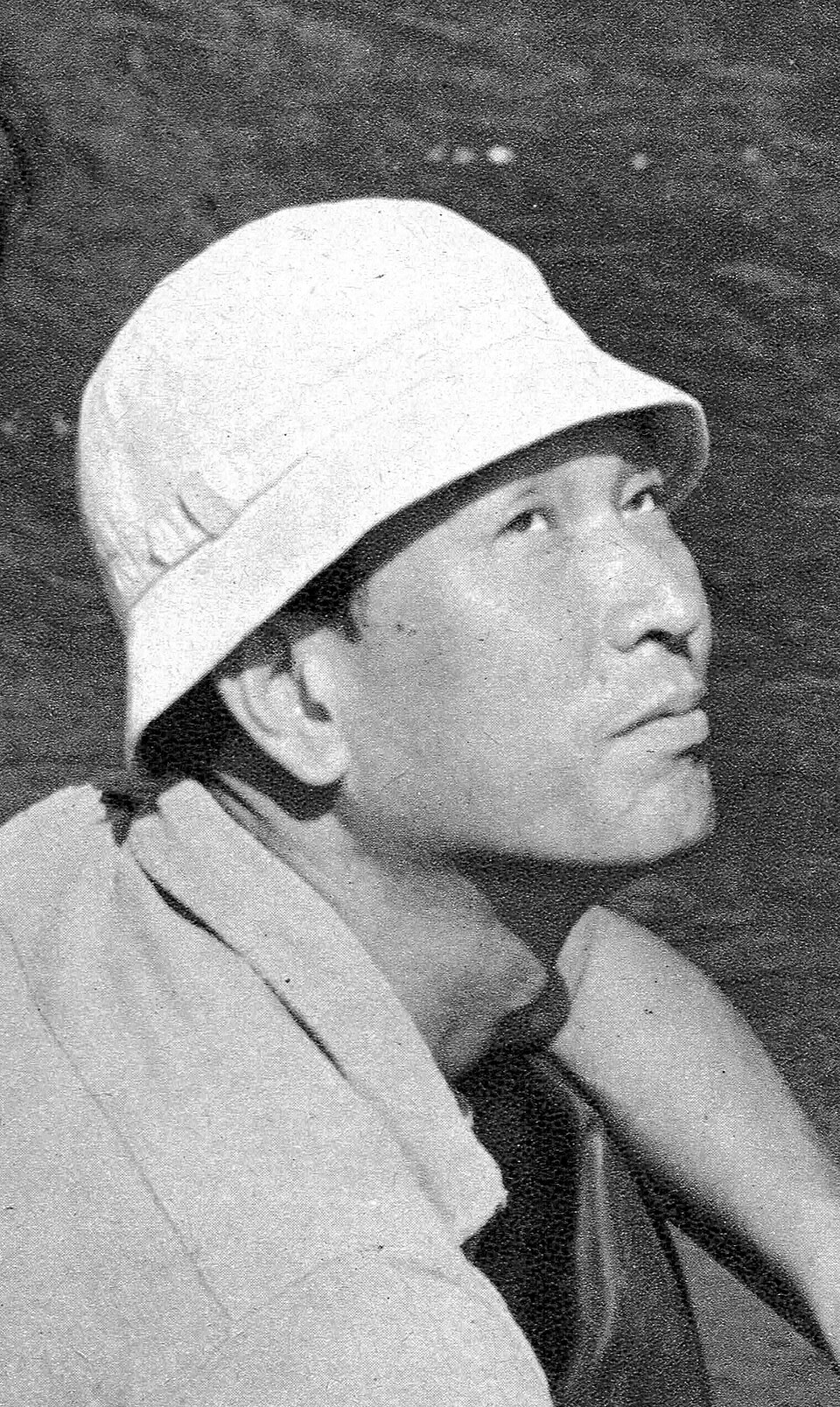
Akira Kurosawa began research for a film about the daily life of a samurai — a straightforward documentary approach to the period — and came out the other side with a three-and-a-half-hour epic about farmers, mercenaries, and the price of protection. The film took a year to shoot, nearly bankrupted Toho, required the construction of an entire village and the controlled flooding of a hillside, and when it was finished it changed the grammar of popular cinema in ways that are still visible.
The idea as it started was modest. In early 1952, Kurosawa set his team a research exercise: find a single day in the life of a samurai and reconstruct it in film. He was interested in the texture of how such a person actually lived — the routines, the training, the food, the social position — rather than in a story built around battles and heroic arcs. The research proceeded and became problematic. A samurai's daily life, it turned out, did not yield a compelling dramatic shape. The facts were interesting; the arc was missing.
The research turned up something else. Kurosawa and his two co-writers, Shinobu Hashimoto and Hideo Oguni, came across records describing a historical practice in which farmers in the Sengoku period — the century and a half of civil war that ran from the mid-fifteenth to the early seventeenth century — hired masterless samurai, or rōnin, to defend their villages against bandits. The farmers had food but no weapons; the samurai had weapons but, in the periods between engagements, no food. It was an exchange. And it had a story shape: the approach of the bandits, the recruitment of the samurai, the defense of the village, the outcome.
The script
The three writers worked together in intensive sessions, isolating themselves from routine to focus entirely on the material. Hashimoto later described the process as something like a boot camp — days of concentrated work, each scene argued through, nothing kept that didn't earn its place. The story they arrived at follows a village learning that bandits plan to raid the harvest; an elder advises finding hungry samurai willing to work for meals. Seven are recruited, each with a distinct character: the calm, seasoned leader Kambei; the brash, semi-comic Kikuchiyo, who turns out to be the son of a farmer himself; the swordsmanship prodigy Kyūzō; and four others, each drawn distinctly enough to carry their share of the story's weight.
The script was long and the scope was large. The full draft ran to something over 500 pages — in itself unusual for a Japanese production of the period, which typically worked from much shorter scripts. Toho, the studio, agreed to produce it. The budget was set. Neither figure anticipated what the production would become.
Shooting begins — and stalls
Cameras rolled in May 1953. The original schedule allowed roughly six weeks. It was optimistic in a way that would become evident almost immediately.
Kurosawa had decided to shoot the film's climactic battle — the defense of the village against the bandit attack — in rain. Heavy rain. He wanted the final confrontation to be fought in driving mud and water, the landscape itself becoming part of the chaos. This was not a casual choice: the contrast between the earlier, drier sequences and the wet, churning finale was structural. The film's emotional shape depended on that deterioration. But Japanese production schedules in the early 1950s did not routinely account for months of weather dependency, and Kurosawa was not willing to simulate what he wanted. He would wait for the real thing.
The monsoon season arrived. It was not the monsoon he wanted. Then it rained too much, washing out portions of the constructed village set. Then it did not rain enough. The company sat idle for weeks at a time. Toho's production accountants watched the budget expand.
Production was suspended outright for a period when Toho ran short of funds. The company could not simply stop — too much had been invested to abandon the film — but they also could not proceed until financing was secured. Kurosawa used the hiatus to continue preparation, reviewing footage and refining the remaining shooting plan.
The cameras and the mud
When the final battle sequence was eventually filmed, Kurosawa used multiple cameras simultaneously. This was not standard practice in Japanese cinema of the period, and not universally standard elsewhere either. It allowed him to cover a scene from several angles in a single take — useful for the climactic sequence, where the action was continuous, wet, and difficult to reset. Actors, extras, horses, and controlled water jets were coordinated across a hillside transformed into mud; multiple cameras captured different framings of the same action. The footage this generated gave Kurosawa substantial material to cut from.
The editorial choices he made from that material are among the most analyzed in the film's reception history. The battle compresses and dilates time in ways that amplify the violence and the exhaustion. The three bandits' deaths that close the film — the last three killed in quick succession — are edited with a ferocity that echoes the chaos of the whole sequence, then stops abruptly in a dissolve to silence and light.
The cast
Toshiro Mifune plays Kikuchiyo, the character who is not what he presents himself as — who carries a forged samurai genealogy and who turns out to have been the son of farmers, which is why he fights for the village with a fierceness the genuine samurai do not quite match. Mifune had been Kurosawa's lead actor since 1948; the director had a proprietary eye for what Mifune could do and kept pushing him into roles that required a different register of physicality and emotion than was usual in Japanese period drama. Kikuchiyo is partly comic, intermittently reckless, and in the end genuinely tragic — a performance assembled from contradictions that Mifune holds together through physical conviction.
Takashi Shimura plays Kambei, the leader. Where Mifune works through energy and force, Shimura works through restraint — every judgment Kambei makes is communicated through small, exact gestures. The two actors had appeared together in many Kurosawa films; in Seven Samurai the tension between their registers is part of what gives the film its texture.
The five remaining samurai are each characterized with enough specificity to be distinguishable throughout a very long film: Gorobei, the marksman; Heihachi, the cheery swordsman who is not quite in the league of the others and knows it; Shichiroji, Kambei's old comrade; Kyūzō, the perfectionist; Katsushiro, the youngest, still learning what it costs to fight. The village characters are similarly individuated. Kurosawa and his writers built the world with enough human detail that the deaths, when they come, have weight.
The ending
Four of the seven samurai die in the battle. The village survives. The surviving three samurai stand by the graves of their four companions. The farmers — who are already back in their fields, planting, moving into the next season, alive — have little to say to them. Kambei watches and speaks the last lines of the film.
Again we survive. The farmers have won. Not us.
The ending declines to celebrate. The samurai won the battle that needed winning, but the social order has not changed: they are still rōnin, landless and without permanent place, while the farmers are permanent and rooted. The victory belongs to the people for whom the land matters; the fighters move on, or die in place.
What came after
Seven Samurai opened in Japan in October 1954 in a 207-minute version. It ran at the Venice Film Festival and won the Silver Lion. International distribution followed, mostly in shortened cuts — the version distributed in the United States and much of Europe ran to around 160 minutes, with entire subplots excised. The full version became more widely available as home video and repertory exhibition expanded from the 1980s onward.
The premise — a small, outgunned community hires fighters to defend against predators — was translated into the American Western almost immediately. John Sturges's The Magnificent Seven (1960) used it directly and acknowledged the source. The acknowledgment did not prevent the structure from being used again without credit many times after. It has appeared in science fiction, animation, action cinema, and television serials. What made it adaptable was not local color — the Sengoku period, the rōnin, the Japanese village — but the geometry of the problem: seven against many, specialists hired by non-specialists, each character carrying a distinct function in the defense and a distinct stake in the outcome.
The production's extremity — the budget overruns, the rain, the months of waiting — is part of the film's institutional history but not part of its power. What Kurosawa built, in that year of shooting and weather and suspension and resumed shooting, was a film that earns its length. Each death costs something. The mud in the final battle is real because he waited for real mud. The village is built to be a village, not a set. What the camera finds is what was there.