Akira Kurosawa
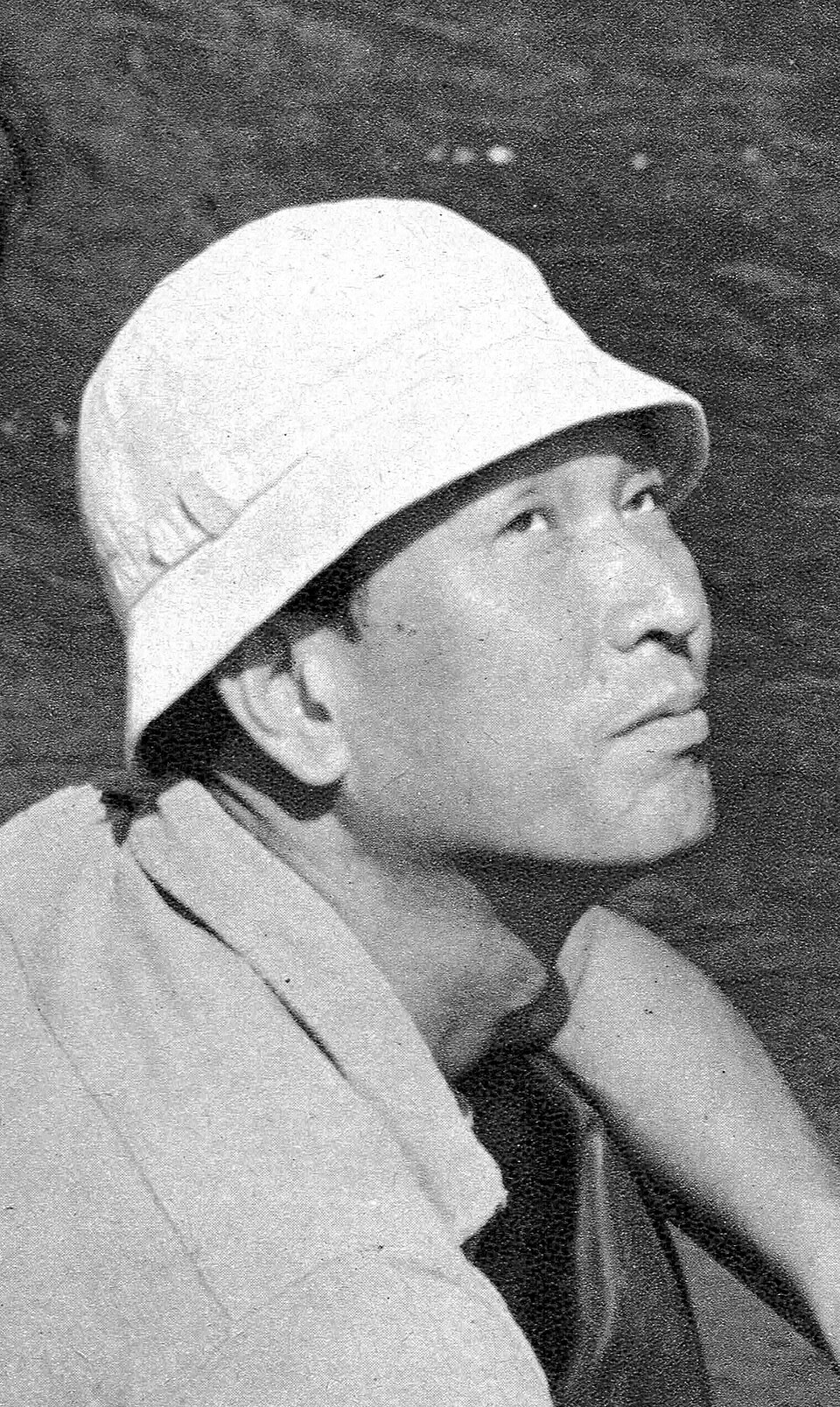
Japan's most internationally influential filmmaker made the samurai epic, the rain-soaked climax, and the multi-perspective narrative the common property of world cinema.
Akira Kurosawa directed thirty feature films across six decades, working in period drama, contemporary thriller, and late lyrical memoir with equal command. His influence on filmmakers who came after him is so pervasive — in Hollywood, in Europe, in East Asia — that it has become almost impossible to watch cinema without encountering the techniques he developed or refined.
Origins and training
Kurosawa was born in Tokyo in 1910, the youngest of eight children of a military family. He studied Western painting at art school before joining the Photo Chemical Laboratory (later Toho) as an assistant director in 1936. He spent seven years in apprenticeship before directing his first feature, Sanshiro Sugata (1943), a judo drama that showed from the outset an unusual control of space and movement. The wartime studio system shaped his early output, though Kurosawa navigated censorship with more latitude than many contemporaries.
The defining work
Rashomon (1950) brought Kurosawa to international attention when it won the Golden Lion at Venice in 1951 — a shock to Western critics who had largely ignored Japanese cinema. The film's structure, four contradictory accounts of a single event, made subjectivity and unreliable testimony central subjects of the story rather than narrative problems to be resolved. It entered film school curricula worldwide and gave the English language a new word for perspectival ambiguity.
Seven Samurai (1954) is widely regarded as his greatest achievement. Running three and a half hours, it follows a group of masterless samurai hired to defend a farming village, building character and situation with a patience that made the final battle — staged in torrential rain and mud — devastating in its earned emotion. The film was remade in Hollywood as The Magnificent Seven (1960) and has since influenced action and ensemble filmmaking across every genre.
Later major works include Yojimbo (1961), remade without acknowledgment as A Fistful of Dollars; Sanjuro (1962); and the Shakespeare adaptations Throne of Blood (1957, after Macbeth) and Ran (1985, after King Lear), the latter made when he was seventy-five and filmed on an epic scale with samurai armies in full regalia.
Method and visual language
Kurosawa worked as his own editor on most films and wrote or co-wrote all his screenplays. He developed several signature techniques: the telephoto lens used to compress deep space, the wipe transition, the careful deployment of weather — wind, rain, snow — as both atmosphere and dramatic agent. He pre-visualised scenes obsessively through storyboards rendered in his own hand.
| Technique | Film where prominent |
|---|---|
| Telephoto spatial compression | Seven Samurai, Ran |
| Multi-angle rain scene | Seven Samurai |
| Contradictory narrators | Rashomon |
| Colour as emotion (late period) | Kagemusha, Ran, Dreams |
He rehearsed actors extensively and expected them to inhabit characters before the camera turned. His long collaboration with actor Toshiro Mifune, spanning sixteen films between 1948 and 1965, produced some of the most physically expressive screen performances of the twentieth century.1
Legacy
George Lucas, Steven Spielberg, Francis Ford Coppola, and Martin Scorsese are among the directors who have publicly identified Kurosawa as a primary influence. Spielberg and Coppola organised the international co-production financing for Kagemusha (1980) after Japanese studios withdrew. In 1990 Kurosawa received an Honorary Academy Award for lifetime achievement; Spielberg and Scorsese presented it. He continued directing until 1993, completing Madadayo at the age of eighty-three.
In order to write the script well, you have to be a filmmaker. In order to direct well, you have to understand writing. They're the same thing.
Footnotes
- The Kurosawa–Mifune collaboration ended after Red Beard (1965); accounts differ as to the reason, and neither spoke publicly about it in detail. ↩