Don't Ever Abandon It
Nadia Boulanger told Astor Piazzolla to stop trying to write like a European and go back to the tango. He did — and the tango establishment in Buenos Aires tried to destroy him for it. He kept going anyway.
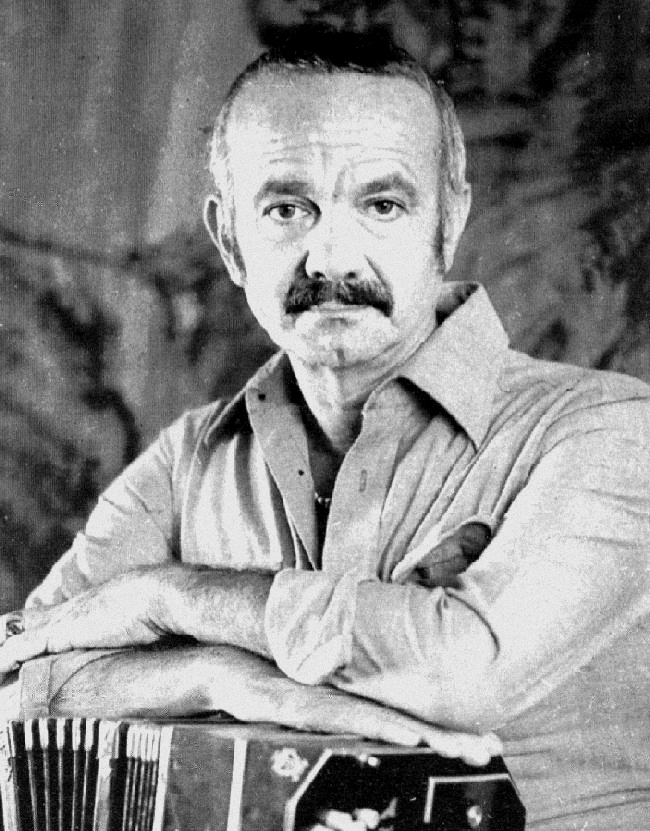
In 1954, Astor Piazzolla arrived in Paris with a scholarship and a suitcase full of orchestral scores he was proud of. He had spent years trying to become a serious composer in the European tradition — symphonies, concertos, chamber works. When Nadia Boulanger, the teacher he had crossed the Atlantic to study with, finally asked him to play something of his own, he played a tango. She stopped him after a few bars, leaned forward, and told him he had been wasting his time. The tango was what he was. He should never abandon it. He went back to Buenos Aires and nearly destroyed his career by following her advice.
The tango Piazzolla had grown up with was the tango of the 1930s and 1940s — the golden age of the form, when the great orchestras of Buenos Aires filled the dance halls and the airwaves with a music that was simultaneously popular and refined. The leading figures — Juan D'Arienzo, Osvaldo Pugliese, Aníbal Troilo — commanded loyal followings and had codified a sound: the bandoneón at its centre, the strings behind it, the beat kept for the dancers. The tango was above all a dance music, and the dancer's needs set the form. Piazzolla had played in Troilo's orchestra and knew the tradition from the inside. He also, by the early 1950s, knew he wanted to break it.
He was born in Mar del Plata in 1921 and spent a significant part of his childhood in New York City, where his father Vicente — a barber and sometime folk musician — had taken the family. The city gave him two things: the bandoneón, which his father bought him at age eight, and exposure to jazz, which he absorbed through the radio and the streets of Greenwich Village where the family lived. He was, from boyhood, a musician who heard the tango from the outside as well as the inside, who could compare it to other things and wonder what it might become.
The Boulanger lesson
The meeting with Nadia Boulanger in Paris in 1954 is the pivot around which Piazzolla's career turns, and he returned to it often in interviews. Boulanger — who had taught Aaron Copland, Darius Milhaud, Virgil Thomson, and many others — was then in her late sixties and had a reputation for hearing exactly what a student was, as opposed to what they wanted to be.
Piazzolla brought her his orchestral compositions: serious, technically accomplished works in a European idiom. She listened, he later recalled, with polite neutrality. Then she asked him what else he had written. Almost reluctantly, he sat down and played her a tango. Her response was immediate.
This is Piazzolla. Don't ever abandon it.
What she heard was not folk music being dressed up for the concert hall. She heard a composer whose voice was native to a specific form — who could not say what he needed to say in any other language. The advice was not merely to keep writing tangos; it was to stop the more fundamental act of self-betrayal, the attempt to become someone else. Piazzolla later said those words were among the most important anyone ever spoke to him.
He spent the remainder of his Paris scholarship studying with Boulanger, working on counterpoint and orchestration. He returned to Buenos Aires in 1955 with a clearer idea of what he wanted to do and a thorough understanding of the technical means to do it.
The attack
The Buenos Aires tango world was not waiting for him with open arms. When Piazzolla formed the Octeto Buenos Aires in 1955 and began performing his new music publicly, the reception from the tango establishment was swift and hostile. His music, they said, was not tango. It could not be danced to. It introduced elements — jazz harmonies, counterpoint, extended rhythmic freedom — that violated the form's rules. He was a traitor, a defector, someone trying to destroy the music of the people.
The criticism came with real social force. Some milongas — the dance halls where the tango lived — refused to play his recordings. Traditional tango musicians publicly distanced themselves from him. He received death threats. He was not a marginal figure being ignored; he was a central figure being attacked, which in some ways was harder to survive.
Part of what Piazzolla had done was change the relationship between the music and the body. Traditional tango was written for dancers; its pulse was calibrated to feet and hips. Piazzolla wrote for listeners. His music asked you to sit still and follow a structure — the way jazz asked you to follow a solo, the way a string quartet asked you to follow the argument between four voices. The beat was still there, still recognizably tango, but it was no longer in charge of everything. This was the real offence. He had taken the dance out of the dance hall.
What held the music together
Piazzolla's core ensemble from the 1960s on was the Quinteto Tango Nuevo: his own bandoneón, violin, piano, electric guitar, and double bass. The combination is precise in its implications. The electric guitar was not part of any traditional tango instrumentation; it brought a timbral brightness and a sustain that acoustic guitar could not provide. The double bass, without the percussion section of a jazz group, had to anchor the rhythm entirely on its own. The violin — the one instrument the ensemble shared with the traditional orchestras — was given melodic lines of a different character: longer, more searching, capable of carrying the kind of phrase structure that Piazzolla had absorbed from studying European chamber music with Boulanger.
The bandoneón remained the engine. Piazzolla played it with a physicality that was evident to any audience — the instrument required total bodily engagement, the bellows extending and contracting across a full arm span, the buttons arranged for fast chromatic runs that the right hand executed while the left handled a different set. He had played it since he was eight. The decades showed.
Adiós Nonino
In 1959, Piazzolla's father Vicente died in Mar del Plata. Astor was in Buenos Aires. He wrote a piece in response, in a single sitting by most accounts, calling it "Adiós Nonino" — farewell to Nonino, which was his family name for his father. It became one of his most performed works and, for many listeners, the clearest single statement of what nuevo tango was: a music of mourning, joy, and velocity simultaneously, with a melody that was immediately recognizable and a structure that kept opening into new rooms.
He returned to the piece multiple times over his career, recording different versions with different ensembles. Each version is slightly different in tempo and weight. What remained constant was the quality of address — the piece sounded, in every version, like someone speaking directly about something that mattered to them absolutely.
By the late 1960s and through the 1970s, the hostility of the traditional tango world had begun to give way. The music Piazzolla had written was finding audiences not only in Argentina but in Europe and Japan, where the nuevo tango was received without the weight of territorial argument — as music, simply, that was worth listening to. "Libertango," composed in 1974 during a period when Piazzolla was living in Italy, became one of his most widely known pieces outside Argentina, covered by performers in genres that had no connection to Buenos Aires.
He suffered a stroke in Paris in 1990, from which he never fully recovered. He died in Buenos Aires in 1992, at seventy years old. The tango establishment whose rejection had defined two decades of his professional life had long since revised its position. The milongas that had banned his recordings were playing them. His music had become what all music that survives its own moment of rejection eventually becomes: tradition.