Astor Piazzolla
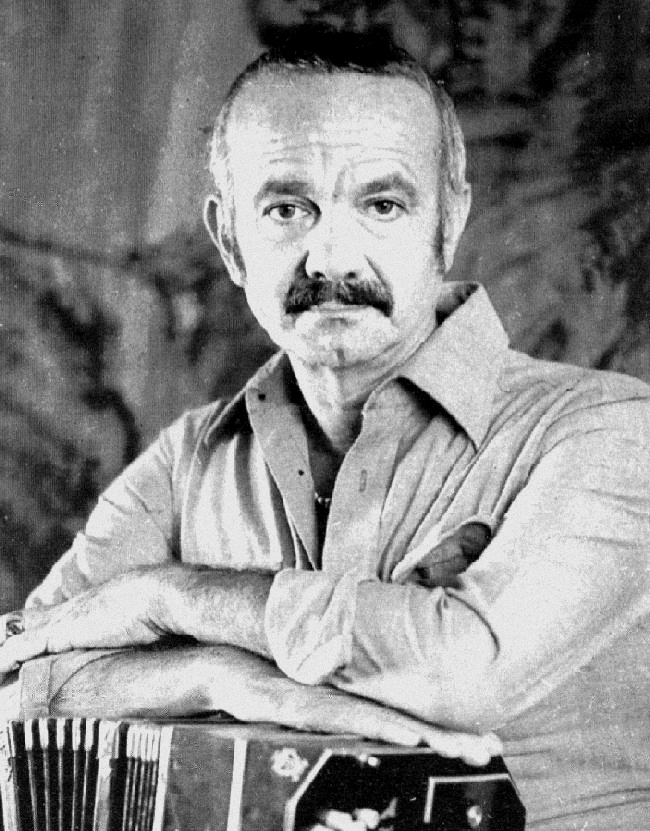
The Argentine bandoneonist who broke tango open, fusing it with jazz and classical counterpoint to produce a new form the old guard called heresy and the concert world eventually called art.
Astor Piazzolla spent two decades learning what tango was and another four decades changing it. His nuevo tango absorbed jazz harmony, classical counterpoint, and the dissonance his Buenos Aires audiences often resented. By the time critics and concert programmers caught up, he had composed more than three thousand works and permanently altered what the form was capable of.
Early formation
Piazzolla was born in Mar del Plata in 1921 and spent much of his childhood in New York, where his family lived in lower Manhattan through the late 1920s and 1930s. He learned the bandoneon — the German-derived concertina that sits at the centre of tango — from his father, and encountered the tangos of Carlos Gardel as a boy. Returning to Buenos Aires, he studied classical composition with Alberto Ginastera, acquiring a formal technique that would later distinguish his work from all other tango composers of his generation.
The Paris turn
In 1954, Piazzolla won a scholarship to study in Paris with Nadia Boulanger, the pedagogue who had shaped a generation of twentieth-century composers. Boulanger initially pushed him to write concert music in a European idiom. According to Piazzolla's own account, it was Boulanger who, hearing him play tango on the bandoneon, told him that his real music was there — and that he should stop apologising for it. He returned to Buenos Aires committed to developing what he would call nuevo tango: the Argentine popular form opened to jazz-derived harmonics, intricate counterpoint, and classical structural ambition.
Nuevo tango
The resistance was immediate. Traditionalists argued that what Piazzolla made was not tango, because it was too dissonant and too complex to dance. He disagreed, and continued. Adiós Nonino (1959), composed in grief following his father's death, became his most enduring single work — a piece that moves between lament and propulsion, built on a melodic arc of rare directness. Las Cuatro Estaciones Porteñas (1965–1970), his set of four pieces mapping the seasons onto Buenos Aires, provided the template for the orchestral arrangements and crossover collaborations that would reach wider audiences in his later career. Libertango (1974) was perhaps the most widely disseminated: its ostinato bass and chromatic melody became, decades after his death, one of the most recognisable passages in popular instrumental music.
Reach and late recognition
International recognition came unevenly and late. European audiences — particularly in Italy and France — responded more readily than Argentine critics, who remained suspicious of the hybrid. American critic Stephen Holden, writing in 1992, called Piazzolla "the world's foremost composer of tango music." By then Piazzolla had suffered the stroke that would kill him. He died in Buenos Aires on 4 July 1992. The works were already everywhere he would never go.
"Tango is a feeling you can't explain."