The Zone
Stalker was shot three times. The first year of footage was destroyed by a laboratory error. The second attempt collapsed. Only on the third try, in an abandoned power plant near Tallinn, did Tarkovsky find the film he had been searching for.
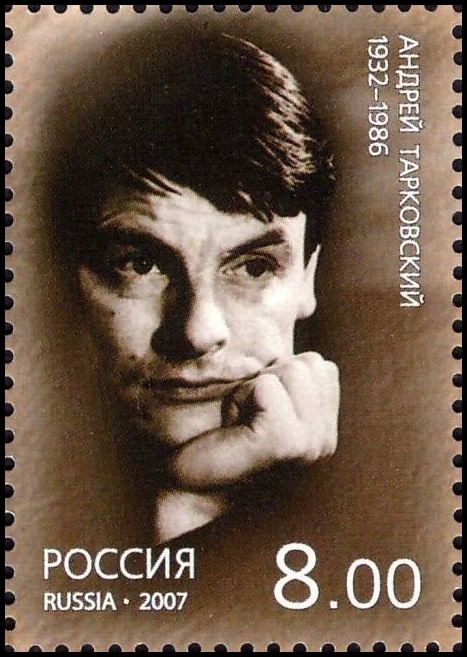
Of all the films that Andrei Tarkovsky made, Stalker is the one that cost the most to arrive. Shoot after shoot collapsed — an entire year of footage chemically destroyed in a processing error, a second attempt abandoned — before a third and final production, staged in the ruins of a hydroelectric plant in Estonia, finally yielded the film that would define the last decade of his life and confirm him as one of cinema's irreducible originals.
The source was a science-fiction novel, Roadside Picnic, published in 1972 by the Soviet brothers Arkady and Boris Strugatsky. In it, an alien visitation has left behind a number of Zones — patches of altered landscape where the laws of physics are unreliable and dangerous — and stalkers are the illegal guides who navigate these zones for hire, retrieving the strange artefacts that litter the alien debris. At the centre of one Zone is a room said to grant the innermost wish of whoever enters it. The Strugatskys wrote the book as a genre piece with philosophical depth; Tarkovsky wanted something else entirely. Over a series of screenplay drafts — he and the Strugatskys worked together closely, and the brothers have written about the difficulty of satisfying his successive revisions — the science-fiction apparatus was steadily stripped away. The Zone was no longer evidence of extraterrestrial visitation. It became, in Tarkovsky's conception, a place with no fixed explanation at all.
The First Ruin: Georgy Rerberg and the Destroyed Negative
Principal photography began in 1976, with the acclaimed cinematographer Georgy Rerberg behind the camera. The two men had a history: Rerberg had shot The Mirror (1975), Tarkovsky's most personal film, and their collaboration had produced some of the most distinctive imagery in Soviet cinema. For Stalker they worked in colour with an ambitious visual plan, filming in the Estonian landscape and at locations around the republic. A year of work accumulated. Then the footage was sent to the Sverdlovsk film factory for processing, and the negatives were ruined — a laboratory error, not a creative failure, but the practical result was the same. Every image from the first shoot was lost.
The scale of the setback is difficult to overstate. In the Soviet film system, productions did not simply restart. Resources were allocated, schedules fixed, permissions granted through a bureaucratic structure that had little tolerance for waste. That the film was allowed to continue at all required institutional support and Tarkovsky's own persistent advocacy. When a second shoot was eventually approved, Rerberg was replaced. The replacement footage also failed to satisfy Tarkovsky. Two shoots in, the film was still not the film.
The Third Attempt: Estonia and the Power Plant
For the third shoot, Tarkovsky brought in Alexander Knyazhinsky as director of photography. The decision to film in Estonia — a Soviet republic on the Baltic coast — proved decisive not because of any specific location but because of what Estonia offered collectively: a landscape at the edge of ruin. The primary interior location was an abandoned hydroelectric power plant along the Jägala river. Its concrete walls were stained with rust and algae, its floors half-submerged, its machinery corroded into sculptural forms by standing water and years of damp. Whatever the Zone was in the film, it looked like this: not an alien intrusion but an industrial aftermath, something built by human hands and then given over to a process of slow dissolution that made it strange.
Tarkovsky used the location without cleaning it up or artificially decorating it. The Zone's texture in the final film — its particular quality of wet concrete, overgrown steel, and water lying still in pools among broken walls — comes directly from what was there. The landscape did not need to be made to look strange; it already was.
Filming continued through 1977 and into 1978. The three central characters — the Stalker, the Writer, and the Professor, played by Alexander Kaidanovsky, Anatoly Solonitsyn, and Nikolai Grinko — spend the film's approximately 163 minutes journeying through the Zone toward the Room. They almost never arrive with ease at anything. The film proceeds in long, almost static takes, the camera moving slowly or not at all, the characters advancing and stopping and waiting. There is no action in the thriller sense. The tension is interior: the three men argue about art, about science, about belief, about what they would actually wish for if they reached the Room. By the time they arrive at its threshold, none of them can bring themselves to enter.
What the Zone Is
Tarkovsky was consistently hostile to readings of Stalker as science fiction. In Sculpting in Time, his book of film theory and personal statement, he wrote of the Zone not as a physical place but as an outward form for something that resists external definition — a place where the inner life becomes terrain. The Room, which grants wishes, is not a literal space in his account. It is a way of testing what a person actually wants when all social performance is stripped away. The Writer, who claims to be seeking inspiration, cannot enter it. The Professor, who arrives with a bomb (he intends to destroy the Room before it can corrupt humanity with wish-fulfilment), is talked out of detonation but cannot enter either. The Stalker, who has guided others there and never entered himself, leads them all back out without any of them crossing the threshold.
What grants the film its strange staying power is that this is not a failure. The journey itself is the event. The Zone is not a place where questions are answered. It is a place where the right questions finally become clear enough to feel their weight.
The Zone is a zone of the human spirit, and the Stalker is someone who is very sensitive to it, who senses that his mission is to bring others there.
Colour, Sepia, and the Visual Language of the Third Shoot
One of the most immediately striking things about Stalker is its use of two colour registers. The world outside the Zone — the city, the bar where the men meet, the interiors of ordinary life — is shot in a desaturated sepia tone, close to monochrome, suggesting a world drained of vitality. The Zone itself is in full, if muted, colour: the greens of overgrowth, the orange of rust, the grey-blue of water. The convention of science fiction associates the Zone with danger and strangeness, but Tarkovsky inverts it. The everyday world is the colourless one. The Zone, for all its threats, is the place where colour lives.
This reversal is not incidental. It is the argument of the film stated in visual terms: the familiar and safe world is the deadened one, and the uncertain interior landscape — whatever it is — is where something real might be encountered.
After the Film: Cancer and the Question of the Location
Stalker was released in the USSR in 1979 and reached Cannes the following year, where it was awarded the FIPRESCI Prize by the international critics' jury. Its reputation in the West grew gradually through the 1980s, as Tarkovsky's emigration — he left the Soviet Union in 1982 and did not return — made his films more widely available outside the state distribution system.
What emerged later, and has never been definitively settled, is the question of the Jägala filming location and the health of those who worked there. Tarkovsky died of lung cancer in Paris in December 1986. His wife, Larisa Tarkovskaya, died of cancer shortly after. So did the actor Anatoly Solonitsyn, who played the Writer, and the cinematographer Alexander Knyazhinsky. The concentration of cancer deaths among people who shared the Stalker production has led to sustained speculation that the Jägala river location — which was near industrial discharge sites — may have exposed the cast and crew to toxic chemicals during filming. Tarkovsky was a smoker, and causation is impossible to establish for any individual case. The question remains open, and has remained open for decades, hanging at the edge of the film's biography the way the film itself likes to leave things: without resolution, but impossible to ignore.
The film itself is now considered one of the masterworks of world cinema. What was built in three attempts, across years of institutional resistance and personal crisis, in the water-logged interior of an abandoned Estonian power plant, turned out to be something that resisted every category the film industry had for it — not science fiction, not art film in the standard sense, not a drama of plot or character in the ordinary meaning, but a meditation on belief and desire staged in a landscape that looked like the interior of a mind that had been left too long in the rain. Tarkovsky spent years finding it. The film has been looking back at its viewers ever since.