Andrei Tarkovsky
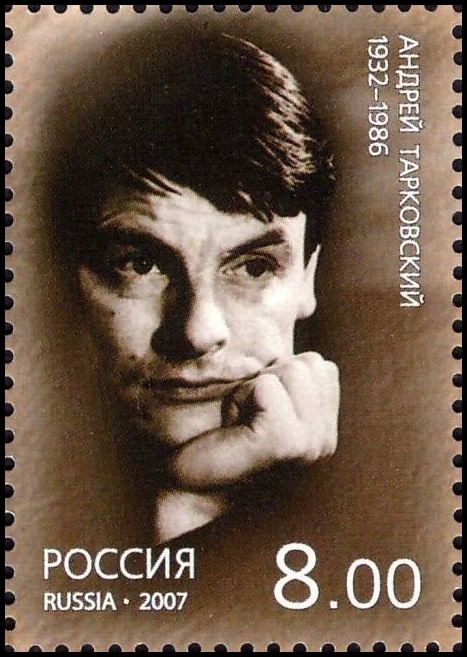
A Soviet filmmaker who transformed cinema into a medium for metaphysical inquiry, aligning slowness and silence with profound spiritual weight.
Andrei Tarkovsky made only seven feature films — yet each one reshaped the possibilities of cinema. Working inside the Soviet system while perpetually at odds with its censors, he developed a visual language in which time itself became material: stretched, folded, and charged with longing.
Origins and formation
Tarkovsky was born in 1932 in the Ivanovo region of Russia. His father, Arseny Tarkovsky, was a celebrated poet whose verse would later appear in several of his son's films. After a peripatetic wartime childhood, he enrolled at the Moscow Film School (VGIK) in 1954, studying under Mikhail Romm. His graduation short, The Steamroller and the Violin (1960), announced an already confident hand. His debut feature, Ivan's Childhood (1962), won the Golden Lion at Venice and signalled that Soviet cinema had found a new voice — one uninterested in ideology and absorbed instead in the inner lives of its characters.
The defining work
Andrei Rublev (1966) is widely regarded as his masterpiece: a fragmented meditation on the medieval icon-painter set against a landscape of religious violence and creative doubt. The Soviet authorities suppressed it for years.^1 Solaris (1972) placed his methods within science fiction, using the genre to examine grief and the limits of human consciousness. Stalker (1979) — shot twice after a laboratory accident destroyed the first negative — became his most austere statement: three men crossing a forbidden zone toward a room said to grant the deepest wish. Every frame feels deliberate, as though duration itself is the point.
Method and style
Tarkovsky distrusted montage as an expressive device. For him, editing should link states of time, not manufacture meaning through collision. The long take was not a stylistic signature but a philosophical necessity: the camera needed to breathe with real duration. Sven Nykvist and, more often, Vadim Yusov were his chief collaborators behind the lens. Water, fire, and levitation recur throughout his work — not as symbols to decode but as presences to be felt. He elaborated his theory in the book Sculpting in Time, completed shortly before his death.
| Element | Function in his cinema |
|---|---|
| Long take | Embeds the viewer in lived time |
| Water | Boundary between states of being |
| Memory sequences | The past as still-living space |
| Natural sound | Silence weighted against noise |
Legacy
Tarkovsky left the Soviet Union in 1982 and made his final two films in Italy and Sweden. He died of lung cancer in Paris in 1986, aged 54. His influence on art cinema has been vast: directors as different as Ingmar Bergman, Terrence Malick, and Lars von Trier have cited him as a primary reference. Bergman called him the greatest of all.
The allotted function of art is not, as is often assumed, to put across ideas, to propagate thoughts, to serve as example. The aim of art is to prepare a person for death, to plough and harrow his soul, rendering it capable of turning to good.
Stories
All stories →