Can Machines Think?
In 1950, Alan Turing sidestepped the unanswerable question — "Can machines think?" — and replaced it with a test that could actually be run. The paper he published that autumn defined a field before the field had a name.
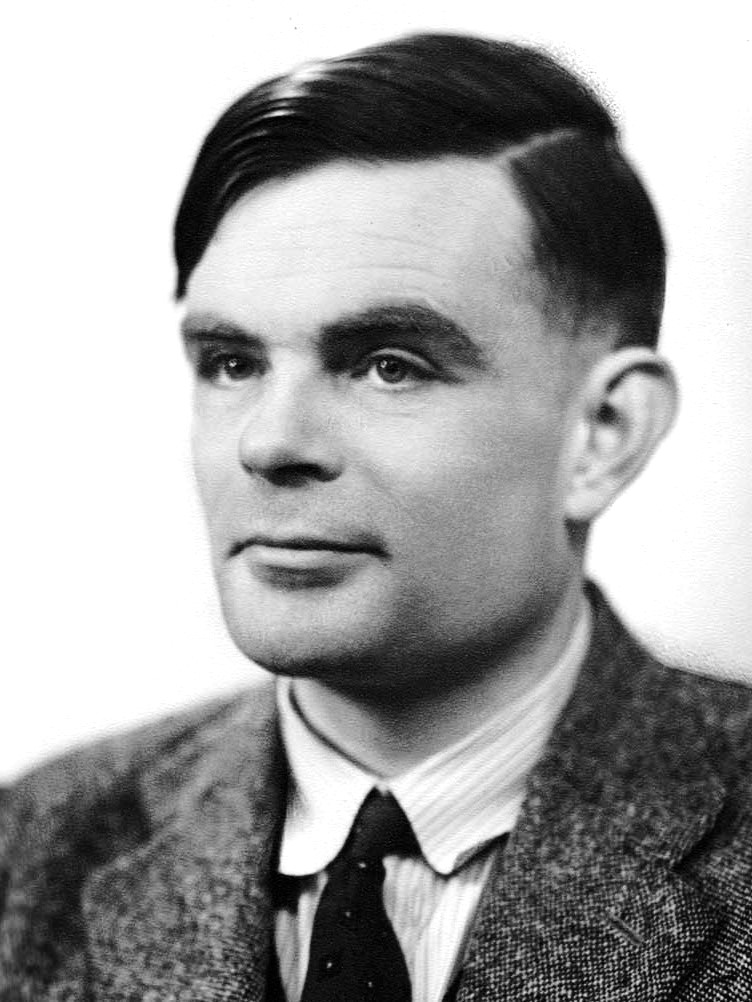
In the autumn of 1950, Alan Turing published a nine-thousand-word paper in the journal Mind that opened with a question philosophers had been wrestling with since Descartes — and then immediately declared it the wrong question. "Can machines think?" he set aside within two paragraphs. What he proposed instead was something testable, something that could in principle be answered by watching a conversation. The paper defined the terms of a debate that continues to this day, and Turing wrote it as a working mathematician at a university in Manchester, surrounded by real machines that he was already thinking about in exactly this way.
The year was 1950, and Alan Turing was thirty-eight. He had spent the war years at Bletchley Park breaking German naval Enigma, had contributed the central mathematical ideas to the British bombe machines that decrypted intercepted traffic, and had emerged from the conflict with a kind of prestige that was deeply classified. The work he had done could not be publicly discussed. What he turned to instead was a question that had been gathering in him since at least 1936, when he had published the paper on computable numbers that defined the theoretical machine now named for him: what, precisely, is the difference between what a machine does and what a mind does?
By 1950 he was working at the Victoria University of Manchester, where he held a position as Reader in the Mathematics Department and served as deputy director of the computing laboratory. The machine he worked with was the Manchester Mark 1, one of the earliest stored-program computers — a large, loud, finicky device occupying a room, operating on cathode-ray tubes, and capable of computations that would have taken human mathematicians weeks or months. It was a real machine, not a thought experiment. Turing had been programming it, running it, watching it produce outputs. The question of what it was doing was not merely academic to him; it was pressed on him daily.
The Question That Cannot Be Answered
"Can machines think?" — so the paper begins. Turing then spends exactly two paragraphs establishing why that question is unanswerable. The words "machine" and "think," he argues, carry so much philosophical freight, and their ordinary meanings are so vague and contested, that no definition agreed upon in advance could settle the dispute. If you define "think" so that only biological creatures can do it, machines obviously cannot. If you define it operationally, the question dissolves into something else. Either way, you are not learning anything interesting about machines. You are just haggling over words.
I propose to consider the question, "Can machines think?" This should begin with definitions of the meaning of the terms "machine" and "think." The definitions might be framed so as to reflect so far as possible the normal use of the words, but this attitude is dangerous.
The move Turing makes is to replace the question with a game. He calls it the Imitation Game. In its original form it has three participants: a man, a woman, and an interrogator who is in a separate room and can only communicate via typed messages. The interrogator must determine which of the other two is the woman. Both try to convince the interrogator they are the woman — the man by deception, the woman by honest claim. The game is a test of whether a human interrogator can distinguish two human respondents purely through the content and texture of written answers.
The Substitution
Turing's step — the one that made the paper famous — is to replace the man with a machine. Now the interrogator is trying to tell apart a woman from a digital computer. If the computer can perform as well as the man had in the original game — can fool the interrogator with the same frequency — then, Turing argues, we have as good a reason to call the machine able to "think" as we have to say anything. The question is not answered; it is dissolved by being made operational.
This was not, as Turing was careful to note, a definition of thought. He was not claiming that passing the game would prove consciousness, or sentience, or any philosophical property. He was claiming that the game provides a useful criterion: if a machine's outputs are indistinguishable from a human's in open conversation, the philosophical question of whether it is "really" thinking is, in practical terms, empty. The game is a proxy for a distinction we cannot otherwise draw.
He made a concrete prediction: by the end of the twentieth century, he wrote, a machine would be able to fool a human interrogator more than thirty percent of the time during a five-minute exchange. This was a specific, falsifiable claim — a rare thing in philosophy of mind.
Nine Objections Dispatched
The second half of the paper is, in some ways, more interesting than the first. Turing anticipates nine objections and addresses them in turn. This structure — the systematic dispatch of counterarguments — is unusual in scientific writing and gives the paper some of its quality as a philosophical document.
The Theological Objection holds that God has given souls to humans; machines have no soul; thinking requires a soul; therefore machines cannot think. Turing's response is measured: theology is not in a position to constrain what God might or might not choose to give a machine, and in any case this objection proves too much — by the same logic, animals cannot think either, which most people would find an awkward conclusion.
The Mathematical Objection draws on Gödel's incompleteness theorems — specifically, the result that any sufficiently powerful formal system contains propositions it cannot prove from within its own axioms. If machines are formal systems, there are questions they cannot answer, while humans apparently can. Turing's reply is shrewd: there is no evidence that humans can actually answer these Gödelian propositions either. The objection assumes a capacity for humans that has never been demonstrated.
Lady Lovelace's Objection is the one with the most historical resonance. Ada Lovelace, writing in 1843 about Babbage's Analytical Engine, had stated that the machine could originate nothing — it could only do what it was instructed to do. Turing's answer is subtle. He does not simply dismiss the point; he asks whether humans are different. If a human's responses are entirely the product of their upbringing, education, and experience, in what sense do humans "originate" anything either? He suggests the objection confuses producing unexpected outputs — which machines already do — with some deeper property of creativity that neither the objection nor its author defines clearly.
The Argument from Consciousness holds that a machine cannot truly think because it cannot feel — cannot experience the pain of losing, the pleasure of solving, the texture of genuine understanding. This is the strongest objection in philosophical terms, and Turing is honest about its limits: he cannot refute it. What he points out is that it leads directly to solipsism. You cannot verify that any mind other than your own truly has conscious experience; you infer it from behaviour and analogy. The Imitation Game is precisely an attempt to make that inference systematic.
A Paper Written Ahead of Its Field
When Turing wrote the paper, there was no discipline called artificial intelligence. That term would not be coined until 1956, when John McCarthy used it to name a summer research workshop at Dartmouth College. The paper Turing wrote in 1950 appeared six years before the field it helped define had been given a name.
His influence was not immediate. The paper circulated among philosophers and logicians through the 1950s but did not become widely known in computing circles until later. Turing himself died in June 1954, at forty-one, under circumstances that remain painful to recount: he had been prosecuted in 1952 for gross indecency under laws then in force in Britain, had been subjected to a course of chemical treatment as an alternative to prison, and had not recovered from what followed. The coroner returned a verdict of suicide. In 2013 the British government issued a posthumous royal pardon.
The Turing Test, as his Imitation Game came to be called, has been criticised, extended, and argued about ever since. The philosopher John Searle's Chinese Room argument, published in 1980, is perhaps the most cited attack on it — the claim that passing the test demonstrates only that a machine can simulate understanding, not that it possesses it. This is substantially the Argument from Consciousness in a new guise, and Turing had anticipated its shape thirty years earlier. Whether his reply to it is satisfying remains genuinely open.
What the paper achieved, in the end, was to frame a question that could not be dissolved by philosophical redefinition. The Imitation Game is not a test of consciousness; Turing never claimed it was. It is a test of conversational indistinguishability — a precise, operational criterion that any competent engineer can attempt to satisfy and any competent judge can attempt to defeat. That precision is why the paper still anchors the debate. The question it points at — what would it mean to say that a machine understands — is no closer to being settled than it was in 1950. But the terms in which serious people argue about it were substantially set by a nine-thousand-word paper published in a philosophy journal by a mathematician at Manchester, in the autumn before the field that would carry the question had even been given a name.