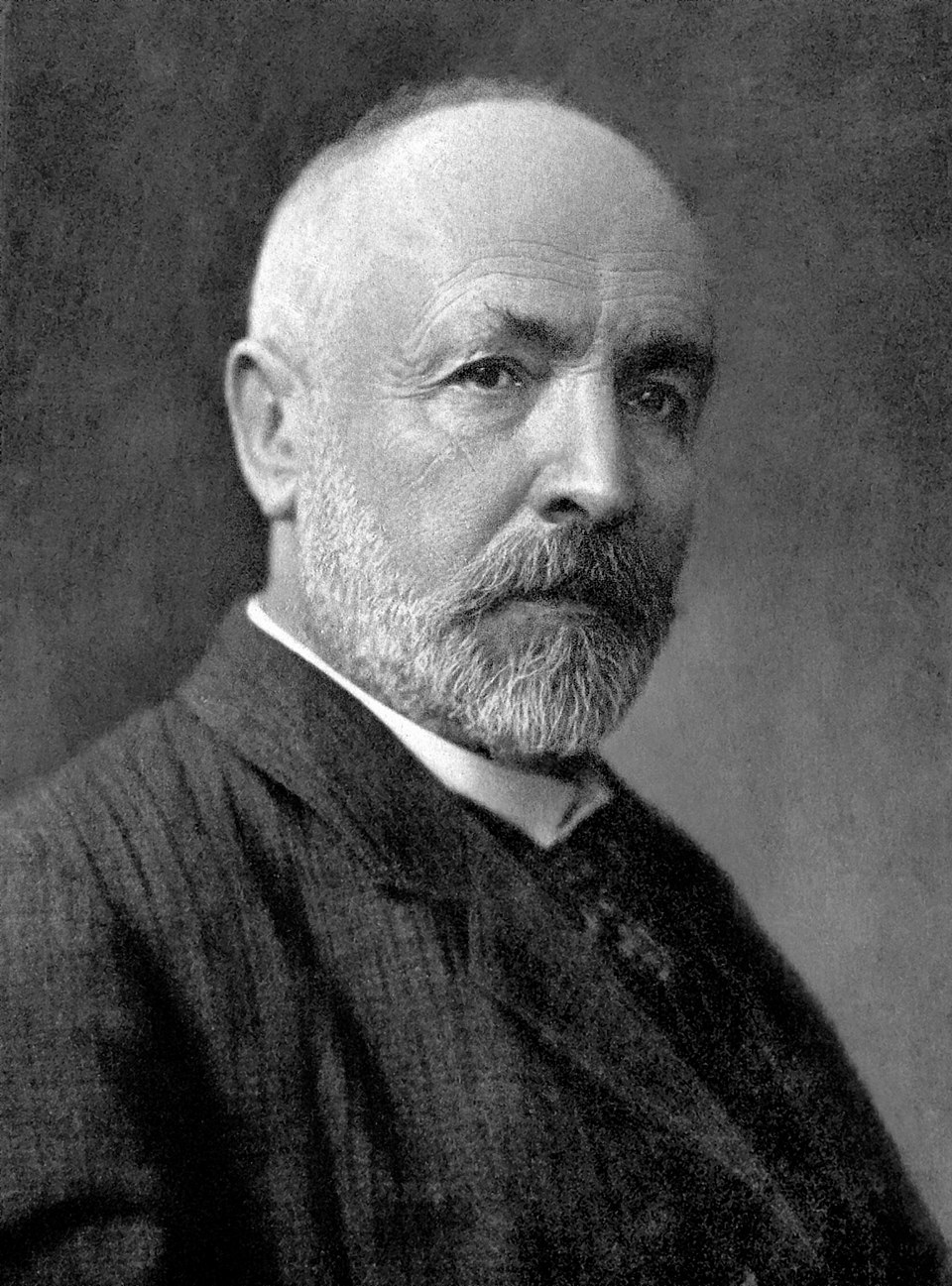
Alan Turing
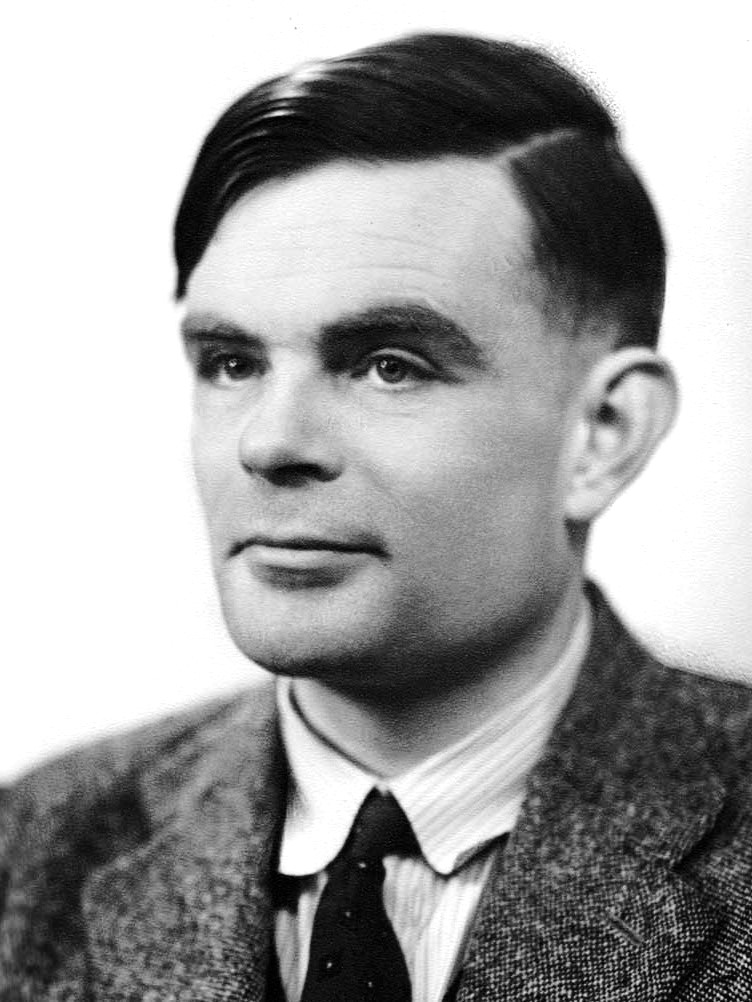
The mathematician who gave computation its theoretical foundation — and whose wartime codebreaking shortened the Second World War at a cost the British state would later inflict on him personally.
Alan Turing formalised what it means to compute before computers existed. The abstract model he constructed in 1936 — a tape, a head, a set of rules — remains the theoretical bedrock on which every modern machine is built. That he spent his final years under state prosecution for his sexuality is an injustice inseparable from his story.
King's College and the Entscheidungsproblem
Turing read mathematics at King's College, Cambridge, graduating in 1934 and being elected a Fellow in 1935. The following year, responding to David Hilbert's Entscheidungsproblem — whether there exists a definite method for deciding any mathematical assertion — Turing published "On Computable Numbers, with an Application to the Entscheidungsproblem." The paper introduced the Turing machine: an idealised device that manipulates symbols on an infinite tape according to a finite table of rules. Turing showed that no such universal decision procedure could exist, but the concept he invented to prove this negative result turned out to be a complete model of mechanical computation.1
He then moved to Princeton, where he completed a doctorate under Alonzo Church — whose lambda calculus had independently reached similar conclusions — before returning to Cambridge in 1938.
Bletchley Park
At the outbreak of the Second World War Turing joined the Government Code and Cypher School at Bletchley Park. He was central to breaking the German naval Enigma cipher. His adaptation and improvement of the Polish bombe — an electromechanical device for eliminating false Enigma settings — dramatically increased the volume of decrypted German signals traffic. Historians credit the intelligence gained at Bletchley, in part due to Turing's work, with significantly shortening the war. He was awarded an OBE in 1946.
Computing Machines and Intelligence
After the war Turing worked at the National Physical Laboratory and later at the University of Manchester, contributing to early stored-programme computer designs. In 1950 he published "Computing Machinery and Intelligence" in the journal Mind, proposing what he called the Imitation Game — now known as the Turing test — as a practical criterion for machine intelligence. The paper's opening question, "Can machines think?", remains the founding provocation of artificial intelligence research.
He also published foundational work on mathematical biology, proposing reaction-diffusion systems as a mechanism for the pattern formation seen in animal markings — a field now called morphogenesis.
Prosecution and Death
In 1952 Turing was prosecuted for gross indecency under laws criminalising homosexual acts. He accepted chemical castration rather than prison. He died on 7 June 1954; the inquest returned a verdict of suicide by cyanide poisoning, though some scholars have disputed this. The British government issued a formal apology in 2009; a royal pardon followed in 2013.
We can only see a short distance ahead, but we can see plenty there that needs to be done.
Footnotes
- The Church–Turing thesis, developed in the years after, holds that any function computable by any effective method can be computed by a Turing machine — a claim that remains unrefuted but, by its nature, unproven. ↩