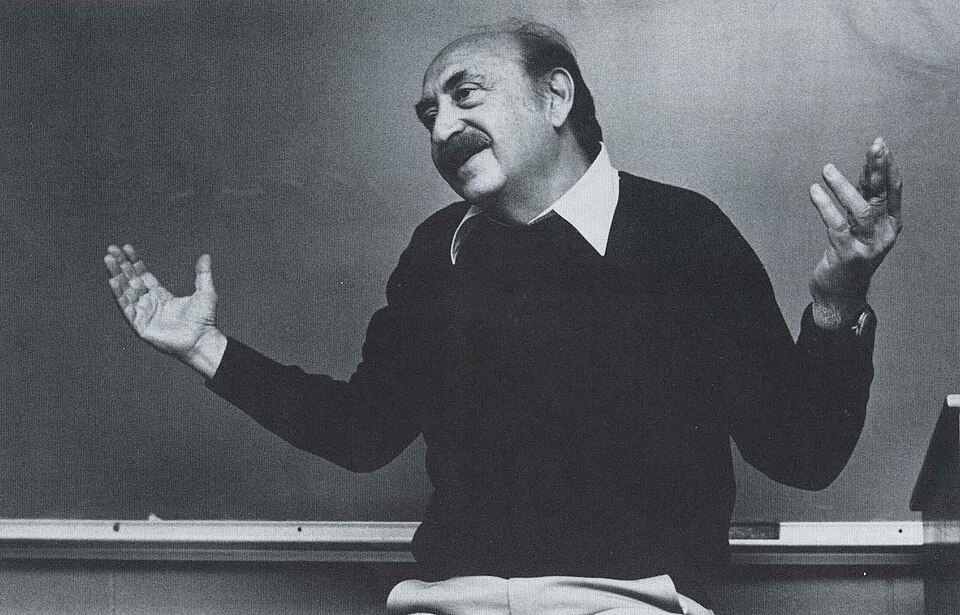
Henry Dreyfuss
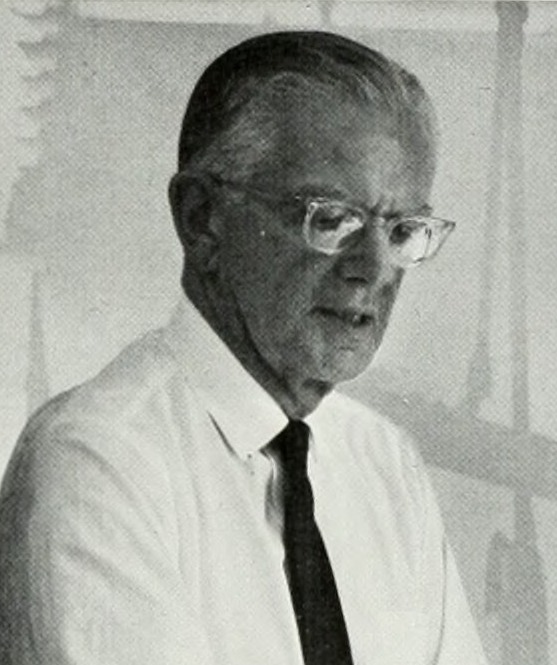
The New York designer who measured the human body and built its dimensions into everything — the telephone receiver, the tractor, the aeroplane cabin — arguing that design fails unless it fits the person using it.
Henry Dreyfuss founded his practice on a single proposition: that a product exists to serve its user, and that the user's body is therefore the designer's primary material. In a career that ran from theatrical set design through industrial design consultancy, he shaped objects used by tens of millions of Americans daily — telephones, thermostats, tractors — and gave the discipline of ergonomics its most influential popular statement.
Theatre and the turn to products
Dreyfuss was born in Brooklyn in 1904 and trained in the theatre, working as a stage designer for Norman Bel Geddes. The connection to Bel Geddes put him close to the emerging professional practice of industrial design in the late 1920s, and in 1929 he opened his own design office in New York. His early commissions included alarm clocks for Westclox and appliances for RCA.
The telephone
His most consequential single design was the Western Electric Model 500 telephone, introduced in 1949. The 500 replaced the two-piece candlestick telephone with a combined handset that integrated transmitter and receiver in a single form sized to the human face. Every dimension — the distance between mouthpiece and earpiece, the curve of the grip, the weight and balance of the receiver — was derived from measurements of the human body. It became the defining telephone form for a generation and sold in the hundreds of millions.
He applied the same method to the Honeywell T87 Round Thermostat (1953), a disc of circular simplicity that has remained in production essentially unchanged. The form followed from an analysis of how a device mounted on a wall would be read and operated at arm's length.
The most efficient machine is the one that is built around the person who will run it.
Humanizing the Machine
In 1955 Dreyfuss published Designing for People, a book that placed human factors at the centre of design methodology and introduced the lay reader to the discipline through accessible prose and diagrams. His two fictional archetypes — Joe and Josephine, male and female American figures representing average human dimensions — were charted in detail in his 1960 reference work The Measure of Man, which became a standard reference for designers and engineers.
He also worked at the largest scales: his studio designed interiors and equipment for Lockheed aircraft, John Deere farm machinery, and American Airlines, bringing the same ergonomic attention to the cockpit and the tractor cab that he had applied to the handset.
Legacy
Dreyfuss died in 1972, along with his wife Doris Marks, in what was ruled a suicide pact — the couple had been unwell and had decided to die together. He was sixty-eight. His contribution to design thinking is foundational: the insistence that human measurement, rather than stylistic preference or engineering convenience, should drive form is now the basis of ergonomics and human-centred design as professional disciplines. The Model 500 telephone remains one of the most thoroughly studied industrial design objects of the twentieth century.