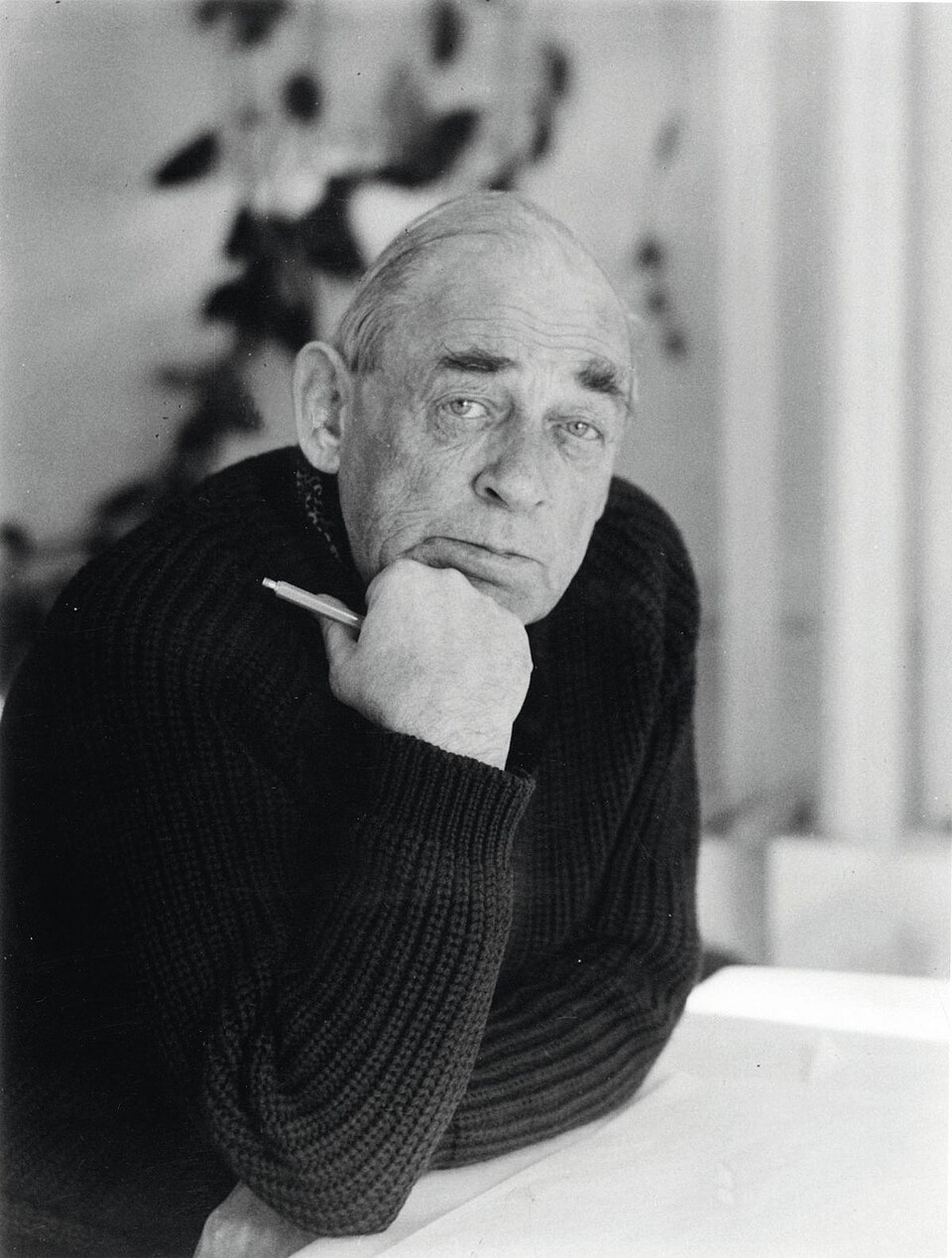
Josef Albers
The German-American artist who turned colour into a discipline — teaching generations of designers that what we see is always modified by what surrounds it.
Josef Albers spent his career demonstrating that colour has no fixed identity — that every hue is transformed by its neighbours — and codified this insight in a series of paintings and a single book that remain foundational to design education worldwide.
Origins and the Bauhaus
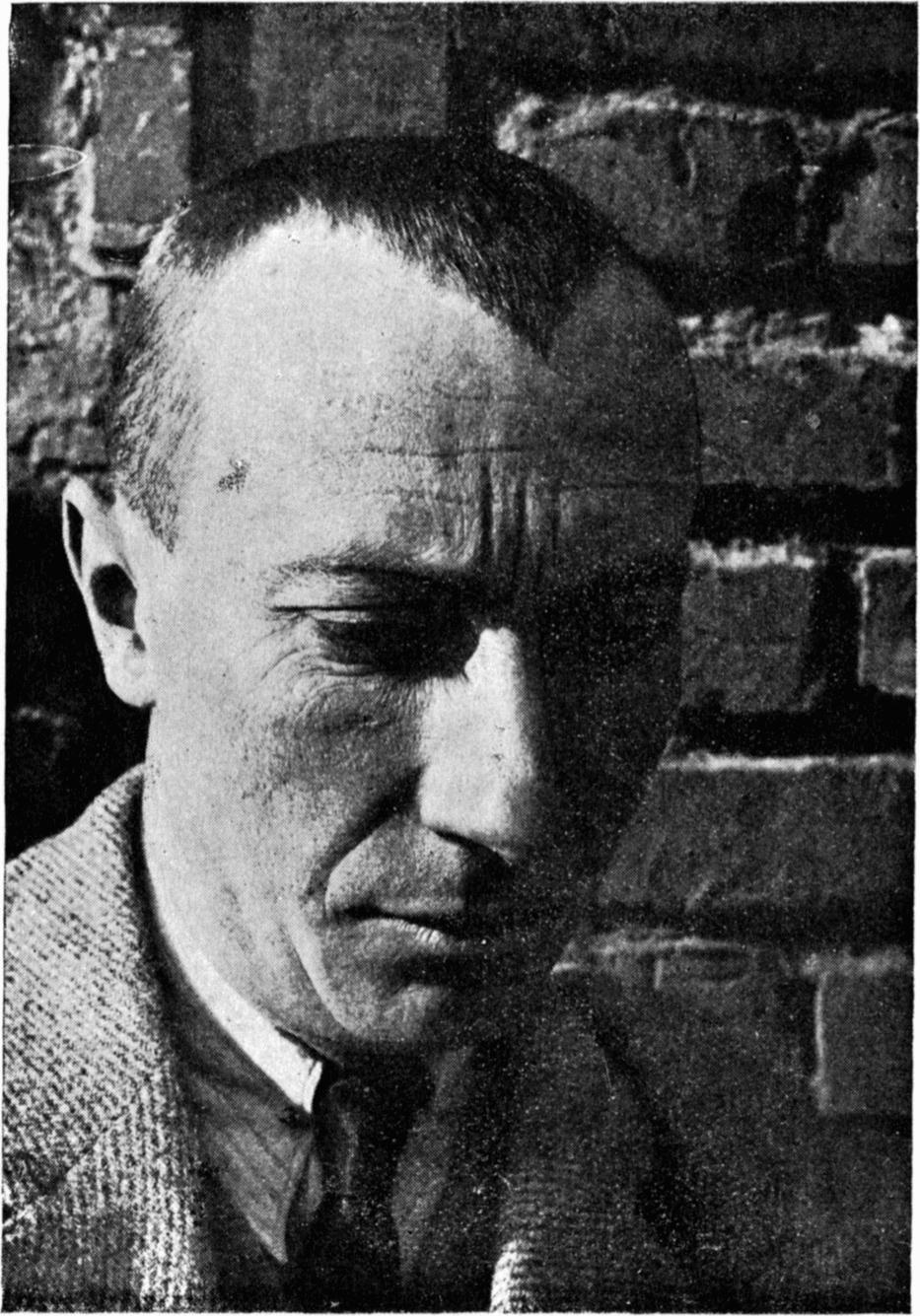
Albers was born in 1888 in Bottrop, Westphalia, into a family with practical craft traditions. He worked as a schoolteacher before studying art and enrolling at the Bauhaus in Weimar in 1920, initially as a student. His abilities were quickly recognized and he was appointed a master — the Bauhaus's term for faculty — taking charge of the preliminary course and later the furniture and glass workshops. He was a master of glass and furniture, producing work in both materials that demonstrated the Bauhaus principle of integrating fine and applied arts.
When the Bauhaus was closed by the Nazis in 1933, Albers emigrated to the United States. He was among the first Bauhaus masters to cross the Atlantic, and his arrival marked a turning point in the transfer of European modernist pedagogy to American institutions.
Black Mountain College
Albers and his wife, the weaver and textile artist Anni Albers, joined Black Mountain College in North Carolina in 1933. The experimental liberal arts college, founded the same year, gave Albers a context in which to develop his approach to art education — built on direct material investigation and the study of visual perception rather than historical precedent or received technique. He taught at Black Mountain until 1949, influencing students who would become central figures in American postwar art and design.
In visual perception, a color is almost never seen as it really is — as it physically is. This fact makes color the most relative medium in art.
Homage to the Square
In 1949 Albers began the series for which he is most widely known: Homage to the Square. Each painting consists of three or four nested squares of colour, identical in format, varying only in the specific colours used and their relationships. By holding the compositional variable constant, Albers isolated colour interaction as the sole subject. Hundreds of works in the series were produced over the following twenty-five years, each a controlled experiment in perception: how a colour appears to advance or recede, to warm or cool, to be luminous or opaque, depending entirely on what surrounds it.
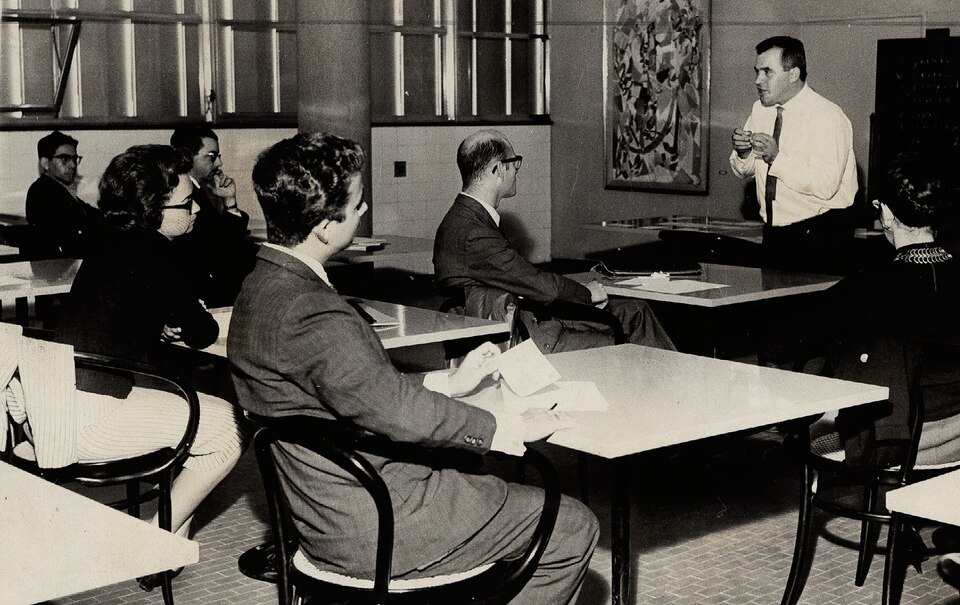
He headed the design department at Yale University from 1950 to 1960, bringing the same empirical discipline to American graduate design education.
Interaction of Color
In 1963 Albers published Interaction of Color, a book and portfolio that formalised his teaching method. The text is brief; the argument is carried by the plates — colour exercises designed to demonstrate specific perceptual phenomena. The book was widely adopted as a teaching text and has remained in print and in use for over sixty years, translated into multiple languages and issued in revised editions.
Legacy
Albers's influence on subsequent design and art education is difficult to overstate. His empirical approach — test the material, observe the result, distrust assumptions — shaped generations of graphic designers, architects, and artists on both sides of the Atlantic. The systematic method of Homage to the Square anticipated aspects of both Minimalism and Op Art, though Albers's own concerns were strictly perceptual rather than aesthetic or decorative.