Hermann Zapf
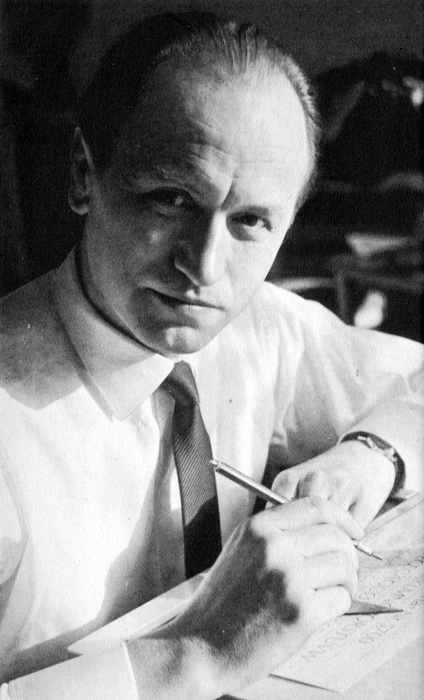
The calligrapher who translated the discipline of the pen into the precision of type, giving the twentieth century two of its most enduring letterforms.
Hermann Zapf began his career with a calligraphy manual borrowed from a library and no formal training; by the end of a seven-decade practice he had designed typefaces used by virtually every Western publisher, setting the standard for how classical letterform tradition translates into reproducible type.
Self-taught in Nuremberg
Zapf was born in Nuremberg in 1918, the year the German Empire collapsed. Barred from an apprenticeship in electrical engineering for political reasons, he taught himself calligraphy from Rudolf Koch's Das Schreiben als Kunstfertigkeit and Edward Johnston's Writing and Illuminating and Lettering. By his early twenties he was working at the Paul Koch printing house in Frankfurt, cutting punches by hand and absorbing the full tradition of European letterpress craft.
The self-taught foundation mattered: Zapf never lost sight of the pen stroke beneath the metal punch. His typefaces retain a legible calligraphic axis — the slight lean and modulated stroke weight that tells the eye where the letter came from, even at display sizes.
Palatino and Optima
His two landmark typefaces appeared within a decade of each other and defined opposite poles of humanist type design. Palatino (1949), named after the Renaissance calligrapher Giambattista Palatino, is a broad-nibbed roman — generous proportions, open counters, and a warmth that makes extended text readable without effort. It became one of the most widely used typefaces in the world.
Optima (1958) is more unusual: a sans-serif with a calligraphic swelling on each stroke, a face that is neither fully geometric nor fully humanist but something genuinely new. Zapf described it as a "serifless roman." Its elegance suited both high-fashion typography and institutional use, and it remains in active circulation.
A type designer knows that when he finishes a typeface it is only the beginning of the typeface's life.
Method and materials
Zapf drew his letterforms first with broad-nib pens, then refined them with brushes and ruling pens before committing to the steel punch. He was among the earliest type designers to engage seriously with digital tools, working with Bitstream and later with URW in Hamburg on digital revivals of his own work. His late typeface Zapfino (1998) — an ornate script — was designed specifically for the expressive possibilities of OpenType's contextual alternates, allowing different glyphs to appear depending on neighbouring letters.
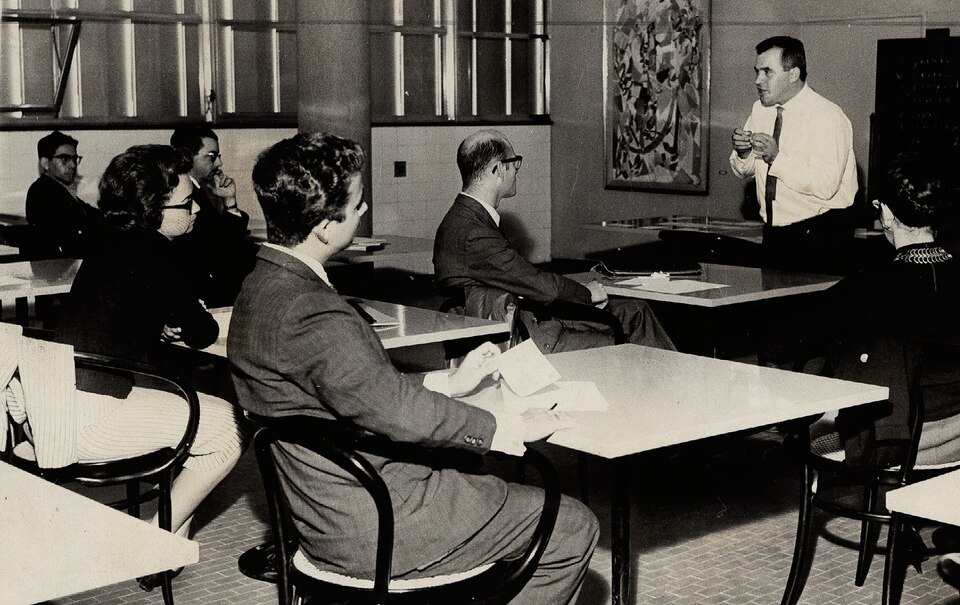
He also spent decades at the Rochester Institute of Technology, teaching typographic design and writing extensively about the history and theory of letterforms.