Jasper Morrison
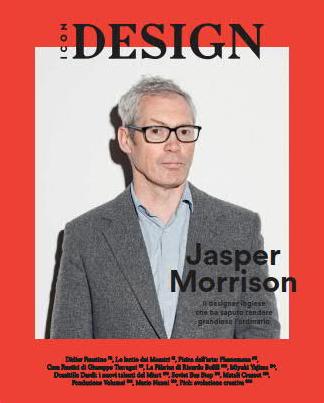
The English product designer whose philosophy of purposeful understatement — Super Normal — redefined what it means for an object to be good.
Jasper Morrison has spent four decades arguing, through objects rather than manifestos, that the best design is nearly invisible — that a chair, a kettle, or a spoon should fit so naturally into daily life that its presence goes unremarked. The difficulty of that simplicity is the subject of his work.
Formation
Morrison was born in London and studied industrial design at Kingston Polytechnic and the Royal College of Art, completing graduate work in Berlin at the HdK (Hochschule der Künste). In Berlin he encountered a culture of rigorous, craft-centred product design that reinforced his instinct toward restraint. His early work — shown at the Design Centre in London and at furniture fairs in Milan — drew immediate critical attention for what it refused to do: it made no claims, announced no personality, asserted no style.
Objects and practice
Morrison's professional output spans furniture, tableware, kitchen equipment, transport interiors, and public seating. His clients include Vitsœ, Muji, Flos, Magis, Rosenthal, and the Hanover tram system. The range is significant: Morrison applies the same principle — appropriate form, right material, no more than necessary — across scales and categories.
Specific works that have entered the design canon include the Ply Chair (1988), the Air Chair for Magis (1999) — one of the first one-piece polypropylene gas-injection chairs — and tableware ranges for Muji and Alessi that are now in mass production globally. His public seating for the London Underground and Hanover's tram network demonstrates that the principles scale to infrastructure.
Objects should never shout.
Super Normal
In 2006 Morrison and the Japanese designer Naoto Fukasawa curated Super Normal, an exhibition first staged in Tokyo, subsequently in London and other cities. The exhibition assembled everyday objects — anonymous, worn, useful — chosen not for their design novelty but for their quality of having arrived at the right form. The accompanying book articulated a position: design should aspire to the condition of the anonymous functional object that has been refined over time until nothing further can be removed.
The concept draws on a tradition — Shaker furniture, pre-war Swiss office tools, Japanese household goods — in which usefulness and quietness are the same thing. It has been one of the most discussed frameworks in twenty-first-century product design thinking.
Method and legacy
Morrison's studio maintains offices in London and Paris and operates across product, furniture, and spatial design. He approaches each commission through sustained observation of use: how an object sits in a hand, where it lives when not in use, what it costs to make honestly. The resulting work has a material specificity — attention to texture, weight, and finish — that distinguishes it from work that achieves visual simplicity through formal reduction alone.
His influence is substantial in the field: a generation of designers has absorbed the lesson that restraint is an active discipline rather than a default, and that the most useful objects are often those that have been most carefully considered.