Jonathan Ive
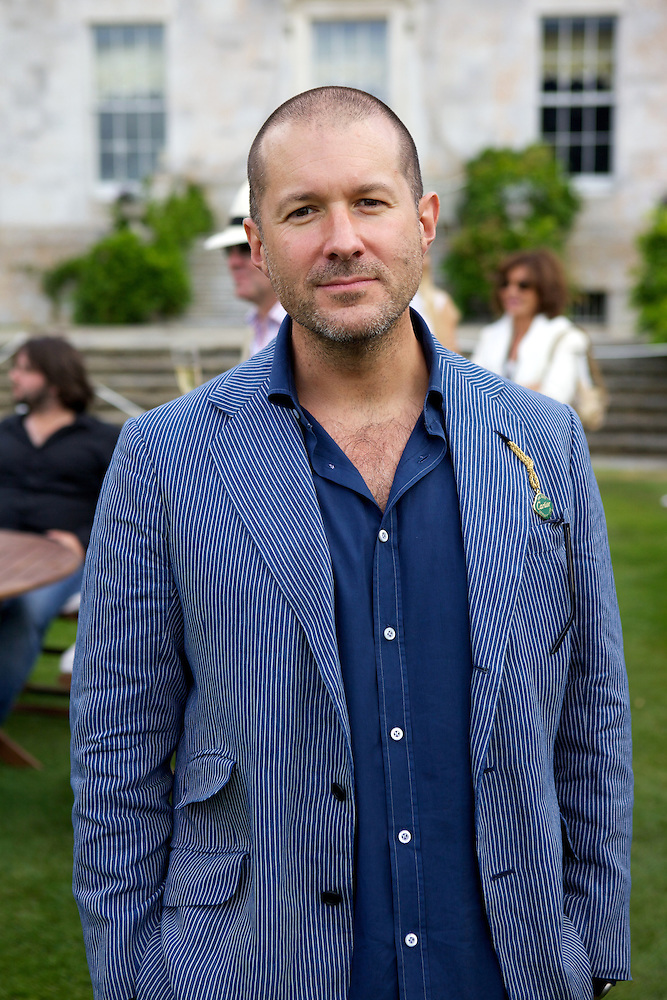
The designer who remade Apple's objects into cultural touchstones, then left to define what comes next.
Jonathan Ive spent nearly three decades at Apple shaping the physical language of personal computing — from the translucent iMac G3 to the iPhone and iPad — and in doing so helped shift industrial design from a service function into the front-line of corporate strategy. Since founding LoveFrom in 2019 he has extended that influence across mobility, hospitality, and artificial intelligence.
Formation
Ive studied at Newcastle Polytechnic (now Northumbria University), graduating in 1989 with a degree in industrial design. A student project — a hearing aid whose form expressed care rather than disability — won a Royal Society of Arts award and signalled the ethical and empathic instincts that would define his career.1 After a period at the London consultancy Tangerine, he joined Apple in 1992, initially as a designer and soon as head of the industrial design group.
The Apple Years
The first decisive moment came in 1998 when Ive's team produced the iMac G3: a translucent, coloured shell that declared computers could be cheerful and approachable. The product reversed Apple's financial slide and established a visual vocabulary — clean geometry, material honesty, restrained colour — that would run through everything that followed.
The decade from 2001 onward produced a sequence of objects that became reference points in industrial design history: the iPod (2001), the aluminium PowerBook and MacBook Pro line, the original iPhone (2007), and the iPad (2010). Each collapsed the gap between utility and desire. Ive took an increasingly direct hand in software as well: appointed Chief Design Officer in 2015, he oversaw the flattened aesthetic of iOS 7 (2013), a break from the skeuomorphic style he himself had inherited.
His method centred on obsessive material research, physical prototyping, and a small, tightly controlled team insulated from broader corporate pressures. He worked closely with Steve Jobs; their collaboration was characterised by mutual challenge and by Jobs's willingness to treat design as an argument rather than a deliverable.
Approach and Influence
Ive's design philosophy prizes reduction: removing elements until nothing superfluous remains, then questioning whether what remains is still necessary. He drew explicitly on the Braun tradition — particularly Dieter Rams's work — while translating it into mass manufacturing at unprecedented scale. The aluminium unibody machining process developed for MacBooks, for instance, became an industry standard.
| Object | Year | Distinction |
|---|---|---|
| iMac G3 | 1998 | Colour + translucency in consumer electronics |
| iPod (1st gen) | 2001 | Scroll wheel interaction model |
| iPhone (1st gen) | 2007 | Full-face touchscreen smartphone |
| Apple Watch | 2015 | Luxury materials in wearable computing |
After Apple
Ive departed Apple in 2019 to found LoveFrom, a creative collective structured deliberately to work across industries. The studio has collaborated with Ferrari on vehicle and brand identity, Airbnb on spatial and service design, and OpenAI on interfaces and brand expression. In parallel, Ive has served as Chancellor of the Royal College of Art since 2017.
Simplicity is not the absence of clutter; that's a common misunderstanding. Simplicity is somehow essentially describing the purpose and place of an object and product.
Footnotes
- The hearing aid project is documented in accounts of Ive's student work and cited in multiple design retrospectives, though no single authoritative source is given for the exact award details — the RSA prize is well-established. ↩