Konstantin Grcic
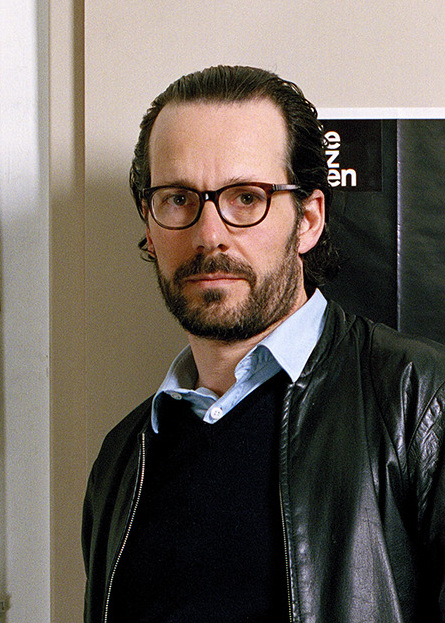
The Munich-based designer who brought hard-edged industrial geometry to furniture and household objects, making function and structure the sole source of form.
Konstantin Grcic designs objects that make no concession to warmth — angles are sharp, geometries are explicit, and the industrial process that made the object is never hidden. This rigour, applied consistently across furniture, lighting, and everyday products, has made him one of the most influential European designers of his generation and a persistent argument against the seductions of organic softness.
Formation
Konstantin Grcic was born in Munich in 1965. He trained first as a cabinet maker in England — a craft foundation that gave him direct knowledge of how furniture is made and how materials behave under load — before studying at the Royal College of Art in London, where he graduated in 1990.
The combination of craft training and design education was deliberate: Grcic has described the cabinetmaking apprenticeship as essential to understanding objects from the inside rather than the surface. This materialist instinct would define his practice.
In 1991 he returned to Munich and founded KGID (Konstantin Grcic Industrial Design), a studio that has remained small by choice, working with a concentrated roster of manufacturers.
Chair One and the geometric language
The object that brought Grcic's name into broad design conversation is Chair One (2004), made for the Italian manufacturer Magis. A seat shell of die-cast aluminium — faceted, open, and angular, like a geodesic fragment — sits on a concrete base. The form is entirely structural: the faceted panels distribute load without the need for continuous casting, and the angles are a direct consequence of the fabrication method. There is no decoration.
Chair One was exhibited in major design collections and became one of the defining objects of early twenty-first century design — significant because it refused both the organic softness of the 1990s and the ironising nostalgia that was beginning to appear in European furniture.
Good design happens when you accept the limits of the material and let them make the decisions.
Method and clients
Grcic works through intensive negotiation with the manufacturing process. His Mayday lamp for Flos — a polypropylene funnel on a long cable — made a utilitarian inspection lamp into a domestic object by changing only its surface quality and hook. His designs for Muji, Plank, and Vitra show similar economy: the problem is stated precisely and solved without surplus.
His approach has been described as post-functionalist — not functionalism in the Modernist sense of aesthetic neutrality, but a position in which function is made visible and the object's logic is its identity.
Influence and standing
Grcic has been represented in the permanent collections of MoMA and the Design Museum London, and has lectured and taught at design schools across Europe. His influence is most visible in the generation of designers who trained in the 2000s and 2010s, for whom the explicit display of structural logic became a baseline rather than a position.