Marc Newson
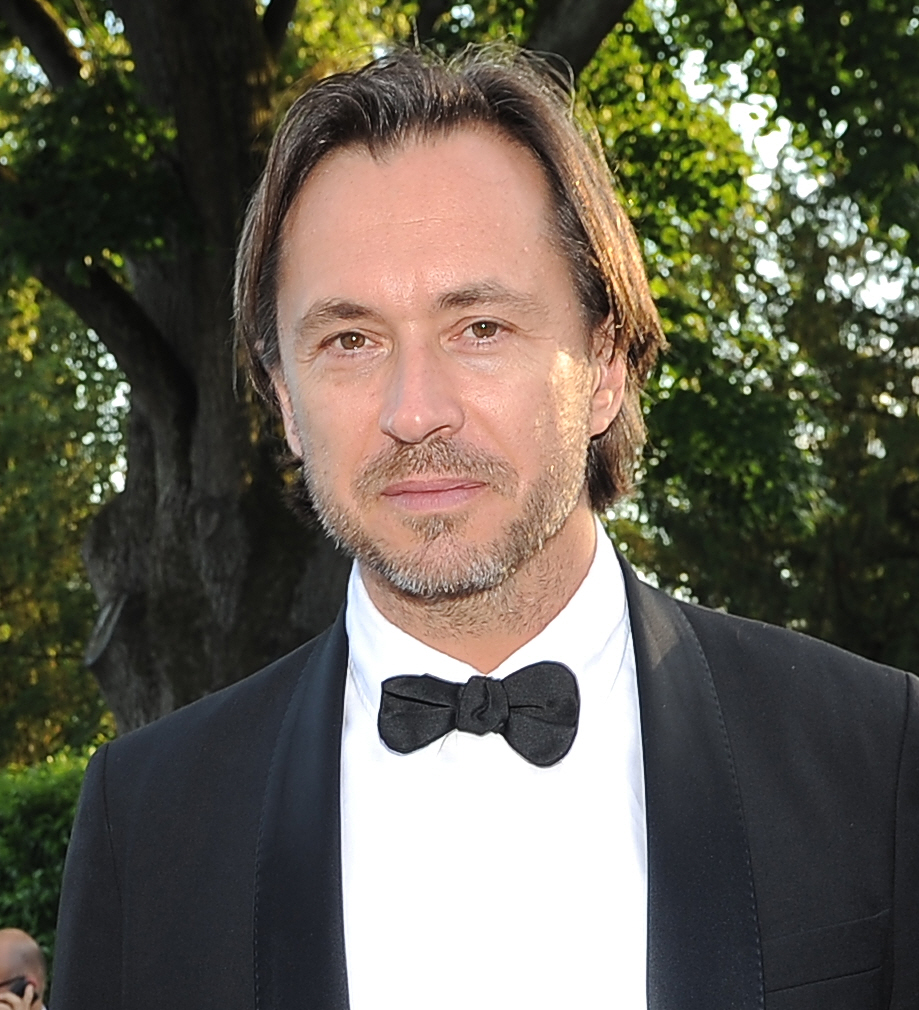
The Australian designer whose organic, riveted, and luminously surfaced objects made futurism feel tactile rather than cold.
Marc Newson has spent four decades designing objects that look as though they arrived from another decade — not a retrofuturist fantasy but a cleaner, more coherent material world where surfaces flow without interruption and the distinction between furniture, vehicle, and sculpture is mostly administrative. Beginning with the riveted aluminium of the Lockheed Lounge in 1986, he established a formal language so distinctive it became synonymous with his name.
Formation
Marc Andrew Newson was born on 20 October 1963 in Hornsby, New South Wales, Australia. He studied jewellery and sculpture at the Sydney College of the Arts, graduating in 1984 — a training that gave him a jeweller's attention to material surface and a sculptor's indifference to the boundary between art and object. His first major work emerged directly from that education.
The Lockheed Lounge
The Lockheed Lounge (1986) is a chaise longue sheathed in hand-applied riveted aluminium — a fiberglass form covered in thousands of small metal buttons that catch the light differently from every angle. The name references the American aircraft manufacturer; the surface references streamlined industrial forms; the result is an object that looks simultaneously historical and imaginary.
It was made in an edition of ten and initially sold for modest sums. At auction in subsequent decades it became one of the most valuable works by a living designer — a measure of how completely Newson's signature was legible in the form and how durable that legibility has proved.
I want things to feel like they belong to the future we were promised but haven't arrived at yet.
Tokyo, Paris, London
Newson moved to Tokyo in the late 1980s, where he designed the Dish Doctor drainer and the Embryo Chair (1988) in neoprene-upholstered steel, and worked with the Idée furniture company. He moved to Paris in the early 1990s and later established studios in London, where his practice expanded from furniture and products into transportation and architecture.
His Ford 021C concept car (1999) applied his formal language to automobile design: smooth, uninterrupted surfaces, retractable elements, an interior designed as a continuous space. The project demonstrated that Newson's approach was transferable beyond the studio scale.
Material range and Apple
Newson has worked across an unusual range of materials and scales — aluminium, fibreglass, polypropylene, glass, titanium — and with manufacturers including Cappellini, Flos, Magis, Nike, and Louis Vuitton. His work in fashion and luxury goods treats accessories and luggage with the same formal rigour he applies to furniture.
From around 2013 he worked with Apple, collaborating on design projects including the Apple Watch — bringing his attention to small-scale material refinement to the world's most scrutinised consumer electronics.