Muriel Cooper
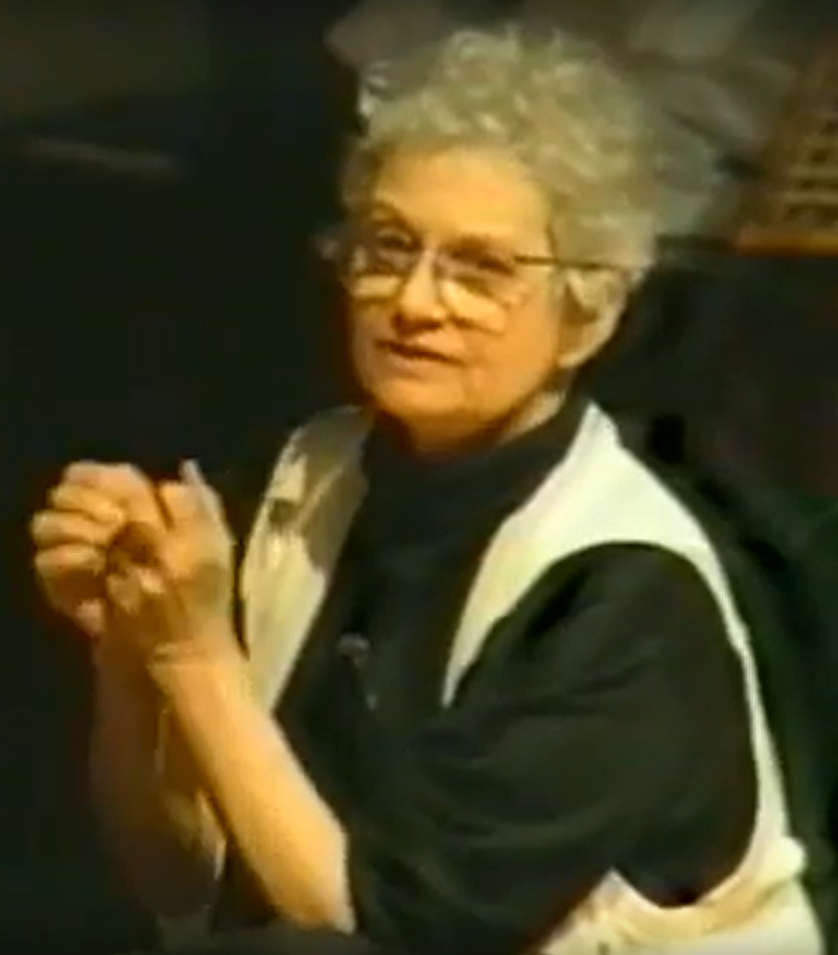
The MIT designer who moved from the Bauhaus-inflected printed page to the uncharted territory of dynamic information space — and arrived there before anyone knew the territory existed.
Muriel Cooper spent the first half of her career making MIT Press books that looked unlike any academic press books of their time, and the second half building computational tools for dynamic typography — imagining screens as design space a decade before screens were capable of delivering what she envisioned.
From Brookline to MIT
Cooper grew up in Brookline, Massachusetts, studied at the Massachusetts College of Art, and began her professional life as a designer in the early 1950s. She joined MIT Press in 1952 and eventually became its first Design Director — a position she shaped into something far beyond a production role. She applied a Bauhaus-informed sensibility to every publication: strong typographic hierarchy, rational grid structure, photographs integrated into the argument rather than decorating it. The covers she designed for MIT Press are recognisable for their directness.
The Press and Bauhaus influence
Her most celebrated single design is the jacket and interior of Learning from Las Vegas by Robert Venturi, Denise Scott Brown, and Steven Izenour (1972). She also designed The Bauhaus (1969), a catalogue for the MoMA exhibition that became the defining popular account of the movement — a book whose layout she controlled to a degree unusual for the time. Cooper's work at MIT Press demonstrated that an academic publisher could have a visual identity as deliberate as any corporate communications programme.
The Visible Language Workshop
In the 1970s Cooper founded the Visible Language Workshop (VLW) at MIT, a research group that treated typography and graphic design as computational problems. The workshop explored dynamic type, interactive layouts, and information visualisation at a time when such possibilities existed only theoretically. She was among the earliest designers to understand that the computer was not a tool for imitating print but a medium with its own spatial and temporal properties.
We design the medium, not just the message.
TED5 and legacy
Cooper presented her work at the TED5 conference in 1994, demonstrating three-dimensional information landscapes — layered text floating in navigable space — that astonished the audience. She died of a heart attack two weeks later, at the age of sixty-eight. The demonstration she gave at TED5 is considered prophetic of what would later be called information visualisation and interface design. In 2007 the New York Times called her "the design heroine you've probably never heard of." She co-founded the MIT Media Lab, which became one of the world's most influential technology and design research institutions.