Naoto Fukasawa
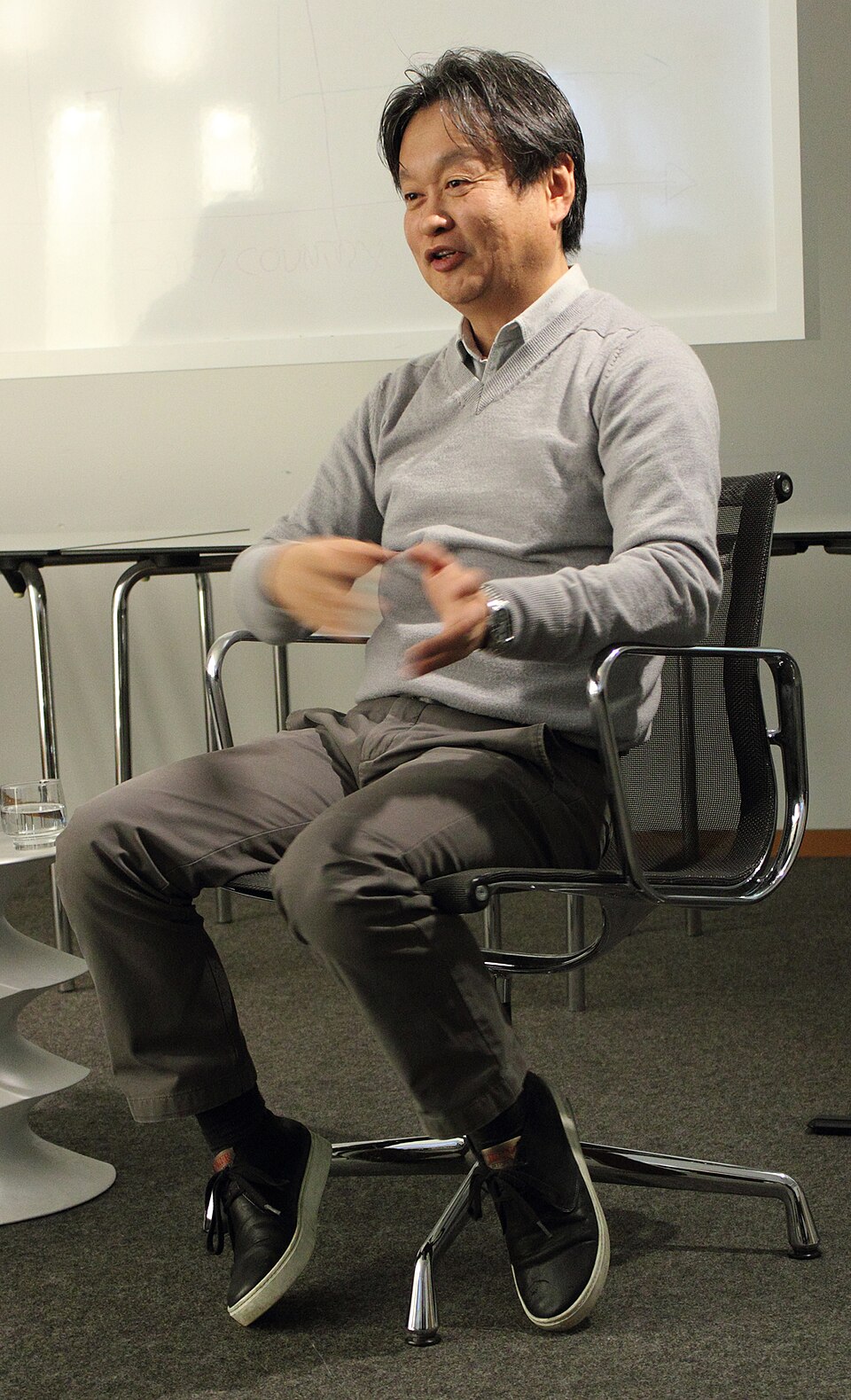
The Japanese designer whose concept of "without thought" became the most precise formula for objects that disappear into use.
Naoto Fukasawa designs objects that ask nothing of their users — products so attuned to human behaviour and context that they seem to have always existed. His concept of "Without Thought" (muishiki) is not a slogan but a methodology: studying the unconscious gestures people already make, then building objects that fulfil those gestures before they are consciously formed.
Formation
Fukasawa studied industrial design at Musashino Art University in Tokyo. After graduating he worked for Seiko Epson in Japan before joining IDEO, the American design consultancy, eventually heading its Tokyo office. These years in industrial consulting gave him exposure to large-scale manufacturing processes and human-factors research, both of which would inform his later independent practice. He established Naoto Fukasawa Design in 2003.
Without Thought
The concept of Without Thought emerged from a series of workshops Fukasawa organised in Japan beginning in 1999, in collaboration with the design community around Muji. The workshops asked participants to observe how people actually interact with objects — the way a hand rests on a table, how someone reaches for a light switch in the dark, the instinctive angle at which a cup is held. Products designed for these pre-cognitive gestures dissolve into the environment rather than demanding attention.
The wall-mounted CD player he designed for Muji, in which the disc housing resembles a ventilation fan and a cord is pulled to start play, became the canonical example: the gesture of pulling a cord was already familiar; the product merely borrowed it. The object now belongs to the permanent collection of the Museum of Modern Art in New York.
His extended relationship with Muji as one of its principal designers ran parallel to his independent practice. He has also designed for B&B Italia, Herman Miller, Alessi, Emeco, Maruni, Magis, and the Danish brand HAY, among many others — a range that spans budget consumer goods to high-end contract furniture.
Form and Material
Fukasawa's objects are distinguished by a kind of geometric modesty: few superfluous curves, materials used for their inherent character rather than their novelty, and proportions calibrated to comfort in the hand or eye rather than to visual spectacle. He is not a minimalist in the sense of pursuing blankness; he pursues rightness — the form that feels inevitable once seen.
| Client | Object | Distinction |
|---|---|---|
| Muji | Wall-mounted CD player | MoMA permanent collection |
| Maruni | Hiroshima chair | Best-selling Japanese chair design |
| B&B Italia | Various seating | International contract market |
| HAY | Various furniture | Scandinavian retail design |
He has written and lectured extensively on design theory, and his book Naoto Fukasawa (Phaidon, 2007) — edited by Jasper Morrison — placed his work in a wider conversation about the nature of simplicity in design.1
Design dissolves in behaviour. The ideal product is one you never notice — because it already fits.
Footnotes
- Fukasawa and Morrison later co-authored Super Normal: Sensations of the Ordinary (Lars Müller Publishers, 2007), articulating a shared vision for objects that achieve meaning through ordinariness rather than novelty. ↩