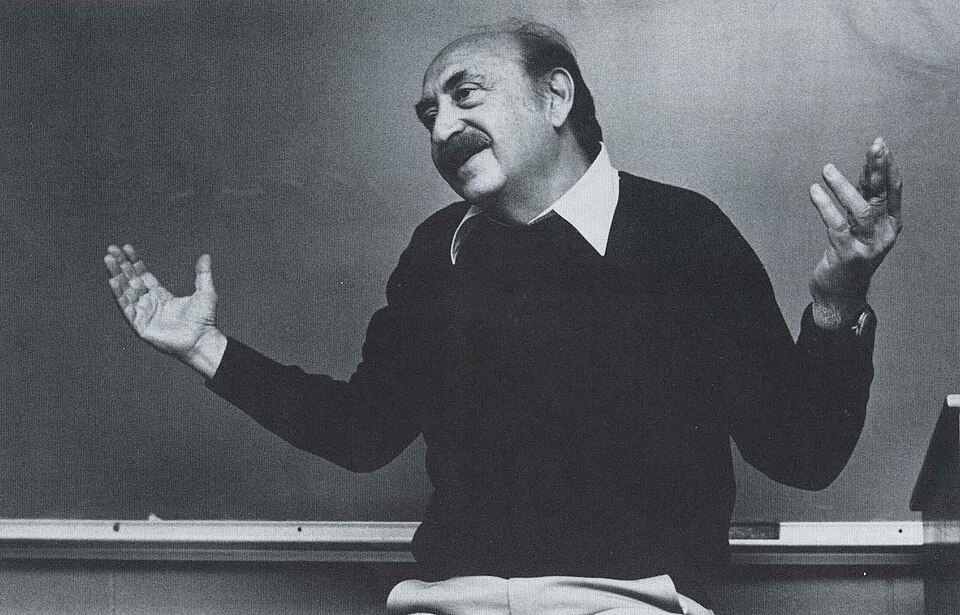
Seymour Chwast
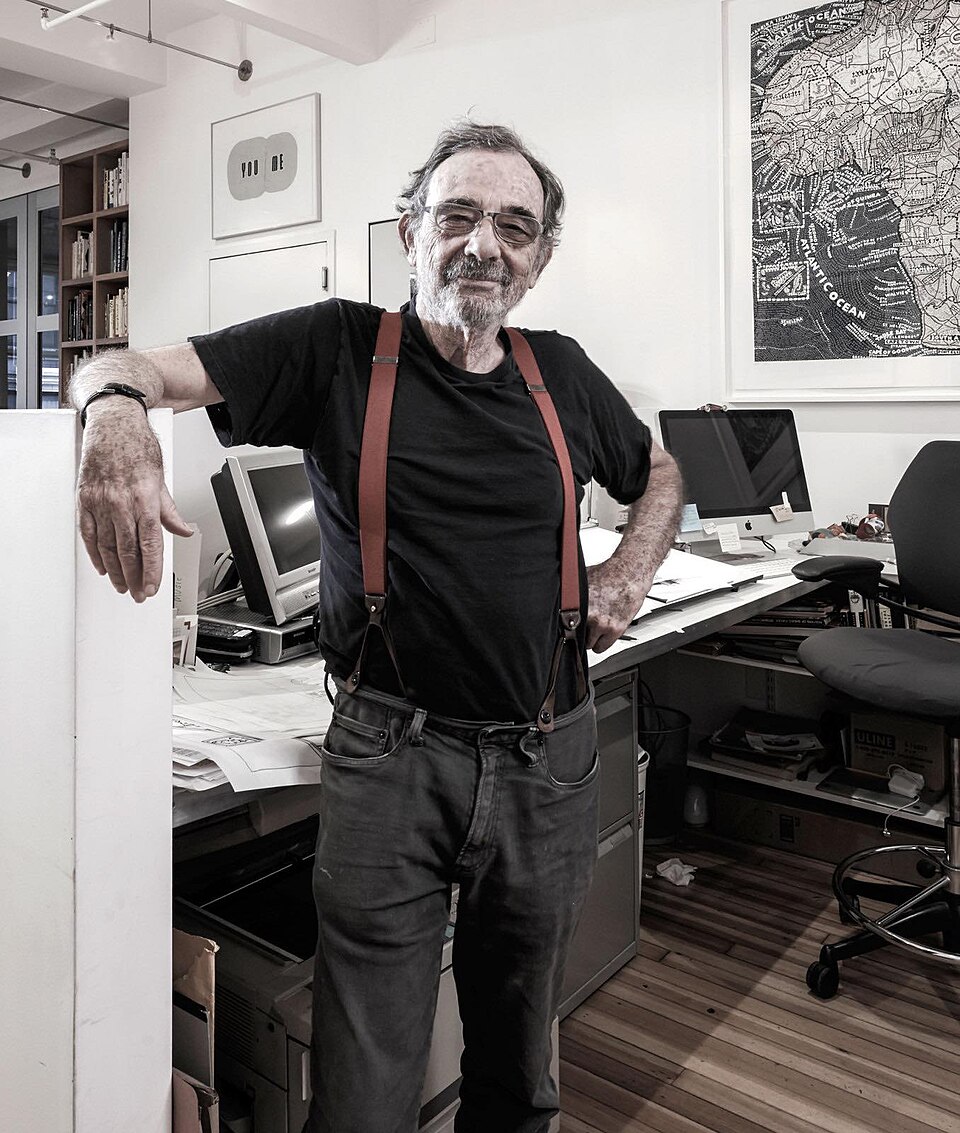
A Bronx-born illustrator and designer who made wit, pastiche, and historical eclecticism into a coherent graphic language — and helped launch Push Pin Studios, one of the most influential American design collectives of the twentieth century.
Seymour Chwast spent seven decades drawing, designing, and making — producing posters, book illustrations, typefaces, packaging, and editorial work with an appetite for historical pastiche and visual wit that placed him at the opposite pole from Swiss rationalism. As a co-founder of Push Pin Studios he helped reshape American graphic design in the 1950s and 1960s; as a continuing practitioner he remained one of its most distinctive voices into the twenty-first century.
The Bronx and Cooper Union
Chwast was born in the Bronx on 18 August 1931. He studied at Cooper Union in New York, where he met Milton Glaser, Reynolds Ruffins, and Edward Sorel — the colleagues with whom he would found Push Pin Studios in 1954, the year they graduated.
The Cooper Union context mattered: the school was free, demanding, and populated by students who had grown up in New York's working-class and immigrant neighbourhoods. The visual culture Chwast absorbed was dense, eclectic, and commercial — street typography, newsstand illustration, comics — and it remained the substrate of his mature work.
Push Pin Studios
Push Pin Studios began as a vehicle for freelance illustration but became a design studio with a distinctive collective voice. The Push Pin Almanack, later the Push Pin Monthly Graphic, distributed widely to art directors and editors, served as the studio's calling card — a demonstration of what graphic design could look like when it permitted historical reference, illustration, irony, and decorative complexity.
The Push Pin style drew on Art Nouveau, Victorian typography, woodcut traditions, and comic illustration simultaneously, producing work that was recognisably American but drew on sources that modernist Swiss design had declared exhausted. It was enormously influential on editorial design, book covers, and advertising illustration through the 1960s and 1970s.
You don't have to forget history to make something new — you can use it.
Practice and range
Chwast's own practice within and after Push Pin was extraordinarily broad. He designed typefaces — End Papers, Artone, and others — that extended his visual eclecticism into letterforms. He produced posters, including anti-war work that circulated widely during the Vietnam era. He illustrated more than a hundred children's books. He designed packaging, record covers, and magazine pages.
The AIGA awarded him its Medal in 1985, recognising a body of work that had genuinely altered what American graphic design looked like.