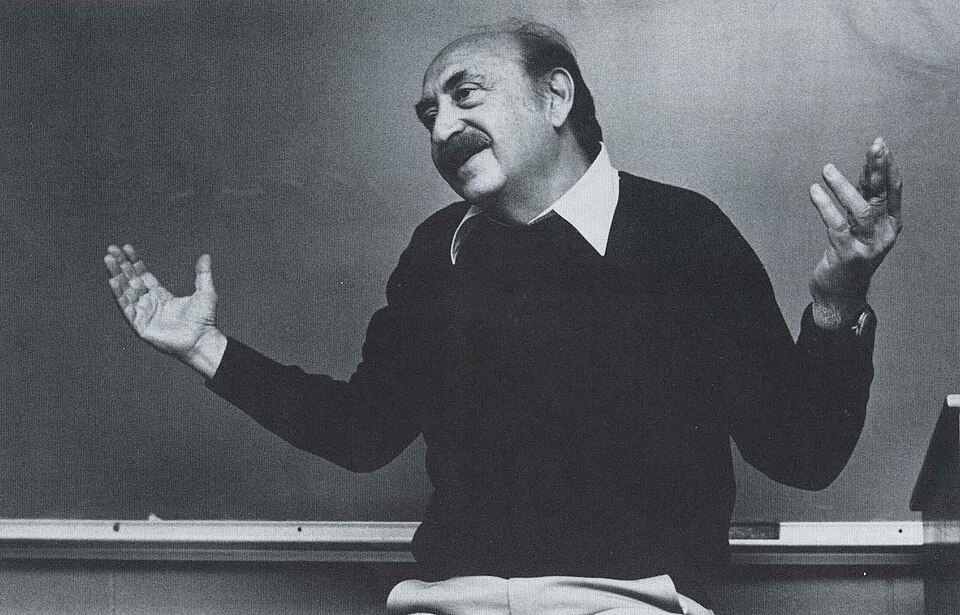
Wilhelm Wagenfeld
A Bauhaus-trained designer whose lamp of 1924 became an icon of the movement and whose lifelong conviction that good design belongs in everyday life shaped German industrial production for decades.
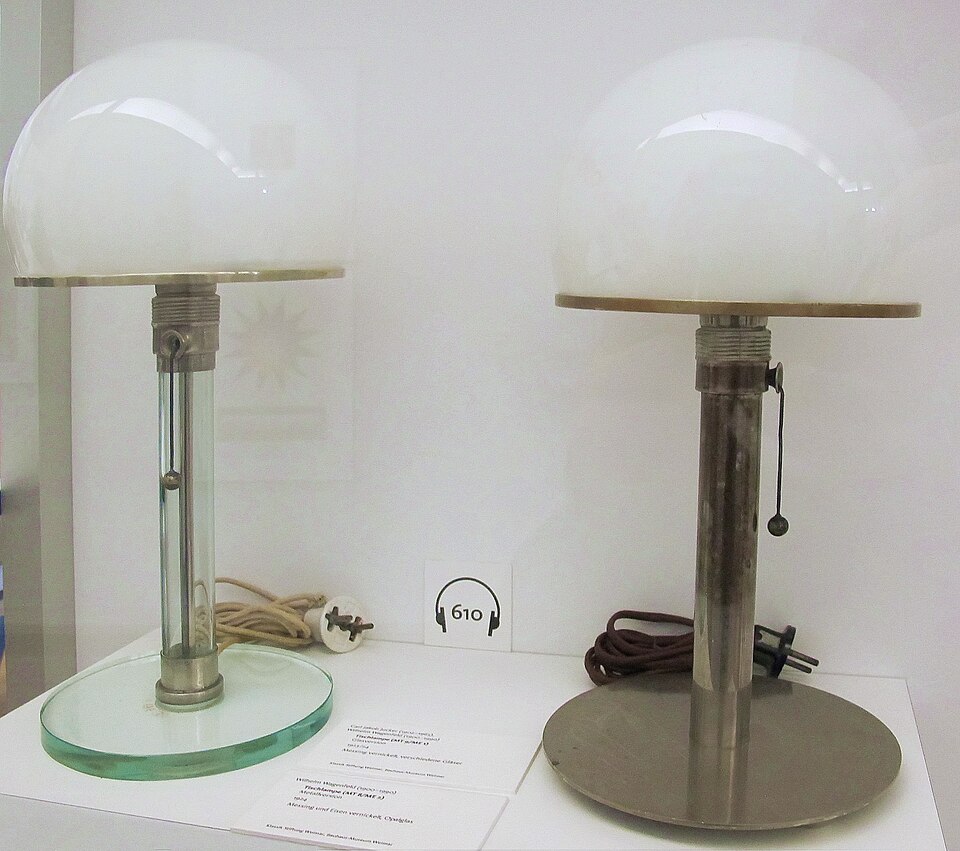
Wilhelm Wagenfeld's table lamp of 1924 — a glass globe on a glass column — remains the most photographed object to emerge from the Bauhaus workshops. What is less often noted is that Wagenfeld spent the rest of his career arguing against the cult of the unique object: he believed good design should be manufactured cheaply enough to reach everyone.
Formation at the Bauhaus
Wagenfeld was born in Bremen in 1900 and trained as a silversmith before enrolling at the Bauhaus in Weimar in the early 1920s, where he studied in the metal workshop under László Moholy-Nagy. In 1924 he designed the table lamp that would define his reputation — a simple, functional object with a glass hemisphere shade and a transparent glass column, produced in the workshop as a demonstration of the Bauhaus principle that fine craft and industrial production need not conflict.
The lamp was later put into mass production and is still manufactured today, making it one of the longest-running products in Bauhaus history.
Industrial practice
After leaving the Bauhaus, Wagenfeld pursued a career as an industrial designer rather than a craftsman or artist. He worked extensively with the Jenaer Glaswerk Schott & Gen. on heat-resistant glass products for kitchen use — a practical, domestic application of the design principles he had absorbed at the school. He also worked with the Vereinigte Lausitzer Glaswerke (VLG) in Weißwasser, designing glass tableware for mass production.
From the 1950s onward he worked with Braun and WMF, the German cutlery and tableware manufacturer, and with Rosenthal on ceramic designs. Across these collaborations the goal was consistent: to make functional, well-formed objects available at ordinary prices. He was suspicious of design that displayed itself.
The aim is not the beautiful object but the object that fits its use.
Method and principles
Wagenfeld's method was rooted in attention to material: glass must behave as glass, not imitate stone or crystal. He resisted ornament that contradicted the logic of fabrication. His forms tended toward clarity and symmetry — not as aesthetic choices but as outcomes of honest production. He wrote and lectured on these ideas and was seen as a continuing voice of Bauhaus functionalism long after the school itself had closed.
Some of his designs have remained in continuous production since the mid-twentieth century — an unusual record that validates his belief that well-resolved form has a longer life than fashionable novelty.
Legacy
Wagenfeld is less celebrated internationally than some of his Bauhaus contemporaries but is a central figure in the history of German industrial design. His insistence that mass production and quality design are compatible rather than opposed was a founding argument of postwar West German design culture, which produced — via the Ulm School and later Braun — some of the most influential commercial design of the twentieth century.