Berthe Morisot
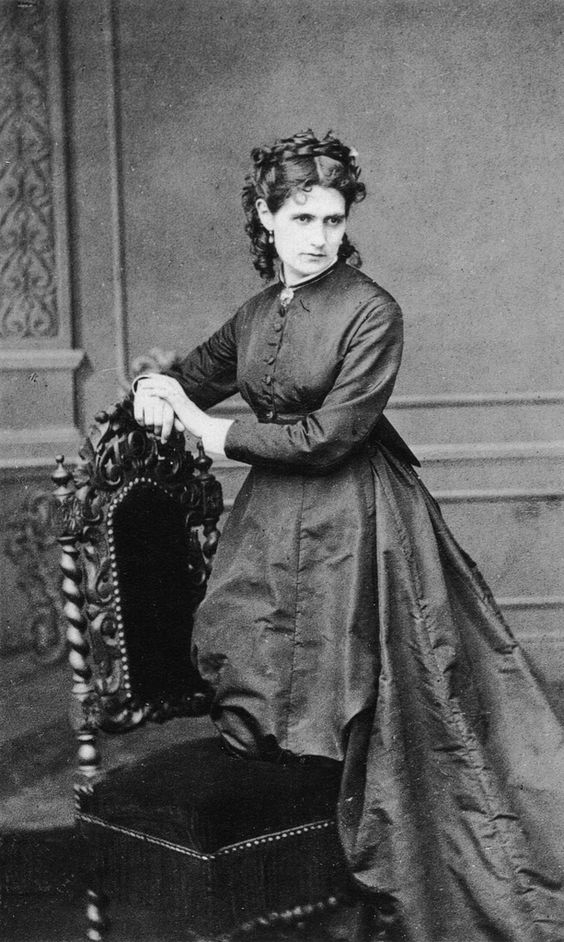
She exhibited at seven of the eight Impressionist shows and made domestic intimacy an exacting formal subject.
Berthe Morisot was among the founding members of the Impressionist group and one of its most consistent exhibitors: she showed in seven of the eight collective exhibitions and, unlike several colleagues, never defected back to the Salon. Her subjects were women and children in domestic and garden settings — not chosen as constraints but as a rigorous field in which to study light, colour, and the texture of perceived experience at close range.
Formation and the Manet circle
Born in Bourges in 1841 into a cultivated upper-middle-class family, Morisot received serious training from Camille Corot, who instructed her to paint outdoors directly from observation. By the late 1860s she was a respected Salon exhibitor. Her decisive encounter came through Édouard Manet, for whom she sat as a model on numerous occasions and with whom she maintained a formative friendship. She brought rigorous academic draughtsmanship and an outdoor practice to the circle forming around Manet; he absorbed her directness of light and her handling of white. In 1874 she married his brother, Eugène.
The Impressionist exhibitions
Morisot showed in the first Impressionist exhibition in 1874, where The Cradle — a mother watching over a sleeping infant through gauze — was among the most discussed works in the show. The painting's formal qualities are not sentimental: the gauze functions as a compositional veil that allows Morisot to address transparency, layering, and reflected light within a single field of vision. She continued to show in every subsequent Impressionist exhibition except 1879, when her daughter's birth prevented participation. Summer's Day (1879) is a characteristic mid-career work: two women in a boat on water, the image almost entirely built from the colour of reflected sky.
She captured something fleeting and retained it in all its lightness.
Technique and later work
Morisot's handling grew more rapid and open over time — brushstrokes that do not resolve into forms at close range but cohere convincingly at the proper viewing distance. She worked in both oil and watercolour and treated the unpainted surface as an active element rather than a void to be filled. Her figures, often her daughter Julie, exist in a middle distance between description and dissolution. In her final decade she hosted a Thursday salon that gathered Mallarmé, Renoir, and Monet among others, maintaining her position at the centre of Paris artistic life.
Legacy
Morisot died of pneumonia in March 1895, at fifty-three. Her reputation was briefly eclipsed by those of her male contemporaries, but sustained critical attention since the mid-twentieth century has restored her position as a central figure of the movement, not a peripheral one. The directness of her light, the formal economy of her domestic scenes, and her consistent independence from institutional approval form a coherent body of work on its own terms.