Jean Arp
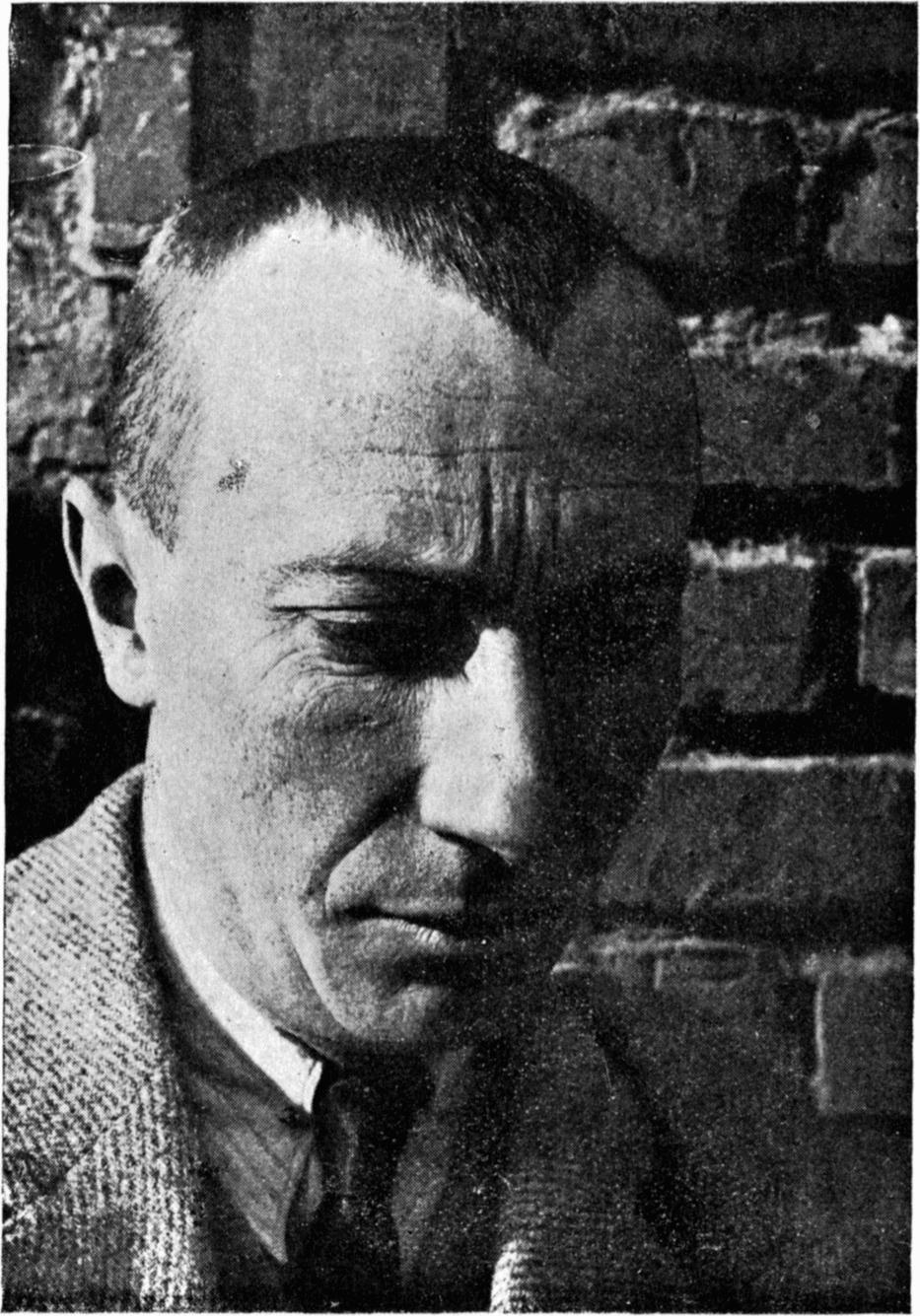
A Dadaist sculptor and poet from Strasbourg who found in organic biomorphic form a language for chance, growth, and the laws of nature as opposed to the laws of art.
Jean Arp moved through three countries, two languages, and half a dozen avant-garde movements in a career that spanned Zurich Dada, French Surrealism, and international geometric abstraction — yet his work maintained a singular obsession: the biomorphic form that resembled no machine-made thing, that grew rather than was constructed, that followed what he called "the laws of chance." His marble and bronze sculptures of the 1930s and after are among the most purely abstract and formally resolved objects of the twentieth century.
Strasbourg, border city
Arp was born in Strasbourg in 1886 — a city that became German after 1871 and French again in 1918, giving him a double identity he navigated by using the German "Hans" in German contexts and the French "Jean" in French ones. He studied at the Strasbourg School of Arts and Crafts, then in Weimar, then at the Académie Julian in Paris.
By 1912 he was in contact with Wassily Kandinsky and exhibited with the Blaue Reiter group in Munich — the first of many avant-garde affiliations. He met Sophie Taeuber, the Swiss designer and artist, in 1915; they collaborated continuously until her death in 1943 and married in 1922.
Zurich Dada
In 1915 Arp arrived in neutral Zurich, where he became a founding participant in the Dada movement launched at the Cabaret Voltaire in 1916 alongside Hugo Ball, Emmy Hennings, Tristan Tzara, and Richard Huelsenbeck. He contributed collages and reliefs to the Dada events and publications.
His collages of this period were made by dropping pieces of torn paper and fixing them where they fell — an explicit surrender of artistic control to chance. He called this "according to the laws of chance," a phrase that became a Dada slogan. The coloured wooden reliefs he made simultaneously were biomorphic and asymmetric, unlike anything in geometric abstraction.
Sculpture and organic abstraction
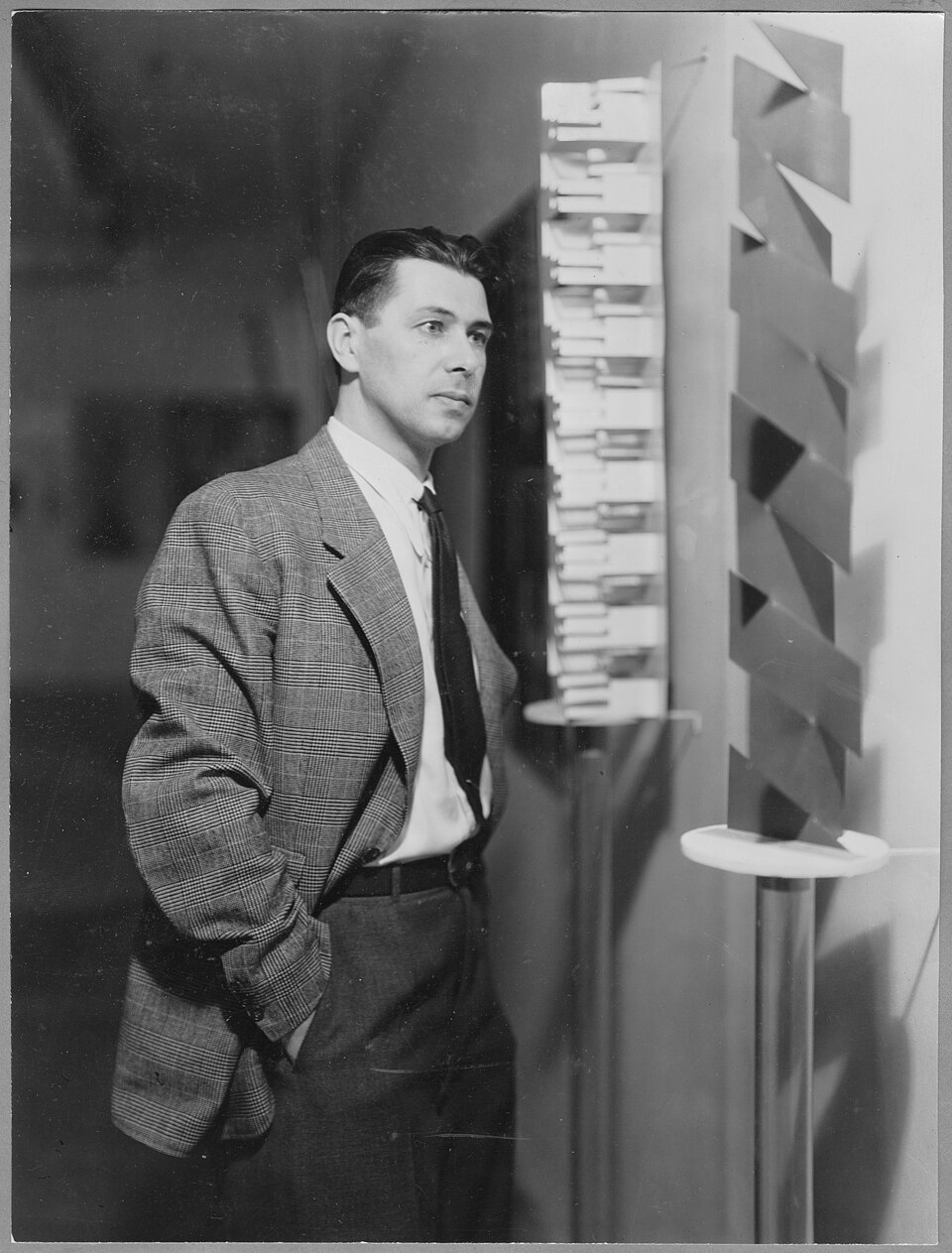
From the early 1930s Arp concentrated increasingly on three-dimensional work — first plasters and marbles, later bronzes. The forms resist naming: they suggest torsos, seeds, clouds, stones, limbs, but resolve into none of them. They are not modelled to represent but to enact growth. The surfaces are smooth and continuous, with no compositional hierarchy.
He participated in the Abstraction-Création group in Paris from 1932, alongside Mondrian, Hélion, and others committed to non-figurative art, while maintaining his connection to Breton's Surrealist circle.
Exile and late recognition
During World War II Arp and Sophie Taeuber fled to the south of France; Taeuber died accidentally in 1943. Arp continued working through the occupation and into an internationally recognised late period. He was awarded the Grand Prize for sculpture at the Venice Biennale in 1954 and the German Critics Prize in 1959. A major retrospective toured Europe and the United States in the early 1960s.
He died in Basel in 1966, aged seventy-nine.
I had accepted the idea that, like nature, art is subject to the laws of chance; that what appears to be chaos is in fact a higher order.