Edvard Munch
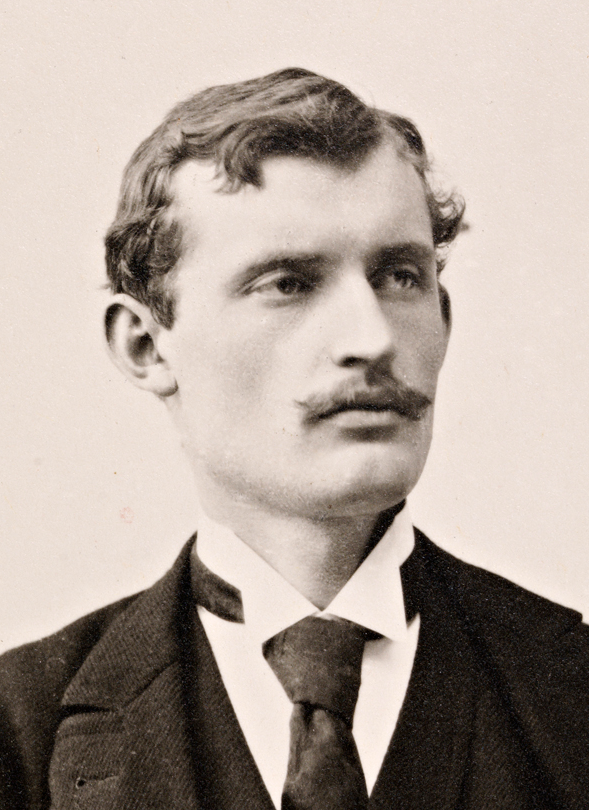
The Norwegian painter who turned inner torment into visual language, producing images so direct and disturbing that they prefigured an entire century of psychological art.
Edvard Munch painted anxiety before the word had its modern meaning. His 1893 canvas The Scream — a figure dissolving against a blood-red sky above the Oslo fjord — has become perhaps the most widely recognised image of psychological distress in Western art, a fact that both honours his achievement and threatens to reduce it.
Loss and formation
Munch was born in Ådalsbruk in the Løten municipality of Norway in 1863. His childhood was marked by death: his mother died of tuberculosis when he was five; his sister Sophie died of the same disease when Edvard was fourteen. His father was a devout, emotionally intense man who made a deep impression on the boy. Disease, grief, and religious anxiety ran through the household and through Munch's early work.
He studied in Kristiania (now Oslo) and came under the influence of the naturalist painters, then travelled to Paris in the late 1880s and encountered Gauguin and the Post-Impressionists. What he absorbed from them — colour used emotionally rather than descriptively, form simplified to express inner states — he pushed further than any of them.
The Frieze of Life
Through the 1890s Munch developed a cycle of paintings he called The Frieze of Life — a loose sequence addressing love, anxiety, and death. The Scream (1893) is its most concentrated expression: a figure on a bridge, mouth open, hands at its face, the landscape writhing in sympathy. He made four versions — two pastels and two paintings — and the image was reproduced as a print.
Madonna (1894–95), Vampire (1893–94), and The Dance of Life (1899–1900) belong to the same cycle. Taken together they constitute one of the most sustained investigations of interior states in nineteenth-century art.
I felt a great, unending scream passing through nature.
Nervous breakdown and return
In 1908 Munch suffered a breakdown and checked himself into a clinic in Copenhagen. The crisis proved a turning point: when he emerged, his work lightened. He bought a property at Ekely, outside Oslo, in 1916 and spent the rest of his life there, producing landscapes, figure paintings, and continued reworkings of earlier themes with less anguished intensity.
He worked with printmaking — woodcuts, lithographs, etchings — with particular commitment, and his graphic work circulated his imagery across Europe and directly influenced the German Expressionists.
Legacy
Munch bequeathed his remaining works to the city of Oslo on his death; the Munch Museum opened in Oslo in 1963, centenary of his birth, and reopened in a new building in 2021. The Scream in its pastel version sold at auction in 2012 for $119.9 million, then one of the highest prices ever achieved at auction for a work of art.
His influence on Expressionism — particularly the German Expressionists of Die Brücke — is direct and acknowledged. The idea that a painting's visual distortion could carry psychological truth rather than decorative effect flows from his work.