Hieronymus Bosch
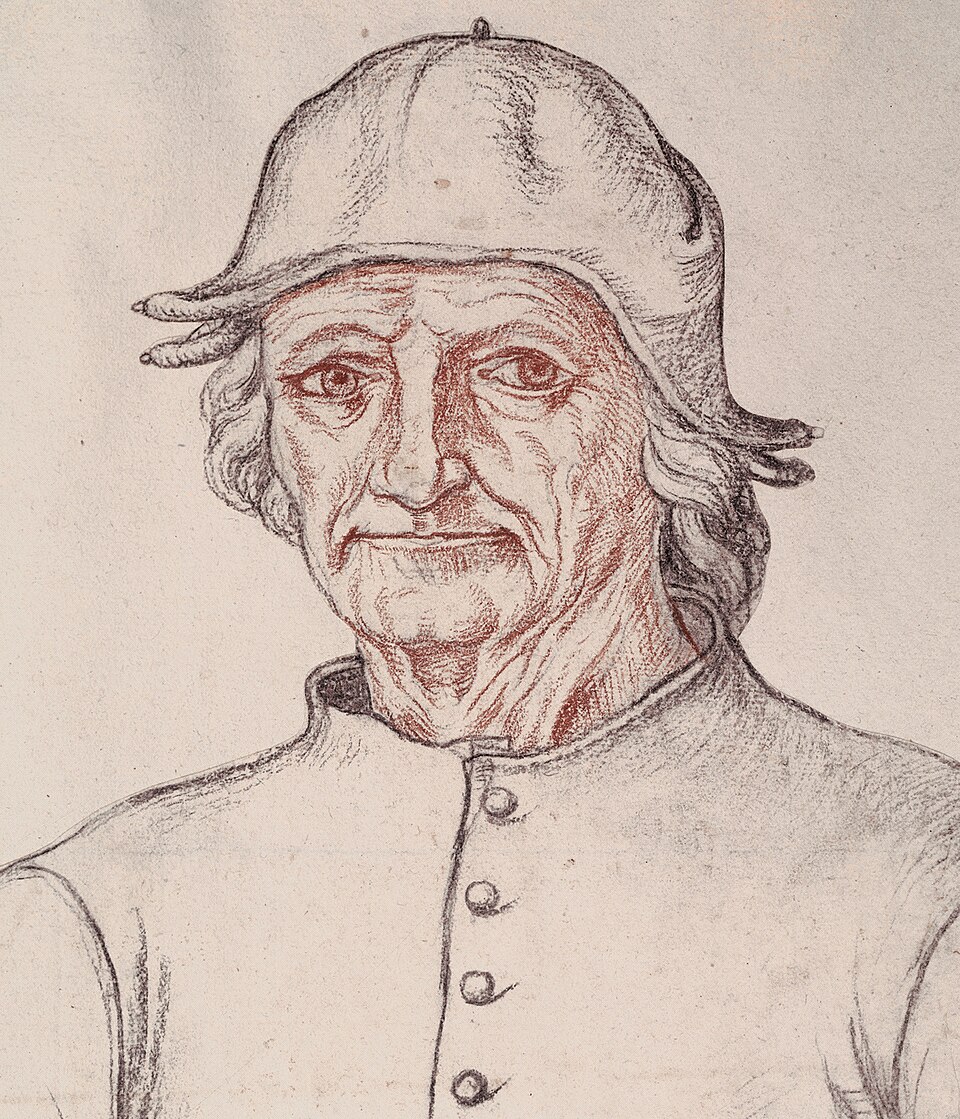
The Dutch painter of 's-Hertogenbosch whose nightmarish visions of sin, temptation, and damnation are the most singular body of work in early Netherlandish art.
Hieronymus Bosch painted a world in which the moral life of humanity is pictured in terms of monsters, demons, and hybrid creatures that have no precedent in the art that came before him and few true successors until Surrealism, five centuries later. His work was not the product of pathology or eccentricity but of a deeply orthodox Netherlandish Catholic imagination that had absorbed the moralising imagery of popular prints and sermons and amplified it to an unprecedented scale and density of invention.
's-Hertogenbosch and the Brotherhood of Our Lady
Hieronymus Bosch — whose real name was Jheronimus van Aken — was born around 1450 in 's-Hertogenbosch, a prosperous trading city in the Duchy of Brabant. The van Aken family had been painters for at least three generations; Bosch took the name of his city. He joined the Brotherhood of Our Lady, a prestigious religious confraternity based in the city's cathedral of St John, around 1486 — a membership that gave him access to educated patrons and connected him to the mainstream of Brabantine religious culture.
He worked almost entirely within 's-Hertogenbosch, with no documented journey to Italy or contact with the major Flemish centres. His imagery derives not from Italian Renaissance classicism but from the vernacular tradition of Flemish marginal illustration, popular proverbs, and the moralistic literature of his period — above all the Ars moriendi and the preaching of the Brethren of the Common Life.
The triptychs
Bosch's most ambitious works are three large triptychs. The Garden of Earthly Delights (c. 1490–1510, Prado, Madrid) is the most complex: the left panel shows Eden; the central panel, a world populated by thousands of tiny nude figures engaged in every form of sensual activity, surrounded by hybrid animals and fantastical fruit; the right panel, a vision of Hell in which musical instruments become instruments of torture. The painting is the most fully realised image of moral allegory in the history of art, and it has never been definitively interpreted.
The Haywain (c. 1516, Prado) presents human society as a crowd fighting over a hay wagon — the hay representing worldly vanity — while angels and demons observe from above and below. The Last Judgement triptych (Akademie der bildenden Künste, Vienna) presents the conventional subject with unprecedented visual elaboration.
Temptation and the saints
Beyond the triptychs, Bosch painted a series of panels depicting saints undergoing temptation or martyrdom — above all the multiple versions of The Temptation of St Anthony, which gave him the widest scope for demonic invention. These paintings, distributed across several collections in Europe, were among the most copied and collected works of his time, eagerly sought by the Spanish crown and the Habsburg emperors.
He painted the dreams of men; others painted the world that men see when they are awake.
Legacy and reception
Philip II of Spain was Bosch's most significant collector; many of his major works passed into the Spanish royal collection in the second half of the sixteenth century, where they remained largely inaccessible to Northern artists. His influence on Flemish printmaking — above all on the prints produced after his designs and distributed across Europe — was considerable. Bruegel the Elder absorbed his allegorical density and capacity for the teeming crowd scene.
The twentieth century's engagement with Bosch was shaped by Surrealism: André Breton and others claimed him as a forerunner, and the comparison, while anachronistic, identified something genuine — the willingness to depict the interior states of the human mind in terms of grotesque external forms.