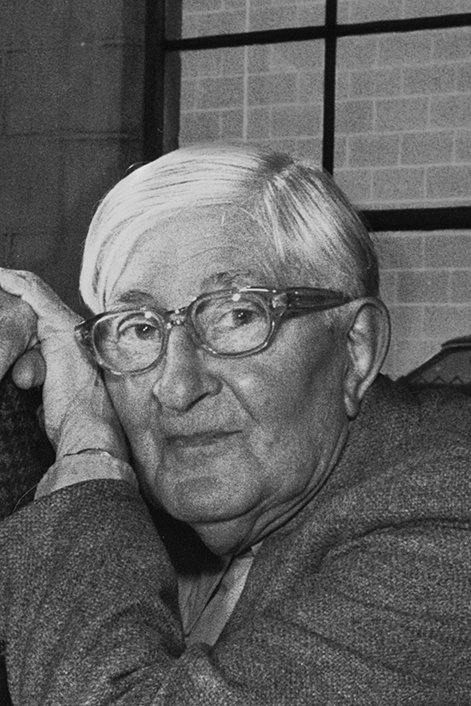
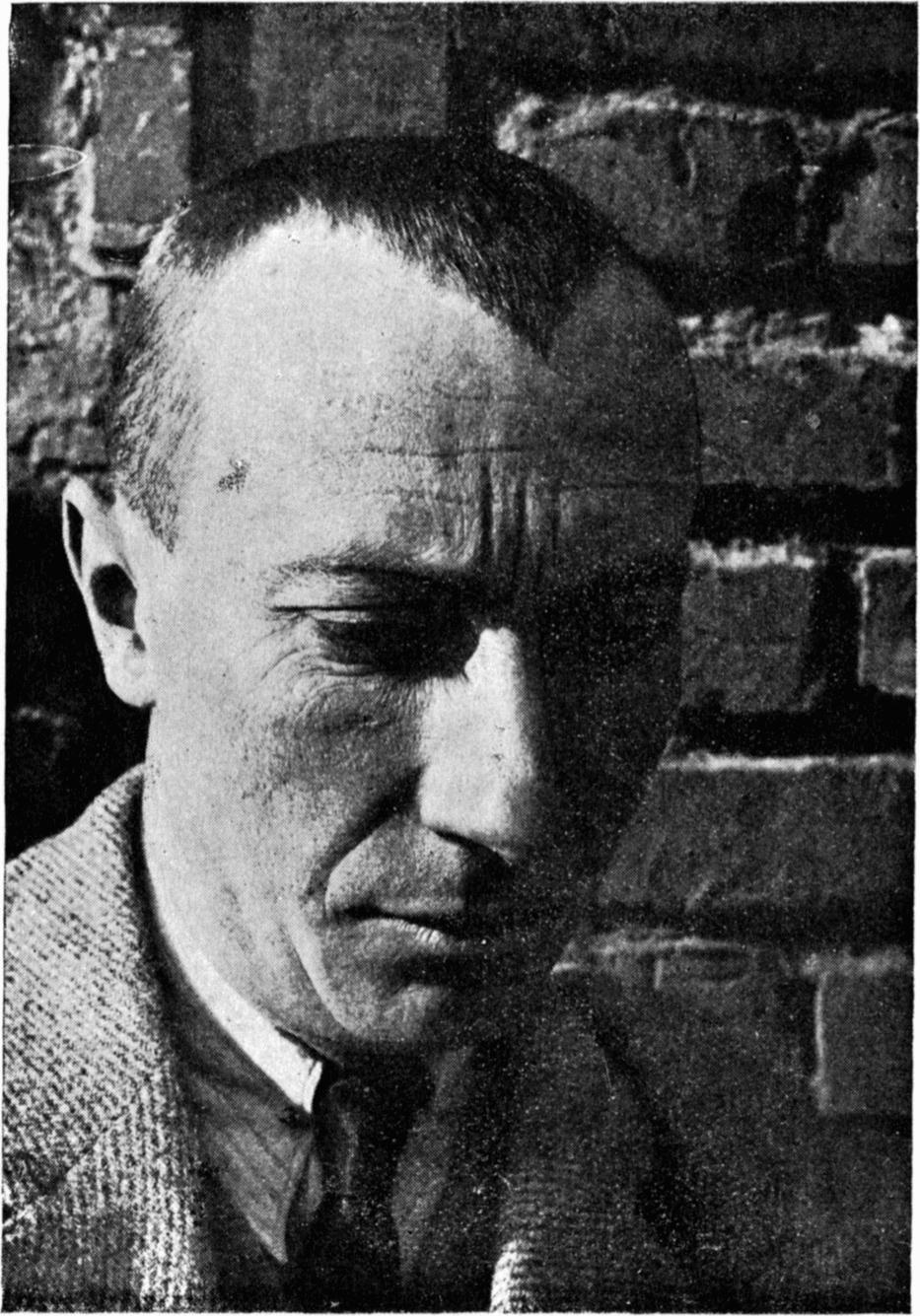
Jackson Pollock
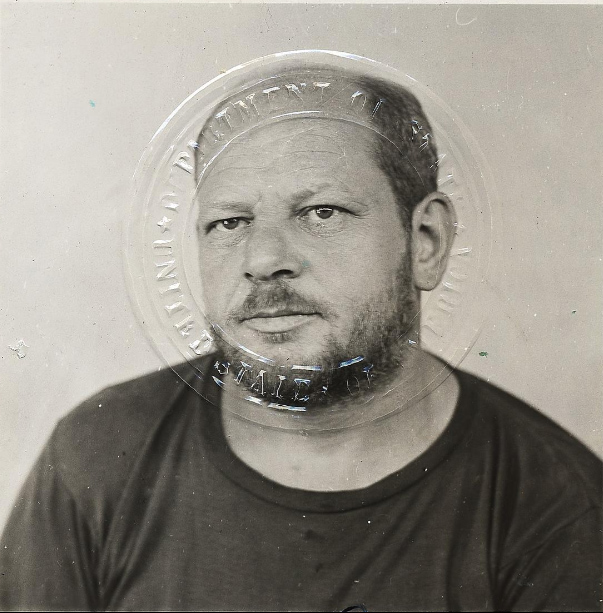
The Wyoming-born painter who took the canvas off the easel and made the physical act of painting inseparable from its result.
Jackson Pollock redefined what painting could be by removing the brush from the hand and the canvas from the wall. Working on the floor, moving around and across the surface, he produced webs of poured and dripped paint that recorded the body's velocity rather than the eye's observation. The results divided critics and consecrated Abstract Expressionism as the first American art movement to claim global authority.
Wyoming to New York
Paul Jackson Pollock was born in Cody, Wyoming in 1912 and grew up across the American West as his family moved repeatedly. He arrived in New York in 1930 to study under Thomas Hart Benton at the Art Students League, absorbing Benton's mural-scale ambition even as he rejected regionalist figuration. Through the 1930s, Pollock worked on federal arts programmes, encountered Jungian analysis — which shaped his interest in unconscious imagery — and studied the mural-sized canvases of José Clemente Orozco and David Alfaro Siqueiros, who demonstrated that paint could be flung and sprayed.1
The drip technique
By the late 1940s, working in a barn studio in Springs, Long Island, Pollock had developed the technique that defined his reputation. He placed raw canvas on the floor, walked around it, and poured or dripped industrial and household paint from cans and sticks, building up dense, interlocking skeins of colour. The works were called "all-over" paintings because they refused a single focal point; they were also called "action paintings" by critic Harold Rosenberg, who argued that the canvas had become an arena rather than a picture plane. Key works from this period — Number 31 (1950), Autumn Rhythm (1950), Lavender Mist (1950) — remain among the most reproduced paintings of the century.
Style and method
The drip paintings were not accidental. Pollock controlled viscosity, height, and movement with deliberate skill, achieving specific textures and directional energies. Photographs by Hans Namuth published in 1951 showed Pollock circling the canvas in a state of intense concentration, and these images became as famous as the works themselves — fixing the idea of the artist as performer. Pollock could also work with concentrated figurative forms: his earlier work from the 1940s includes masked and mythological imagery drawn from Surrealism and Jungian archetypes.
Influence and aftermath
Pollock's innovation was absorbed rapidly: European painters from Georges Mathieu to the Tachiste movement took up gestural abstraction; later generations from Frank Stella to Cy Twombly reckoned with his legacy by reacting against it. His personal instability and alcoholism were well documented, and his death in a car accident at 44 cut the career short. He is buried in the Green River Cemetery in Springs, New York. His influence on the definition of painting as a time-based, bodily act rather than a static craft has not diminished.
When I am in my painting, I'm not aware of what I'm doing. It is only after a sort of "get acquainted" period that I see what I have been about.
Footnotes
- Siqueiros ran a workshop in New York in 1936 where Pollock experimented with spray guns and fluid paint — a direct precursor to the drip method. ↩