Johannes Vermeer
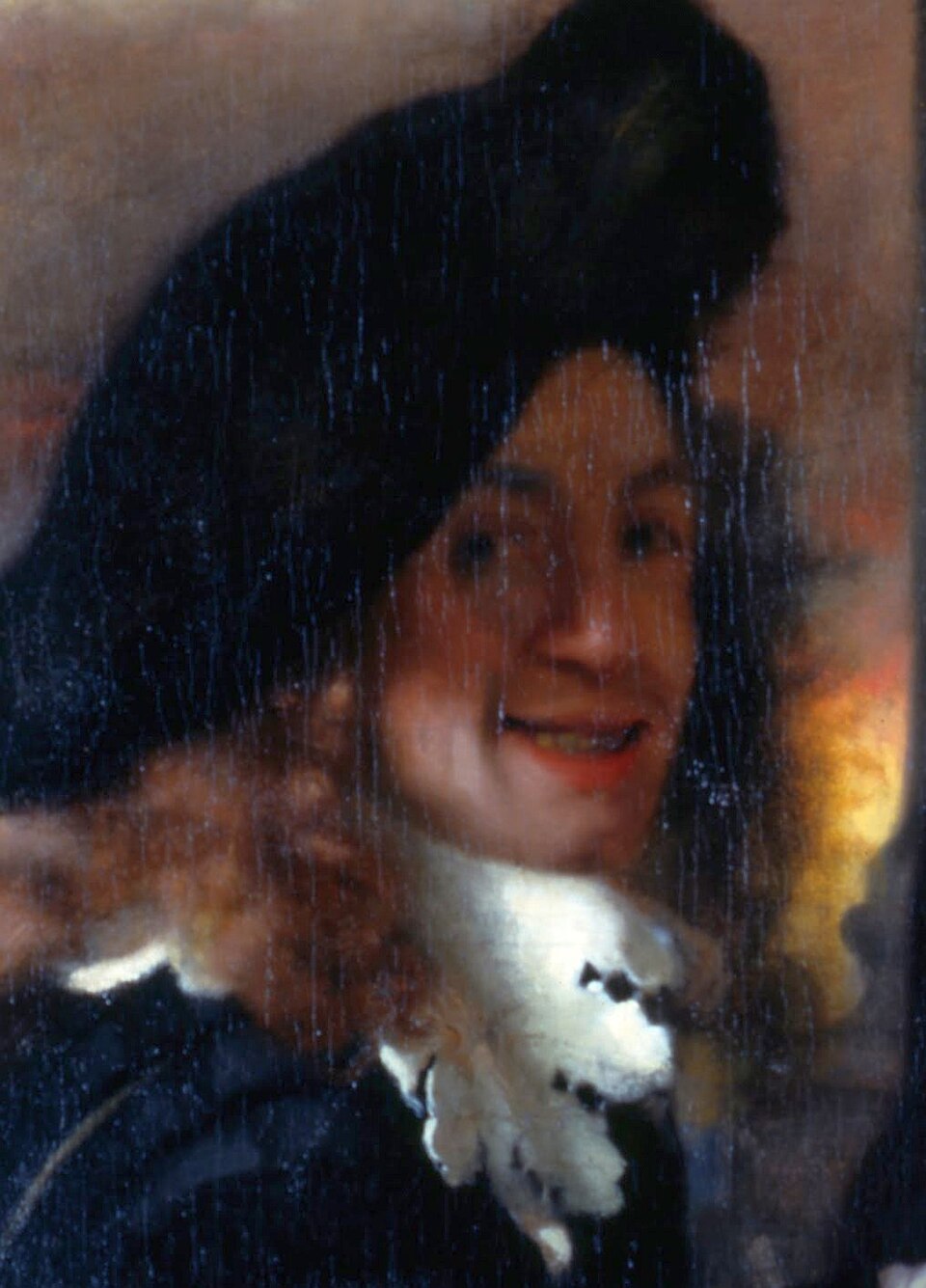
The Delft painter who worked in near-total obscurity, produced fewer than forty pictures, and is now considered one of the supreme masters of light in the history of Western art.
Johannes Vermeer painted at most thirty-six pictures, earned his living partly as an art dealer, died leaving his wife in debt, and was almost entirely unknown outside Delft for two centuries after his death. The patient reconstruction of his reputation, above all by the French critic Théophile Thoré-Bürger in the 1860s, revealed a painter of such concentrated technical mastery and emotional intelligence that art history had to revise its account of the Dutch Golden Age to accommodate him.
Delft and the interior world
Vermeer was baptised in Delft on 31 October 1632, the son of an innkeeper and art dealer. He married Catharina Bolnes in 1653, converted to Catholicism, and joined the Delft Guild of St Luke, eventually serving twice as its headman. He produced relatively few paintings — the entire attributed corpus fits on a single gallery wall — working slowly and, by the evidence of the pictures, with intense deliberation.
His characteristic subject is a single figure, usually a woman, engaged in a domestic activity — reading a letter, pouring milk, playing a musical instrument — in a corner room lit by a window on the left. The light enters, strikes surfaces, and models form with a softness that no other painter of the period achieved. This quality of illumination — diffuse, even, yet specific in its fall — is the signature of every major work.
The optical question
Scholars since the mid-twentieth century have debated whether Vermeer used a camera obscura — a box with a lens that projects an image of the scene onto a surface — as an aid to his compositions. The distortions of focus visible in some pictures (the bread rolls in The Milkmaid, the chair in The Music Lesson) resemble what a camera obscura lens produces. Whether he projected and traced, or simply used the device to study the way light falls and colour changes in cast shadow, remains unresolved. The point is not that the camera obscura explains the paintings; it does not. It addresses a question about method, not about judgment.
Girl with a Pearl Earring
The painting now known as Girl with a Pearl Earring (c. 1665) is a tronie — a character study rather than a formal portrait — depicting a young woman turning to look back at the viewer. The background is a flat, dark tone; the light falls only on her face and the earring. The painting's directness — the direct return of the gaze, the slightly open mouth — is unusual in Vermeer's work and has made it the most reproduced of his pictures. Its subject and its history before the nineteenth century are unknown.
He saw with extraordinary truth and rendered it with extraordinary skill — a combination rarer than either alone.
Legacy
Vermeer's reputation, once established in the second half of the nineteenth century, grew steadily. His influence on subsequent painting is harder to trace than that of Rembrandt, partly because he was working in an idiom — the domestic interior with directed light — that had already been established by Pieter de Hooch and Gerard ter Borch. What he added was a quality of stillness and concentration that later painters — Chardin in the eighteenth century, the early twentieth-century intimists — aspired to. The scholar Lawrence Gowing called his work "the most perfect thing in European painting."