Marianne Brandt
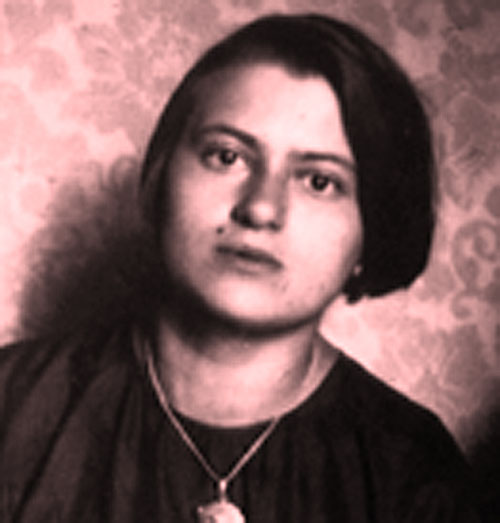
The Bauhaus metalsmith whose desk lamps and tea infusers became defining proofs that industrial production and considered form could be the same thing.
Marianne Brandt came to the Bauhaus as a painter and left it as one of the most consequential designers of the 20th century. Her metal workshop objects — lamps, ashtrays, and tea infusers stripped to their functional geometry — demonstrated that industrial design could be both rigorous and humane, and they remain in production nearly a century after they were first made.
Early formation
Brandt was born in Chemnitz in 1893. She attended a private art school and then the Grand Ducal College of Art in Weimar from 1911 to 1917, working in an Expressionist manner and studying both painting and sculpture. This dual training in fine art gave her an understanding of form and volume that would later translate directly into three-dimensional metalwork. After a period working independently, she enrolled at the Bauhaus in Weimar in 1923, joining the Metall-Werkstatt under László Moholy-Nagy.
Metal workshop and the Bauhaus method
At the Bauhaus, Brandt was initially discouraged by some male students, but she persisted and quickly distinguished herself. She worked with hemispherical and cylindrical forms in brass, silver, and nickel, learning to think about objects as resolved geometric systems rather than decorated surfaces. Her early pieces — ashtrays, tea infusers, desk lamps — were small in scale but precise in their logic. In 1928 she was appointed head of the Metall-Werkstatt in Dessau, becoming one of the very few women to lead a Bauhaus workshop. Under her direction the workshop moved firmly toward industrial collaboration, developing prototypes intended for mass manufacture.
Industrial design and the Kandem lamps
The most commercially significant work of Brandt's Bauhaus years was her collaboration with the Leipzig firm Kandem on a series of bedside and desk lamps. These lamps — adjustable, simple to produce, and formally resolved — sold in large numbers and placed Bauhaus design directly into everyday German homes. The MT 49, a combined ashtray and tea infuser in silver-plated metal, is perhaps her most reproduced single object, its hemispheres fitting together with an almost demonstrative clarity. These objects were not merely functional; they argued, through their form, that good design need not be expensive or exclusive.
Photography and later life
Alongside her metalwork, Brandt worked extensively with photography at the Bauhaus. She made self-portraits in reflective metal surfaces, explored disorienting angles, and produced photomontages that engaged directly with the visual language of Weimar-era mass media. This photographic practice has been reassessed in recent decades as a distinct and significant body of work in its own right. After the Bauhaus she served as head of the design department at Ruppelwerk Metallwarenfabrik GmbH in Gotha until 1932. She later taught at the University of Applied Arts from 1949 to 1954. She died in Kirchberg in 1983, aged 89.
"I was the only woman in the metal workshop and had to fight for every bit of recognition."