Michelangelo
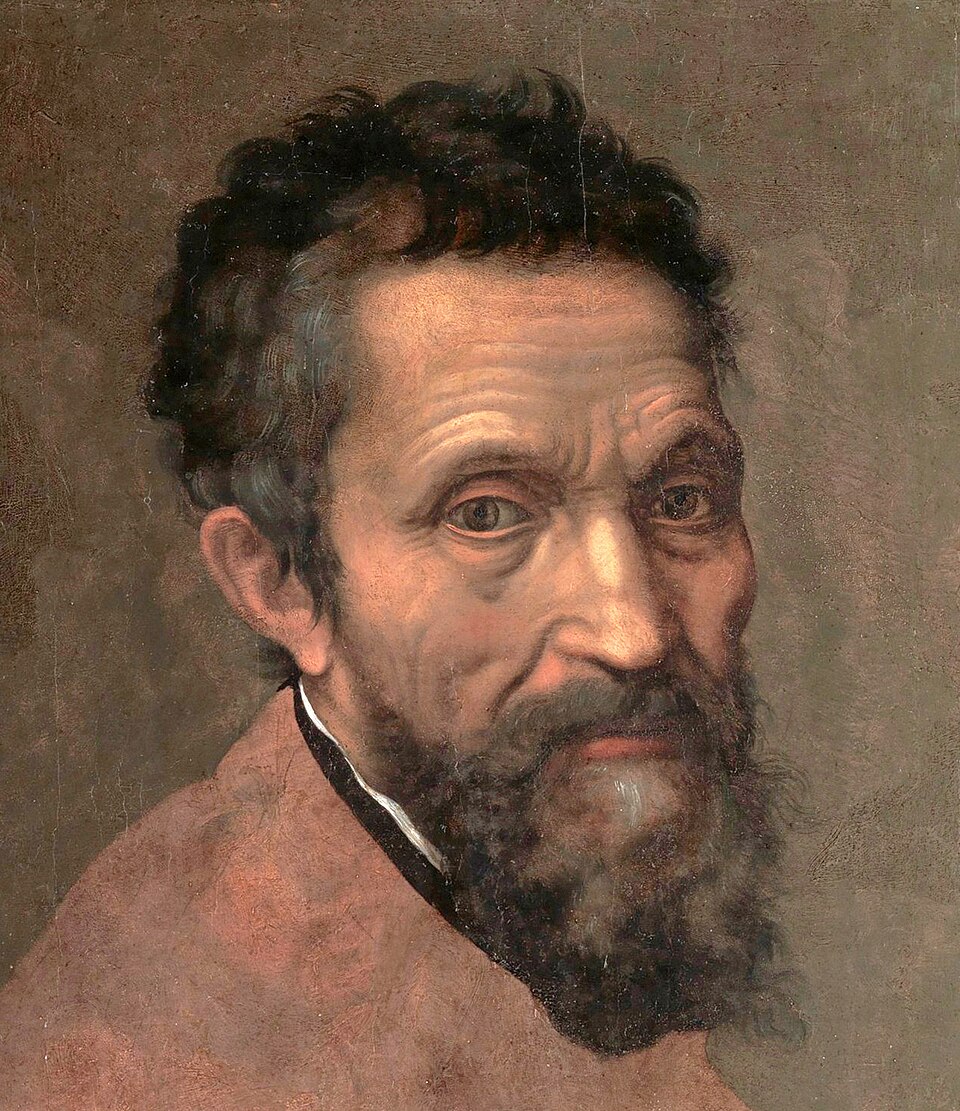
The sculptor who made marble breathe — and the Sistine ceiling a monument to what a single human body can express.
Michelangelo Buonarroti spent nearly ninety years insisting that sculpture — not painting, not architecture, not poetry — was the supreme art. The paradox of his career is that the two works by which he is best remembered are painted ceiling and a domed building, both executed under papal command and both surpassing anything he claimed to love most.
Formation in Florence
Born on 6 March 1475 in Caprese, in the territory of Arezzo, Michelangelo grew up in Florence and at thirteen entered the workshop of the painter Domenico Ghirlandaio, one of the most productive studios in the city. He transferred almost immediately to the sculpture garden maintained by Lorenzo de' Medici near San Marco, where he studied ancient casts under the sculptor Bertoldo di Giovanni and came to the attention of Lorenzo himself, joining the Medici household as a quasi-son.
When Lorenzo died in 1492 and the Medici were expelled two years later, Michelangelo moved between Florence, Venice, and Bologna before travelling to Rome in 1496. His Roman Pietà — the Virgin holding the dead Christ, completed in 1499 for St Peter's Basilica — established him as the greatest sculptor alive. He was twenty-four years old.
The Sistine ceiling and David
Returning to Florence, he carved the colossal David (1501–1504) from a block of marble that had been quarried forty years earlier and abandoned as unworkable. The figure — over five metres tall, depicting the moment before the fight rather than after — was installed outside the Palazzo della Signoria as an emblem of Florentine civic virtue.
In 1508 Pope Julius II commissioned him to paint the ceiling of the Sistine Chapel. Michelangelo protested that he was a sculptor, not a fresco painter; he was overruled. Working largely alone on scaffolding he designed himself, he painted more than three hundred figures across the vault over four years, completing the work in 1512. The sequence — from the creation of light through the fall of man to the story of Noah — set the scale of biblical narrative in Western art.
Architecture and late work
From the 1520s onward Michelangelo worked increasingly in architecture and poetry. He designed the Laurentian Library in Florence, with its unprecedented vestibule staircase, and from 1546 until his death directed the rebuilding of St Peter's Basilica, designing the great drum and dome that dominate the Roman skyline. He died in Rome on 18 February 1564, weeks before his eighty-ninth birthday, leaving the dome unfinished.
The sculpture is already complete within the marble block, before I start my work. It is already there, I just have to chisel away the superfluous material.
Legacy
Michelangelo's influence on Western art is without parallel for its duration and directness. The figures of the Sistine ceiling — muscular, contorted, expressing internal states through the positions of bodies — became the template for history painting for three centuries. Mannerist, Baroque, and academic painters all measured themselves against his example, even those who, like Caravaggio, defined themselves partly against it.