Pablo Picasso
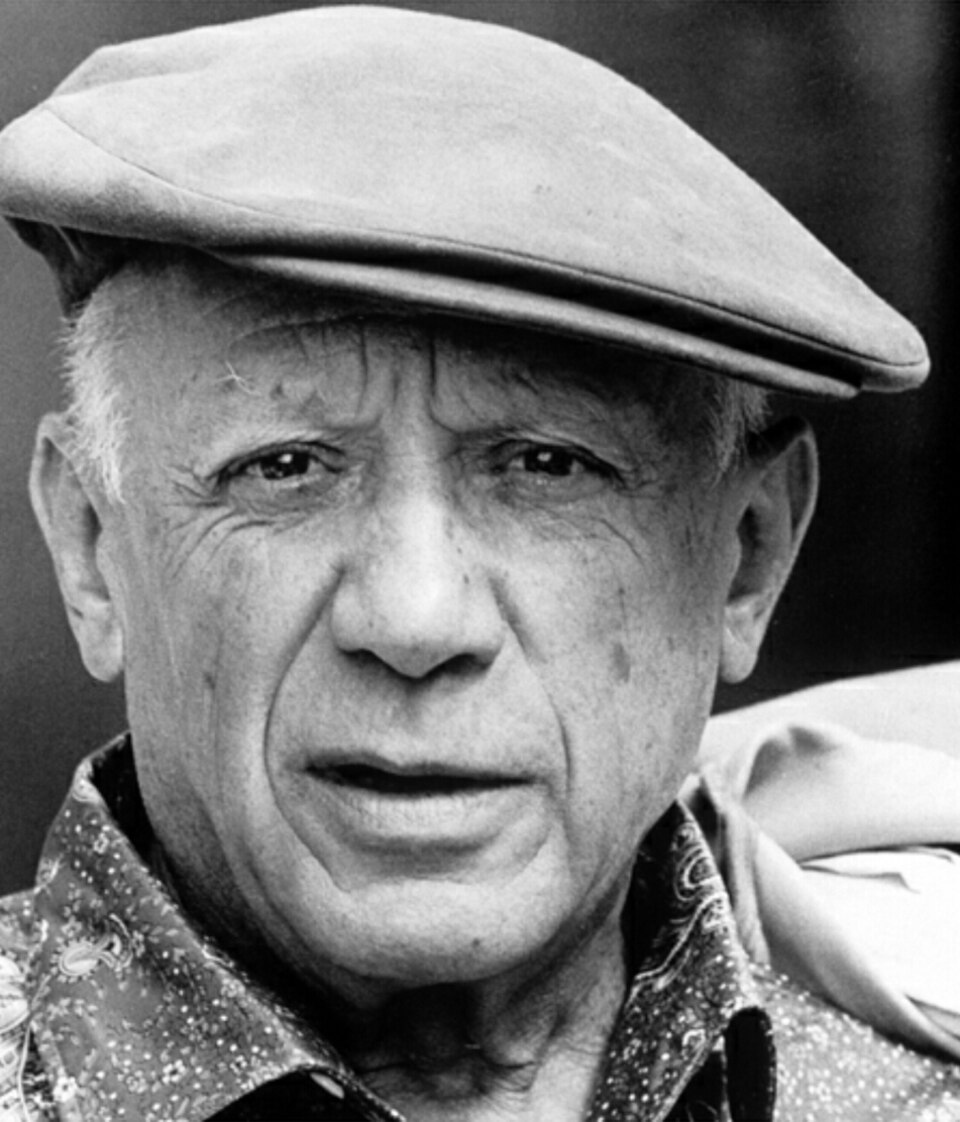
The Málaga-born painter and sculptor who co-founded Cubism and produced a body of work so wide in style and medium that no single image adequately represents it.
Pablo Picasso worked across painting, sculpture, printmaking, ceramics, and stage design during a career that spanned more than seven decades. He is best known for co-founding Cubism with Georges Braque, a development that fractured the spatial conventions of Western painting so thoroughly that art before and after 1907 can be distinguished at a glance. His political work, commercial celebrity, and complicated personal life made him the twentieth century's most recognisable artist.
Formation in Spain and early Paris
Picasso showed precocious technical facility from childhood — his father, an art teacher, reportedly handed him his own brushes in recognition of the boy's surpassing skill. He trained in Barcelona and Madrid, and first visited Paris in 1900. The Blue Period paintings (1901–04), with their monochromatic palette and melancholy subject matter — beggars, the isolated, the hungry — date from a period of poverty and grief following the suicide of a close friend. The Rose Period (1904–06) shifted to warmer tones and circus figures. Both periods are virtuosic within recognisable conventions; neither anticipates what followed.1
Cubism and structural revolution
Les Demoiselles d'Avignon (1907) is conventionally taken as the break: five nude figures in a space that refuses consistent perspective, with faces drawn partly from Iberian sculpture and partly from African masks Picasso encountered at the Trocadéro. The painting disturbed his closest allies when he showed it in the studio. In collaboration with Georges Braque over the following years, Picasso developed Analytic Cubism — fragmenting objects into facets seen simultaneously from multiple viewpoints — and then Synthetic Cubism, incorporating collaged paper and textured surfaces into the picture plane. The invention of constructed sculpture followed: three-dimensional assemblages of sheet metal and wire that dissolved the distinction between painting and object.
Style and range
Picasso never settled into a single style after Cubism. His work moved between Neoclassical figuration (the early 1920s), Surrealist-inflected distortion (the 1930s), and late-period paintings of colossal expressive energy. His most famous single work — Guernica (1937), painted in response to the bombing of the Basque town by German and Italian aircraft during the Spanish Civil War — is in grey, black, and white, and has functioned as the defining anti-war image of the century. It remained outside Spain during the Franco years on Picasso's instruction, held by MoMA in New York, and was transferred to Madrid after the restoration of democracy.
| Period | Approximate dates | Characteristic |
|---|---|---|
| Blue Period | 1901–1904 | Monochrome blue, melancholy subject |
| Rose Period | 1904–1906 | Warm tones, circus figures |
| Analytic Cubism | 1908–1912 | Fractured planes, near-monochrome |
| Synthetic Cubism | 1912–1919 | Collage, textured surfaces |
| Neoclassical | c. 1920–1924 | Monumental figurative work |
Influence and contested legacy
No twentieth-century artist's formal innovations were adopted more widely. Cubism restructured the spatial logic of modernist architecture, graphic design, film editing, and literature. Picasso's personal history — his relationships with women, his political affiliations, his long membership of the French Communist Party — has been subject to sustained reassessment, particularly the accounts of his conduct given by partners and collaborators. The work and the life are both part of the historical record.
Every act of creation is first an act of destruction.
Footnotes
- Picasso's own account of the first encounter with African masks at the Trocadéro museum was described by him in a 1935 interview with Christian Zervos, though the precise influence of African art on Cubism's formation has been debated by scholars ever since. ↩