Sandro Botticelli
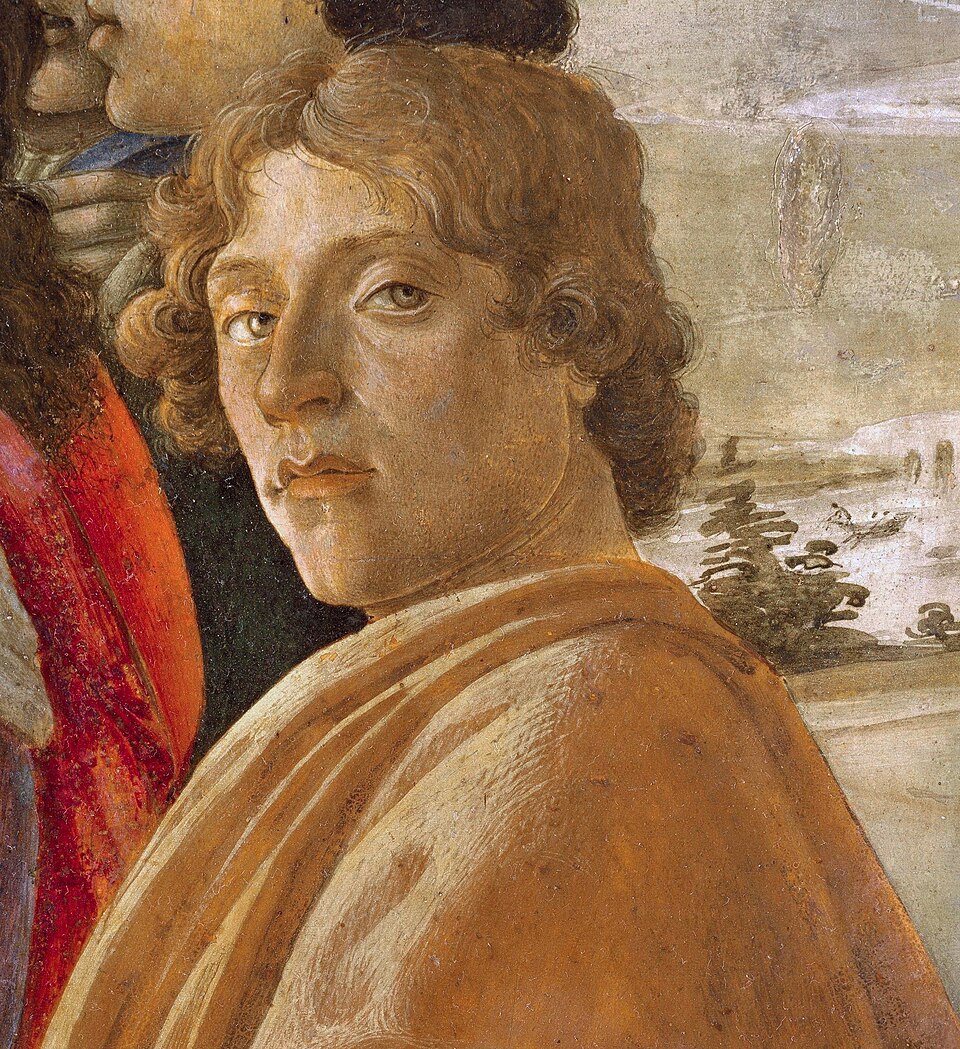
The Florentine painter of the Medici circle whose linear grace and mythological imagination were forgotten for three centuries before the Pre-Raphaelites rediscovered him and made him modern.
Sandro Botticelli painted at the height of Medici Florence, when Neoplatonist philosophy was making the classical gods safe emblems of Christian allegory. His two great mythological paintings — the Primavera and the Birth of Venus — gave that synthesis a visual form of extraordinary refinement. That he was then forgotten for nearly four hundred years, and that his rediscovery by Victorian artists reshaped taste from that point forward, is itself a chapter in the history of what art is for.
Florence and the Medici circle
Alessandro Filipepi was born in Florence around 1445 and took the name Botticelli, meaning "little barrel," likely as a family nickname. He trained under Filippo Lippi and by the 1470s was an established painter in the city. The Medici family became his principal patrons; he was close enough to Lorenzo de' Medici's circle to be influenced by the Neoplatonic philosophy of Marsilio Ficino and Angelo Poliziano, whose allegorical readings of classical mythology provided the programme for his two most famous works.
The Primavera and Venus
The Primavera (c. 1477–1482) and the Birth of Venus (c. 1484–1486), both painted for the Medici villa at Castello, are the culminating images of Florentine Neoplatonism. In the Primavera — Spring — Venus presides over a garden in which the Three Graces dance, Zephyr pursues Chloris, and Mercury disperses clouds. The programme encodes a philosophical allegory of love, beauty, and the transformation of the sensual into the spiritual; the figures are arranged in a frieze against a dark grove with a flattening of space that derives from antique relief sculpture.
The Birth of Venus is cooler, more spare. The goddess emerges from the sea on a scallop shell, windblown, covering herself with her hair. The surface of the painting is among the most refined in the Early Renaissance: line predominates, forms are weightless, and the whole composition has an otherworldly stillness despite its subject.
In 1481–1482 Botticelli was one of several painters summoned to Rome to decorate the walls of the newly built Sistine Chapel with scenes from the lives of Moses and Christ.
Later years and Savonarola
In the 1490s the political and spiritual crisis brought by the preacher Girolamo Savonarola reached Florence. Botticelli is reported to have been deeply affected by Savonarola's revival movement; his late works become more austere and expressive, losing the delicate sweetness of the Medici period. He died in Florence in 1510, having outlived the world that made him.
The contour is the thing most essential to good painting, not the mass; and the masters who best knew how to draw the outline were the best painters.
Rediscovery
Botticelli's posthumous reputation collapsed almost immediately. The High Renaissance and then Baroque painting made his linear, non-illusionistic style seem archaic and provincial. It was not until the 1860s and 1870s — above all through the writings of Walter Pater and the enthusiasm of the Pre-Raphaelites — that his work was reassessed. The Uffizi's purchase of the Primavera for public display in 1815 and the scholarly attention of mid-nineteenth-century critics turned him into the emblem of a kind of painting that valued spiritual feeling over naturalistic accomplishment.