Wassily Kandinsky
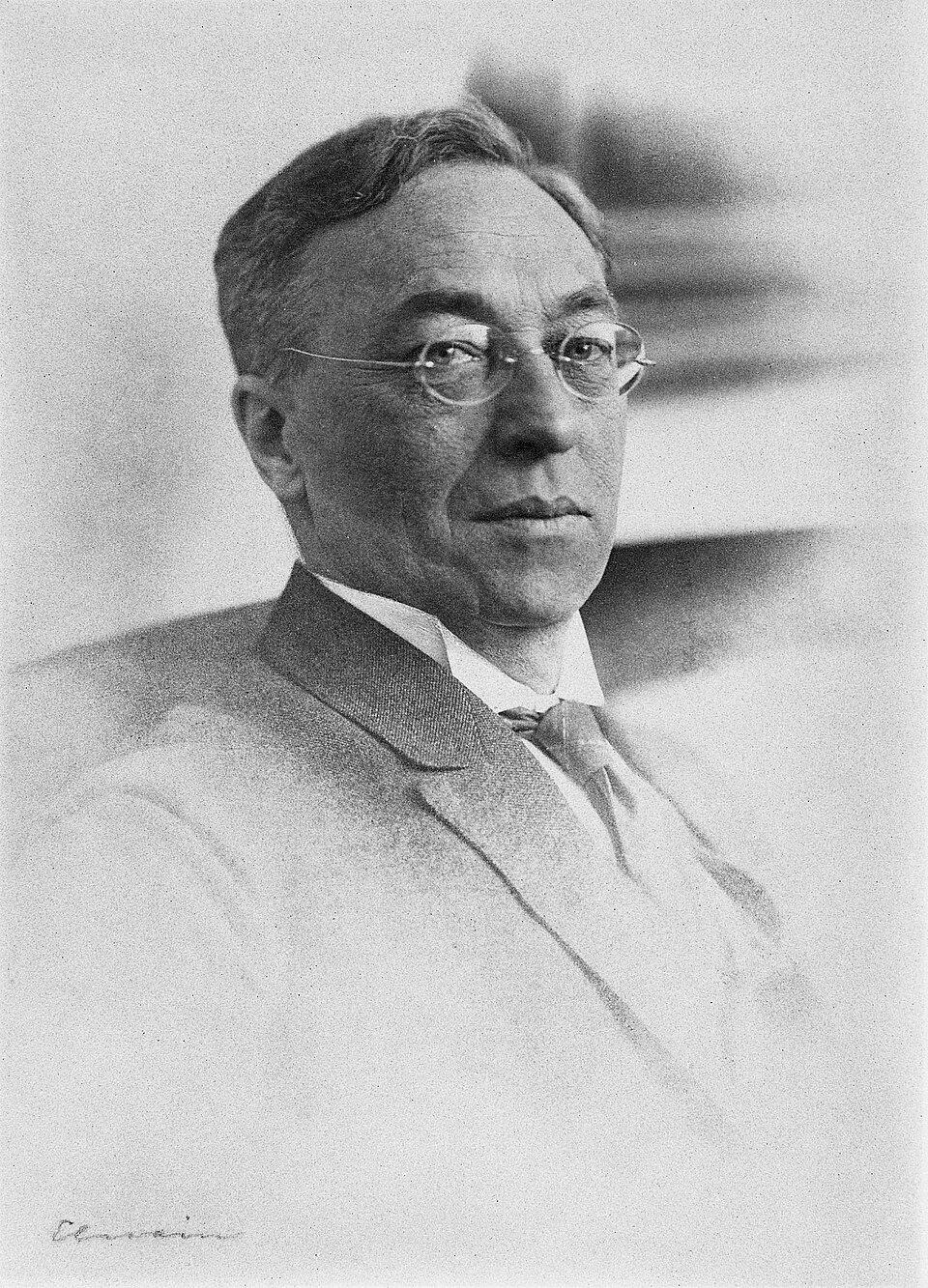
The Russian painter who made the first systematic case that colour and line could carry emotional meaning without depicting anything at all — and then built the paintings to prove it.
Wassily Kandinsky is credited as one of the first painters to produce fully abstract works — compositions in which colour and form operate without reference to the visible world. His theoretical writings, above all Concerning the Spiritual in Art (1911), gave that practice an intellectual framework that shaped modern art education for generations. He arrived at painting late, having studied law and economics until his thirties, and spent the rest of his life exploring what art could express that language could not.
Late start and early formation
Kandinsky was born in Moscow in 1866 and raised partly in Odessa. He showed early musical talent — he played piano and cello — and synesthetic sensitivities: he reported perceiving colour as sound and sound as colour, an experience that became central to his theory of art. He pursued a conventional academic career, studying law and economics and receiving a faculty appointment at the University of Dorpat, before abandoning it in 1896 at the age of thirty to study painting in Munich. The decision was reportedly triggered by two experiences: seeing a Rembrandt exhibition and attending a performance of Wagner's opera Lohengrin.
In Munich he studied under Franz von Stuck and absorbed the decorative flattening of Jugendstil. His early paintings — Russian village scenes, Post-Impressionist landscapes — show the influence of Paul Gauguin and the Fauves. Gradually the objects dissolved. By 1909–10 his landscape-derived Impressions and Improvisations were approaching abstraction, their subjects legible only as residual traces.
Der Blaue Reiter and the theoretical project
In 1911 Kandinsky co-founded Der Blaue Reiter (The Blue Rider) with Franz Marc in Munich, creating an association of artists who believed art could access inner spiritual states. The almanac they published that year brought together primitive art, folk imagery, music, and contemporary painting under a single thesis: form and colour carry meaning independent of representation. Kandinsky's treatise Concerning the Spiritual in Art, published the same year, systematised these ideas — mapping colours to emotions and spiritual states, arguing that painting should aspire to the condition of music.1
The series of Compositions he produced from 1910 onward are the works most identified with this theory: large canvases densely packed with arcs, lines, and colour masses whose energy suggests landscape, figures, or apocalyptic events without depicting them. Composition IV (1911) and Composition VII (1913) are among the most complex canvases produced in the prewar period.
| Series | Character |
|---|---|
| Impressions | Loosely based on external nature |
| Improvisations | Spontaneous expressions of inner states |
| Compositions | Carefully planned large-scale works; the most theoretical |
The Bauhaus years
The First World War and the Russian Revolution forced Kandinsky back to Moscow, where he held administrative and teaching roles before growing friction with the state's increasingly materialist aesthetic doctrine led him to return to Germany in 1921. He taught at the Bauhaus from 1922 until its forced closure by the Nazis in 1933, developing his ideas toward a harder geometric vocabulary — circles, triangles, and grid-based structures — documented in his second major theoretical text, Point and Line to Plane (1926). He spent his final decade in Paris, taking French citizenship in 1939.
Influence
Kandinsky's synthesis of theory and practice shaped Abstract Expressionism, Colour Field painting, and the broader trajectory of non-representational art throughout the twentieth century. His Bauhaus teaching — adapted into foundation courses at art schools worldwide — means his ideas about form, colour, and visual grammar are embedded in design education far beyond the painting tradition.
Colour is a power which directly influences the soul. Colour is the keyboard, the eyes are the hammers, the soul is the piano with many strings.
Footnotes
- The phrase "art aspires to the condition of music" predates Kandinsky — it comes from Walter Pater's 1877 essay on Giorgione — but Kandinsky developed it into the most sustained visual argument of the early twentieth century. ↩