Abbas Kiarostami
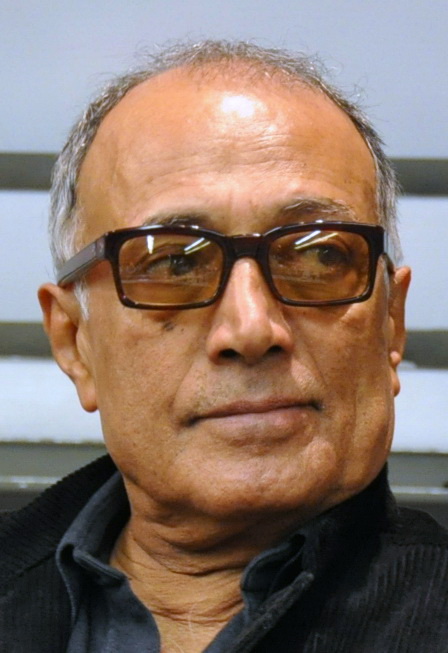
The Iranian filmmaker who dissolved the boundary between documentary and fiction, making the camera itself a philosophical instrument.
Abbas Kiarostami spent more than four decades building a body of work that refused easy categories. Beginning at the Institute for the Intellectual Development of Children and Young Adults in Tehran, he made films that looked like observation and functioned like inquiry — into identity, grief, survival, and the ethics of looking. His Palme d'Or–winning Taste of Cherry (1997) and the celebrated Close-Up (1990) remain among the most discussed works in world cinema, and his influence extends well beyond Iranian film.
Origins
Kiarostami was born in Tehran in 1940 and trained as a graphic artist before entering film. His early career unfolded through the Kanoon (Institute for the Intellectual Development of Children and Young Adults), where he directed educational shorts and features from 1970 onward. That institutional context shaped his instinct for economy: small budgets, real locations, non-professional actors, questions rather than answers.
Defining work
The Koker trilogy — Where Is the Friend's House? (1987), And Life Goes On (1992), and Through the Olive Trees (1994) — established his international reputation by folding earthquake aftermath and filmmaking itself into the narrative. Close-Up (1990) reconstructed a real fraud case using the actual people involved, pressing on the line between performance and life. Taste of Cherry (1997), a spare film about a man seeking someone to bury him, received the Palme d'Or at Cannes. In later work — Certified Copy (2010) in Italy, Like Someone in Love (2012) in Japan — he carried his method into new languages and geographies.
Method and style
Kiarostami worked repeatedly with long takes from within moving cars, with roads, with the act of searching. His screenplays were often improvised or incomplete by design, trusting actors and location to complete the thought. He was also a poet and photographer, and those disciplines are visible in his framing: an image often holds longer than narrative strictly requires, accumulating meaning through duration rather than event.
Legacy
Three of his films appeared in BBC Culture's 2018 critics' poll of the 100 greatest foreign-language films. Close-Up ranked among the 50 greatest films of all time in the 2012 Sight & Sound decennial poll. Directors including Martin Scorsese and Jean-Luc Godard named him among cinema's essential voices. He died in Paris on 4 July 2016. His archive and influence continue to shape documentary practice and art-house filmmaking globally.
"With a film I can say things I couldn't say otherwise — and still not quite say them."