Chantal Akerman
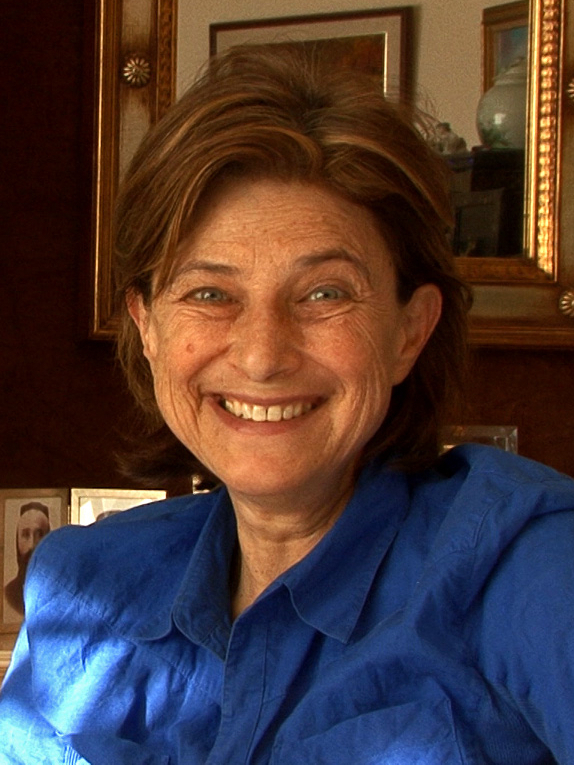
The Belgian director who made domestic time a radical political act — and whose fixed camera changed what cinema is allowed to see.
Chantal Akerman rewrote the grammar of cinema by slowing it to the pace of a life actually lived. Her films — built from long takes, fixed cameras, and the unspectacular rhythms of domestic and urban space — made the invisible labour of women visible, and the invisible time of cinema impossible to ignore.
Brussels, New York, and the education of a gaze
Akerman was born in Brussels in 1950 into a Jewish family shaped by catastrophe: her mother, Natalia, had survived Auschwitz, and that silence — what could not be said, only circled — ran beneath much of her work. She encountered cinema almost by accident in her teens, when she saw Jean-Luc Godard's Pierrot le fou and felt, abruptly, that making films was possible. She enrolled briefly at INSAS, the Belgian national film school, but left within months for Israel, then New York.
New York in the early 1970s was decisive. Watching the structural films of Michael Snow (Wavelength, 1967) and the diaries of Jonas Mekas, Akerman absorbed a different understanding of the camera: not as a tool for representing events but as a presence that registers duration. Her own short La Chambre (1972) — a slow 360-degree pan around a room in which she lies eating an apple — announced a method she would never abandon.
Jeanne Dielman and the politics of duration
Her third feature, Jeanne Dielman, 23 quai du Commerce, 1080 Bruxelles (1975), is the work on which her reputation rests — and which, in 2022, was voted the greatest film of all time in Sight and Sound magazine's critics' poll, the first film by a woman to top it.1 Shot over four weeks with a mostly female crew, the film follows a widowed Brussels housewife across three days: she cooks, cleans, sees to her adolescent son, and — in the only income she has — receives male clients in the afternoon. The camera never moves. Each task occupies its full real duration. Nothing is condensed or elided.
The effect is quietly devastating. Repetition becomes the film's argument: domestic labour is work, and its invisibility is a political condition, not a natural one. When, on the third day, a tiny disruption cascades into violence, the rupture is both inevitable and shocking, because the viewer has been made to understand, through accumulation, exactly what holds the routine together.
I wanted to show what it is like to do the same thing every day and to have your whole life contained in that repetition.
Method and style
Akerman's formal vocabulary was narrow and consistent:
| Element | Characteristic use |
|---|---|
| Camera movement | Largely static; rare slow tracks and pans |
| Shot duration | Extended takes — often well beyond narrative necessity |
| Sound | Ambient, non-dramatic; silences as information |
| Subject | Women, interiors, borders, displacement |
Her 1977 film News from Home layered letters from her mother in Brussels over long, patient shots of New York streets and subway cars — a meditation on distance and guilt that is also one of cinema's most precise studies of a city. Je tu il elle (1974) divided its discomforts across three sections with the grammatical tidiness of its title. Her later installations and video essays extended the same durational logic into gallery space, making her equally significant to the art world and to cinema.
Legacy
The 2022 Sight and Sound result — in which Jeanne Dielman overtook Hitchcock, Welles, and Kubrick — was greeted with both celebration and controversy, but it clarified something that had been accumulating for decades: Akerman's influence was structural and philosophical, not merely stylistic. Filmmakers including Kelly Reichardt and Todd Haynes have cited her work. Her durational method — the insistence that time itself is the subject — anticipated both the essay film and the gallery installation as serious forms.
Akerman died in Paris on 5 October 2015, weeks after completing No Home Movie, a final reckoning with her mother's life and death. She was sixty-five. The film ends, as much of her work began, inside an apartment — time accumulating, a silence that contains everything.
Footnotes
- The Sight and Sound Greatest Films poll has been conducted every decade since 1952; the 2022 edition was the first in which a film directed by a woman placed first, out of 1,639 participating critics. ↩