Alain Resnais
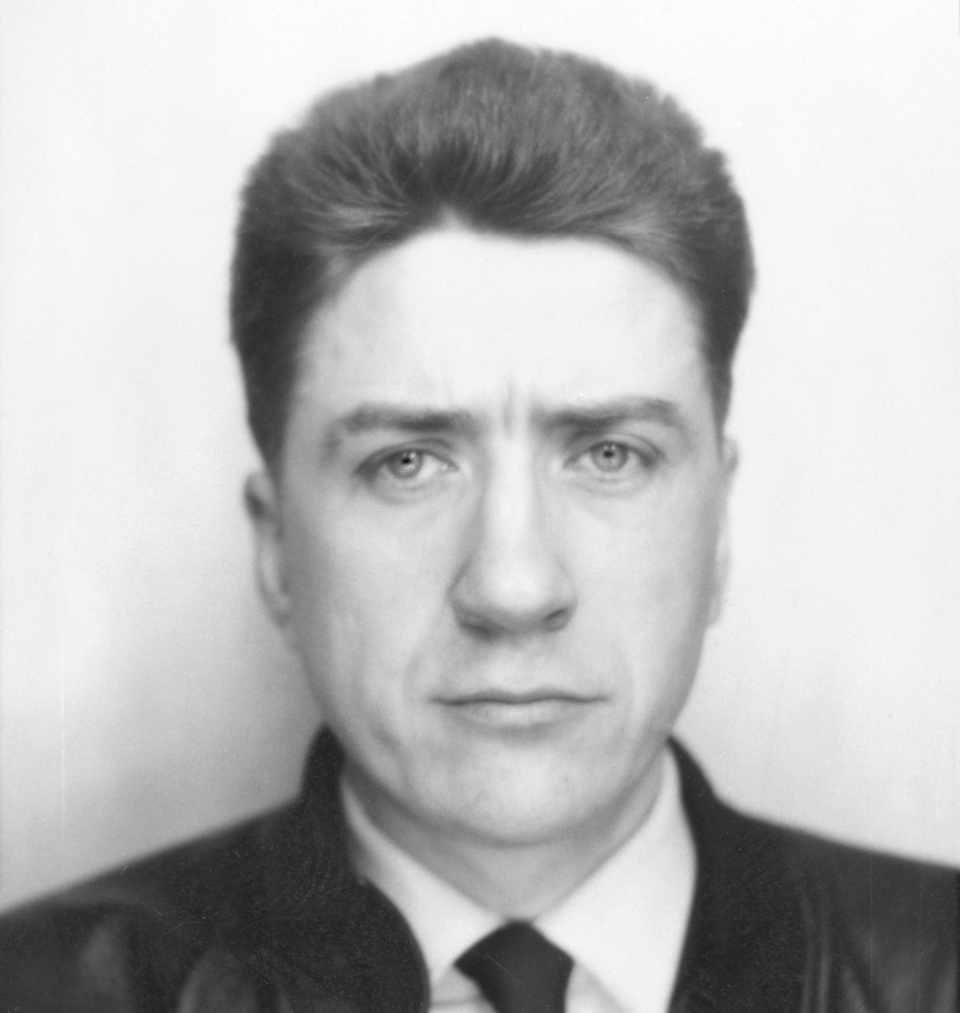
A filmmaker who made memory his formal subject — splicing past and present, consciousness and image, into structures that no other director attempted.
Alain Resnais spent six decades asking the same question in different formal registers: how does a mind hold time? His answer was always structural — cuts that collapse decades, images that cannot be trusted, characters who may be remembering, imagining, or simply wrong. No other filmmaker of his generation pursued the inner life of consciousness with such sustained formal invention.
Vannes to the short film
Born in Vannes, Brittany, in 1922, Resnais came to film through a passion for Surrealism and the visual arts. He studied at the Institut des hautes études cinématographiques (IDHEC) in Paris and spent the late 1940s and 1950s making short documentaries on painting and sculpture — Van Gogh (1948) won an Academy Award for Best Short Subject — that were formally attentive to how still images move when edited.
The short Night and Fog (Nuit et brouillard, 1955), commissioned for the tenth anniversary of the liberation of the Nazi camps, applied the same editing intelligence to historical atrocity: colour footage of the camps as they stand now, alternating with black-and-white archival images. The film's thirty-two minutes remain among the most morally considered responses to the Holocaust in any medium.
The feature films
Hiroshima mon amour (1959), with a screenplay by novelist Marguerite Duras, placed a French actress and a Japanese architect in Hiroshima and mapped their present-tense love affair against her memory of a German soldier killed at the Liberation. The film collapsed historical time and personal trauma into the same editing pattern; it announced the French New Wave to international audiences and introduced a new way of thinking about how cinema handles memory.
Last Year at Marienbad (1961), scripted by Alain Robbe-Grillet, went further: a film in which the status of every image — memory, desire, fantasy, or present reality — is withheld. The film's puzzle is not a mystery to be solved; it is a proposition about the unreliability of all reconstructed experience.
Late career
Resnais continued working into his nineties, producing a late sequence of films — including Mélo (1986), Same Old Song (1997), Wild Grass (2009), and You Ain't Seen Nothin' Yet (2012) — that explored theatre, song, and play with tonal register in ways that surprised audiences who expected formal severity. The late films are playful; the formal intelligence remained intact.
His career's range — from Holocaust documentary to avant-garde puzzle to musical — is held together by the consistent question: what is the relationship between an image and the mind that produces or receives it?
Legacy
Resnais shaped the practice of the film essay and the structural approach to cinema that later critics would call le cinema du cerveau — cinema of the brain. His collaborations with major literary figures (Duras, Robbe-Grillet, Alain Ayckbourn, Jean Gruault) demonstrated that film could be a genuine literary form.
Film is the art closest to dreaming — both are made of images that arrive without being summoned and resist rational ordering.