Andrzej Wajda
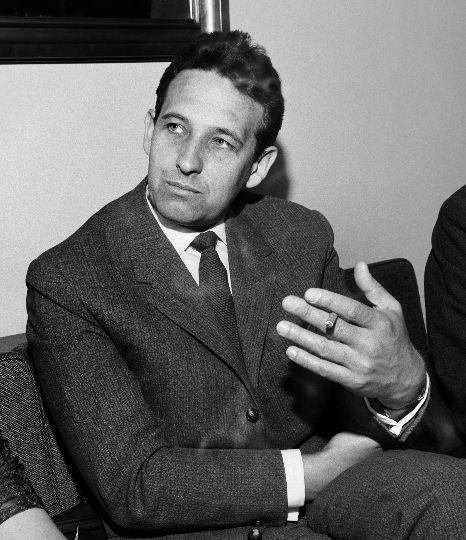
The Polish director whose war trilogy gave cinema its most searing portrait of a generation caught between occupation and idealism.
Andrzej Wajda emerged from the wreckage of wartime Poland to become the conscience of Polish cinema — a director whose films returned, over six decades, to the question of what it costs a nation to resist, to capitulate, and to remember. His war trilogy of the 1950s remains among the defining achievements of European postwar cinema.
Formation in wartime Poland
Wajda was born in Suwałki in 1926. His father, a cavalry officer, was killed in the Katyn massacre of 1940 — a fact that would shadow his work for decades and ultimately produce one of his final films. The war years shaped not just his biography but his aesthetics: an appetite for historical weight, for the gap between heroic ideal and catastrophic outcome, for the Polish predicament of being crushed between great powers.
He studied painting at the Academy of Fine Arts in Kraków before enrolling at the Łódź Film School, where he trained under Jerzy Toeplitz. The visual intelligence of a painter never left his work; his frames have a compositional intensity that lifts his most urgent scenes into something iconic.
The war trilogy
Three films made between 1955 and 1958 established Wajda's international standing and defined the Polish Film School as a movement. A Generation (1955) introduced Zbigniew Cybulski — soon to be called "the Polish James Dean" — in a story of Warsaw youth drawn into underground resistance. Kanał (1957) followed fighters of the Warsaw Uprising retreating through the city's sewers, trapped and dying in the dark. Ashes and Diamonds (1958) placed Cybulski as a young Home Army soldier ordered to assassinate a communist official on the last day of the war — a film about men who belong to a history that has already passed them by.
Together the three films constituted an elegy for the generation that fought and was destroyed, and a complex, morally unresolved examination of what that sacrifice meant.
My generation was the last to have fought. We were the last to have seen the face of war directly, and now we try to pass that on to those who come after us.
Political filmmaking and Solidarity
Wajda's engagement with Polish politics never retreated into allegory. Man of Marble (1977) and Man of Iron (1981) addressed the Solidarity movement directly, the latter filmed partly at the Gdańsk shipyards during the strikes themselves. Man of Iron won the Palme d'Or at Cannes in 1981 — one of the few occasions a major award was given to a film so explicitly connected to live political events.
Under martial law the authorities banned several of his films. He worked intermittently in theatre and in France during the 1980s before returning to Polish cinema after 1989.
Legacy
Katyń (2007), released when Wajda was over eighty, returned to the massacre that killed his father — a film he had been unable to make under communist censorship for forty years. It was nominated for the Academy Award for Best Foreign Language Film. He received an Honorary Oscar in 2000, as well as Honorary Golden Lion and Honorary Golden Bear awards across his career. He was a member of the European Parliament in the early 1990s and remained a public intellectual until his death.
His influence on Polish cinema and on Eastern European film more broadly is structural: the Polish Film School he helped define produced a generation of directors, and his commitment to treating cinema as a form of historical witness has no close equivalent in postwar European filmmaking.