Annie Leibovitz
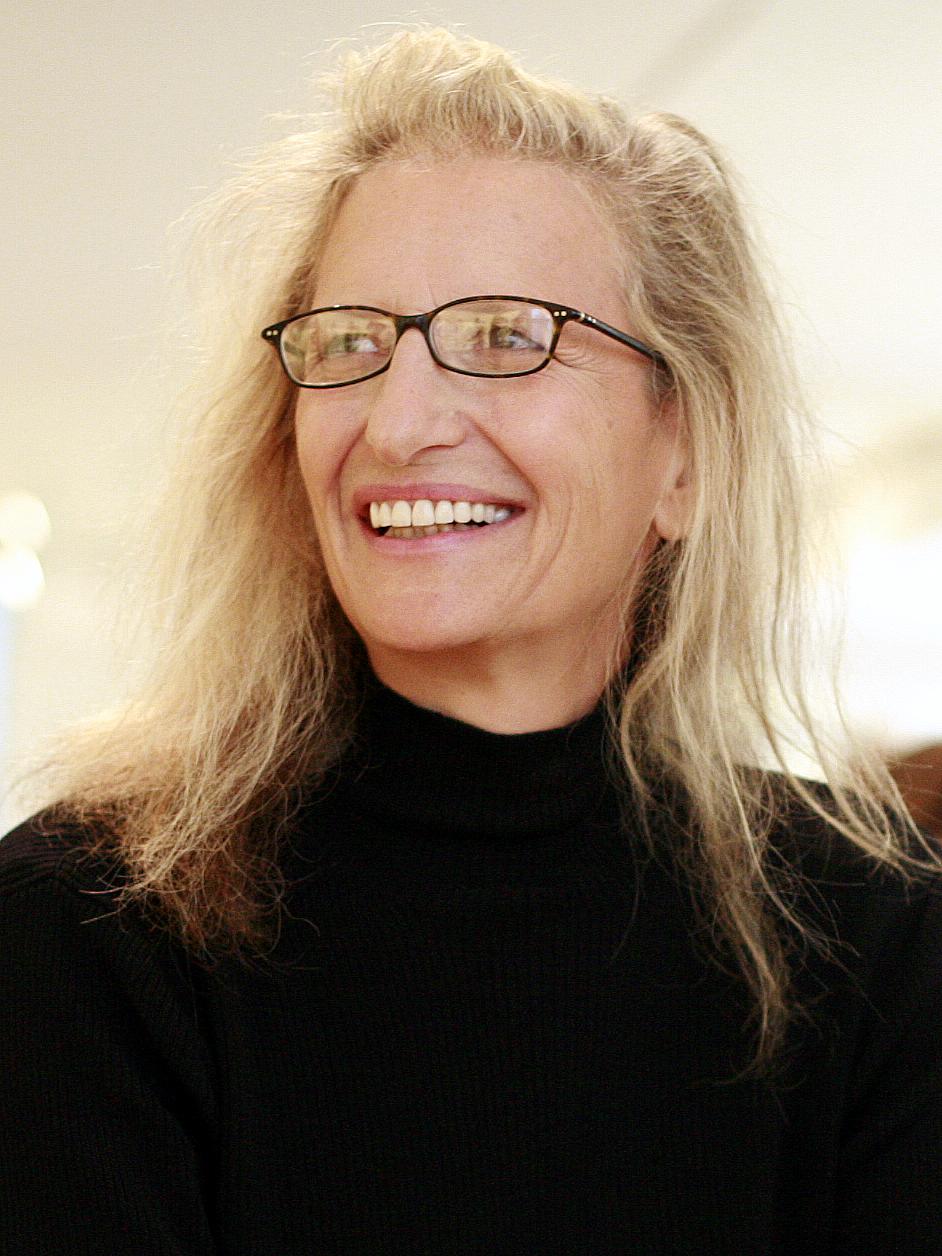
The photographer who made celebrity portraiture into a serious art — through unflinching access, elaborate staging, and a consistent willingness to make her subjects vulnerable.
Anna-Lou Leibovitz built her reputation in the offices of counterculture journalism and carried it into the boardrooms of glossy magazine publishing, but the photographs themselves were always about something more private — a face stripped of its public surface, a moment of genuine discomfort or trust between subject and lens.
Early life and Rolling Stone
Leibovitz was born in 1949 in Waterbury, Connecticut, the third of six children of a military family that moved frequently. She studied painting at the San Francisco Art Institute, then enrolled in photography. In 1970, while still a student, she contacted Rolling Stone magazine in San Francisco and began shooting for them. She became the magazine's chief photographer in 1973, aged twenty-three.
The years at Rolling Stone (1970–1983) produced some of her most enduring images. The magazine was covering rock music and counterculture as serious cultural phenomena, and Leibovitz had extraordinary access. Her photographs of the Rolling Stones on tour, of Bob Dylan, John Lennon, and dozens of others combined journalistic presence with a painterly awareness of light and composition. On 8 December 1980, she photographed John Lennon and Yoko Ono for a Rolling Stone cover shoot; hours later, Lennon was shot outside the Dakota building. The image — Lennon curled naked around a fully clothed Ono — became one of the most discussed photographs of the decade.1
Vanity Fair and the elaborated portrait
In 1983 Leibovitz moved to Vanity Fair, where she began working at a larger scale — conceptually and logistically. The Condé Nast platform allowed extensive production budgets and access to the highest tier of celebrity. Her portraits from this period are frequently theatrical: props, costume, constructed sets, historical or art-historical references layered beneath the surface of what looks like a candid shot.
Key images from the Vanity Fair years include Demi Moore's nude pregnancy cover (1991) — a photograph that reshaped what the magazine cover was permitted to show — and Whoopi Goldberg in a bath of milk (1984). These were not fashion photographs; they were arguments about the photographed body and the nature of celebrity itself.
| Period | Publication | Characteristic approach |
|---|---|---|
| 1970–83 | Rolling Stone | Documentary access, natural light |
| 1983–present | Vanity Fair | Constructed tableaux, large production |
| 2006 | Book / exhibition | Autobiographical, family, memoir |
Method and the long exposure
Leibovitz's working method involves extended time with subjects before the shoot, often hours or days. She uses large-format film alongside digital, and her lighting shifts between the natural and the dramatically artificial depending on what the subject requires. She has spoken about treating each portrait as a negotiation — the camera creating a particular kind of pressure that reveals rather than conceals.
Her 2006 book A Photographer's Life 1990–2005 departed from celebrity work to include intimate photographs of her family, her father's death, and her partner Susan Sontag's final illness. The book drew both acclaim for its candour and debate about the ethics of photographing private grief.
I don't think of myself as a celebrity photographer. I'm interested in who the person is, and the camera is the tool I use to find out.
Footnotes
- Leibovitz later described this shoot and its aftermath in interviews and in her book Annie Leibovitz at Work. ↩