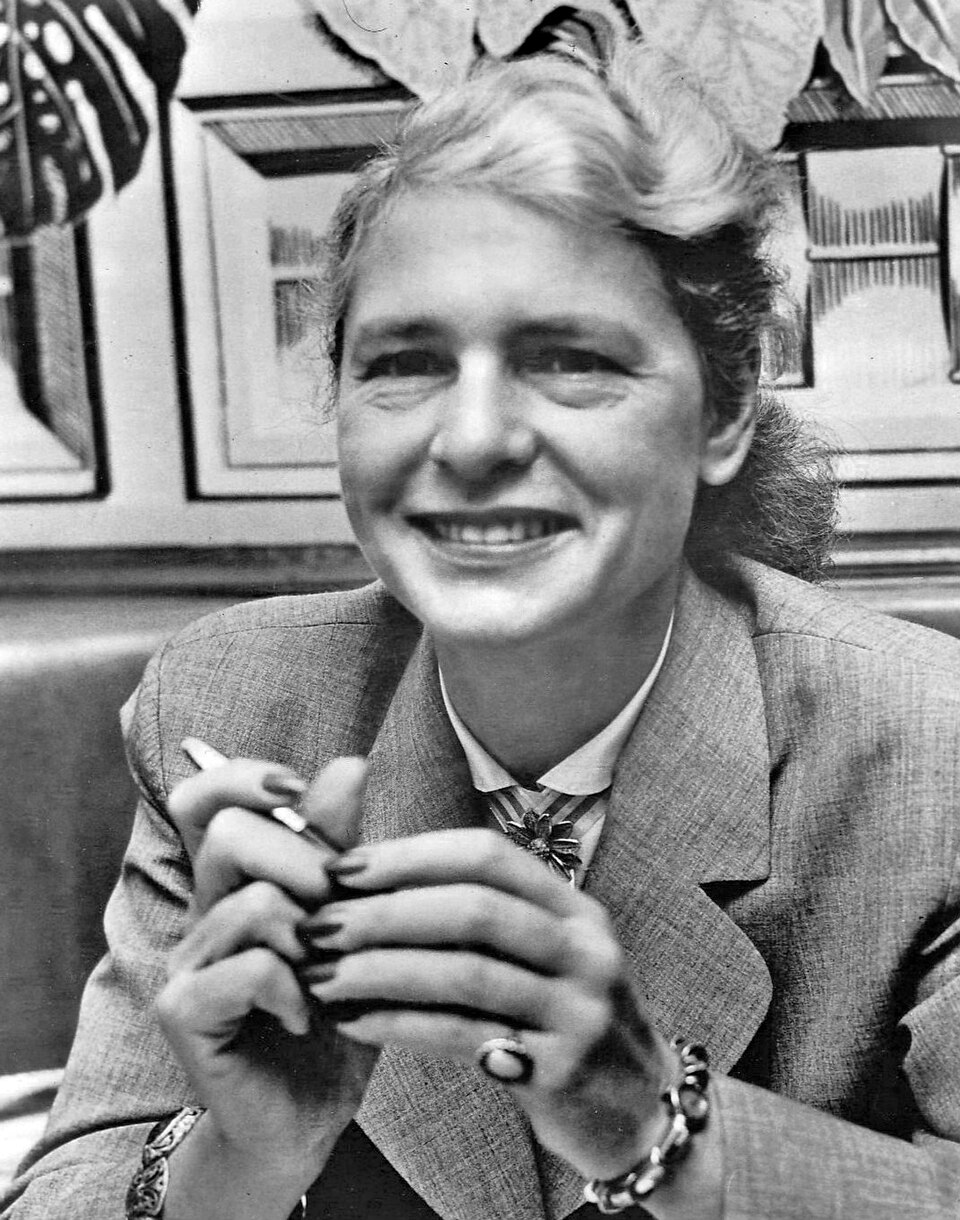
Diane Arbus
The American photographer who dismantled the approved distance between photographer and subject, producing portraits of unusual psychological intimacy and lasting discomfort.
Diane Arbus photographed people who had been excluded from the frame of respectable American portraiture — carnival performers, nudists, people with dwarfism, transgender individuals, identical twins — and made pictures of such disarming directness that the photographs seemed to implicate the viewer as much as to document the subject.
Upper West Side to the street
Arbus was born Diane Nemerov in 1923, to a wealthy Jewish family in New York City — her father ran the Russek's fur department store on Fifth Avenue. She grew up in comfort and married the photographer Allan Arbus at eighteen. They worked together for years as commercial fashion photographers, a career she found constricting. In the late 1950s she began studying under Lisette Model at the New School, and the instruction clarified what she wanted: not fashion, not commerce, but the face as a psychological event. She began carrying a camera through New York's streets, fairgrounds, parks, and nudist camps.
The subject and the camera
Arbus worked with a medium-format twin-lens reflex camera, usually the Rolleiflex, which she held at waist height, looking down into a viewfinder. The square format, the direct flash, and her habit of positioning subjects centrally in the frame gave her pictures a quality quite different from the candid street photography of her contemporaries. Her subjects faced the camera; many were clearly complicit in being photographed. She often spent hours or days with a subject before photographing them.
A photograph is a secret about a secret. The more it tells you, the less you know.
The result was photographs that could not be dismissed as exposé. Her subjects were not caught; they were met. The encounter was evident in their faces.
New Documents and posthumous influence
In 1967 she was included with Lee Friedlander and Garry Winogrand in the New Documents exhibition at the Museum of Modern Art, curated by John Szarkowski — a show that defined a new mode of American photography: subjective, direct, and indifferent to prettiness. Arbus died by her own hand in 1971, at forty-eight. The following year she became the first American photographer to be exhibited at the Venice Biennale. Her posthumously published monograph (1972) sold 150,000 copies in its first printing, a figure unprecedented for a photography book at the time.