Richard Avedon
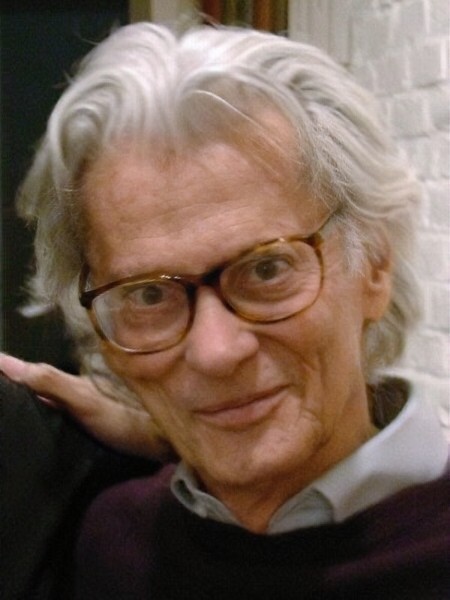
The New York photographer who shattered the convention that fashion and portraiture were separate disciplines, charging both with an intensity that bordered on theatre.
Richard Avedon remade fashion photography by putting bodies in motion and faces under pressure, producing images that refused to be merely decorative. Over six decades his work moved between the runway and the road, the studio and the psychiatric ward, always returning to the question of what a face reveals under a camera's scrutiny.
Origins and early career
Avedon was born in New York City in 1923 into a family of Russian-Jewish immigrants who ran a clothing store on Fifth Avenue. He grew up acutely conscious of style and its social weight. After a period in the United States Merchant Marine — where he was assigned to take identification photographs — he enrolled at the New School for Social Research to study under the art director Alexey Brodovitch. Brodovitch, who was simultaneously art director of Harper's Bazaar, hired the twenty-one-year-old Avedon and gave him unusual latitude. By 1945 Avedon was the magazine's principal photographer.
Reinventing fashion photography
Where fashion photography of the 1940s typically placed models in static, corseted poses indoors, Avedon took them into the street, into motion, into situations. Models ran, laughed, fell — the photographs had the energy of contact sheets rather than finished editorial objects. He worked repeatedly with Dorian Leigh, Dovima, and later Twiggy and Veruschka, coaxing from them a performing self distinct from conventional modelling.1
His studio portraits operated by a different logic: white backgrounds, no props, the subject confronted directly by the camera. The method stripped away context and atmosphere, forcing attention onto expression. Subjects who submitted to this treatment — Marilyn Monroe, Malcolm X, the Chicago Seven — often emerged looking exposed in ways they had not anticipated.
In the American West
In 1979 Avedon began what would become his most ambitious project: a five-year survey of working people across the American West, commissioned by the Amon Carter Museum of American Art. In the American West (1985) comprised 124 large-format portraits — drifters, oil workers, slaughterhouse workers, carnival performers — shot against a portable white backdrop in harsh outdoor light. The project challenged the mythology of the West with unflinching directness, and the monograph remains a landmark of American documentary portraiture.
| Phase | Context |
|---|---|
| 1945–1966 | Harper's Bazaar, fashion editorial |
| 1966–1992 | Vogue and commercial portraiture |
| 1979–1985 | In the American West |
| 1992–2004 | Staff photographer, The New Yorker |
Late work and legacy
In 1992 Avedon became the first staff photographer in the history of The New Yorker, producing portraits and political photojournalism until his death from a cerebral haemorrhage while on assignment in San Antonio, Texas, in 2004. His estate and archive are held by the Richard Avedon Foundation in New York.
My portraits are more about me than they are about the people I photograph.
Footnotes
- His 1955 photograph Dovima with Elephants — the model in Dior gown between two circus elephants — remains among the most reproduced fashion images of the century. ↩