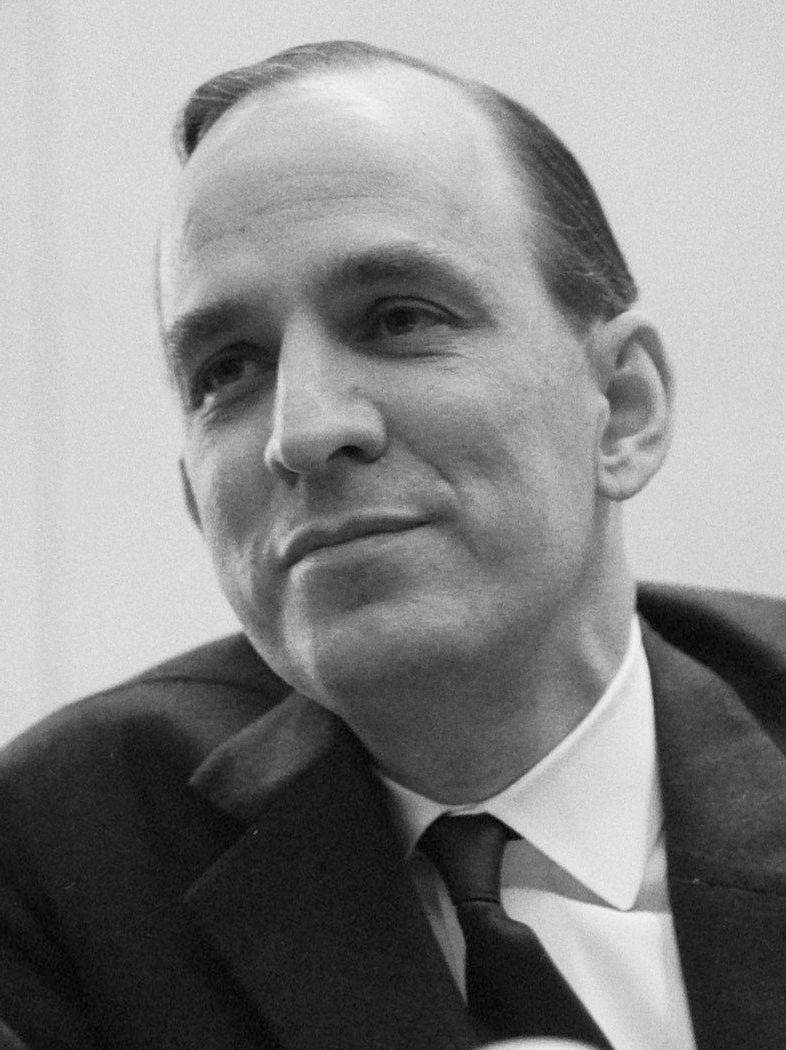
Carl Theodor Dreyer
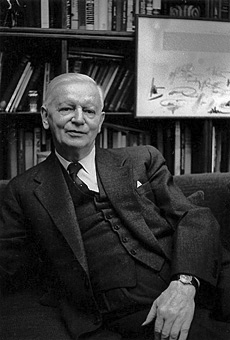
The Danish director whose films strip away everything incidental to arrive at inner states that almost no other cinema can reach — austerity as a form of grace.
Carl Theodor Dreyer is among the handful of directors — alongside Ozu, Tarkovsky, Bresson — whose films are recognisable in a single frame: close, slow, stripped of ornament, concerned with faces more than with action, and directed toward states of spiritual crisis and endurance that the conventions of commercial cinema cannot accommodate. In a career spanning fifty years and only fourteen features, he made four or five films that are widely considered among the greatest in history.
Origins and early career
Dreyer was born in Copenhagen in 1889 to an unmarried Swedish woman and adopted by a Danish family named Dreyer. The circumstances of his birth — illegitimacy, adoption, a harsh household — have been widely discussed in relation to his lifelong preoccupation with persecution, intolerance, and the suffering of individuals crushed by institutional authority.
He began his career as a journalist and started writing film scripts for the Nordisk Films Kompagni in 1912. His first film as director, The President, appeared in 1919. The early films — The Parson's Widow (1920), Love One Another (1922), Michael (1924) — show increasing formal confidence and an already characteristic interest in faces and interiors.
The Passion of Joan of Arc
La Passion de Jeanne d'Arc (1928), filmed in France with a largely French cast, is the film by which Dreyer is most widely known. Shot almost entirely in close-up, drawing on the actual transcripts of Joan's trial, it strips the historical event down to the confrontation between one face and the institutional forces arrayed against it. Maria Falconetti's performance as Joan is among the most discussed in cinema history. The original negative was destroyed in a fire; a version long thought to be a compromise reconstruction was discovered in a Norwegian mental institution in 1981 — effectively intact.
The film was received with unease on its initial release; the formal radicalism of its close-up strategy was disorienting to audiences expecting the wider compositional frames of conventional historical film.
What interests me — and this comes before technique — is reproducing the feelings of the characters in my films.
Vampyr and the sound period
Vampyr (1932), Dreyer's first sound film, is a horror film unlike any other: deliberately dreamlike, shot with a fogged lens by Rudolf Maté to produce an image quality that hovers between vision and nightmare. It was a commercial failure. Dreyer returned to Denmark, took a decade away from feature filmmaking, and directed documentaries.
Day of Wrath (Vredens dag, 1943), shot during the German occupation of Denmark, concerns a woman accused of witchcraft — a subject with unavoidable contemporary resonance. Ordet (1955), based on Kaj Munk's play about faith and miracle in a rural Danish household, won the Golden Lion at Venice. Gertrud (1964), his last film, is a severe, late-Dreyer work about a woman who refuses to compromise her ideals of love — received with hostility at its Cannes premiere and reassessed in subsequent decades as one of his major achievements.
Legacy
Dreyer died in Copenhagen in 1968 while preparing a film about the life of Jesus. The project was never realised. His influence on subsequent filmmakers — Ingmar Bergman, Robert Bresson, Andrei Tarkovsky, Chantal Akerman — is both acknowledged and visible: the willingness to hold a shot until discomfort passes into revelation, the focus on faces as the primary site of dramatic meaning, the indifference to pace as a commercial consideration.