Charlie Chaplin
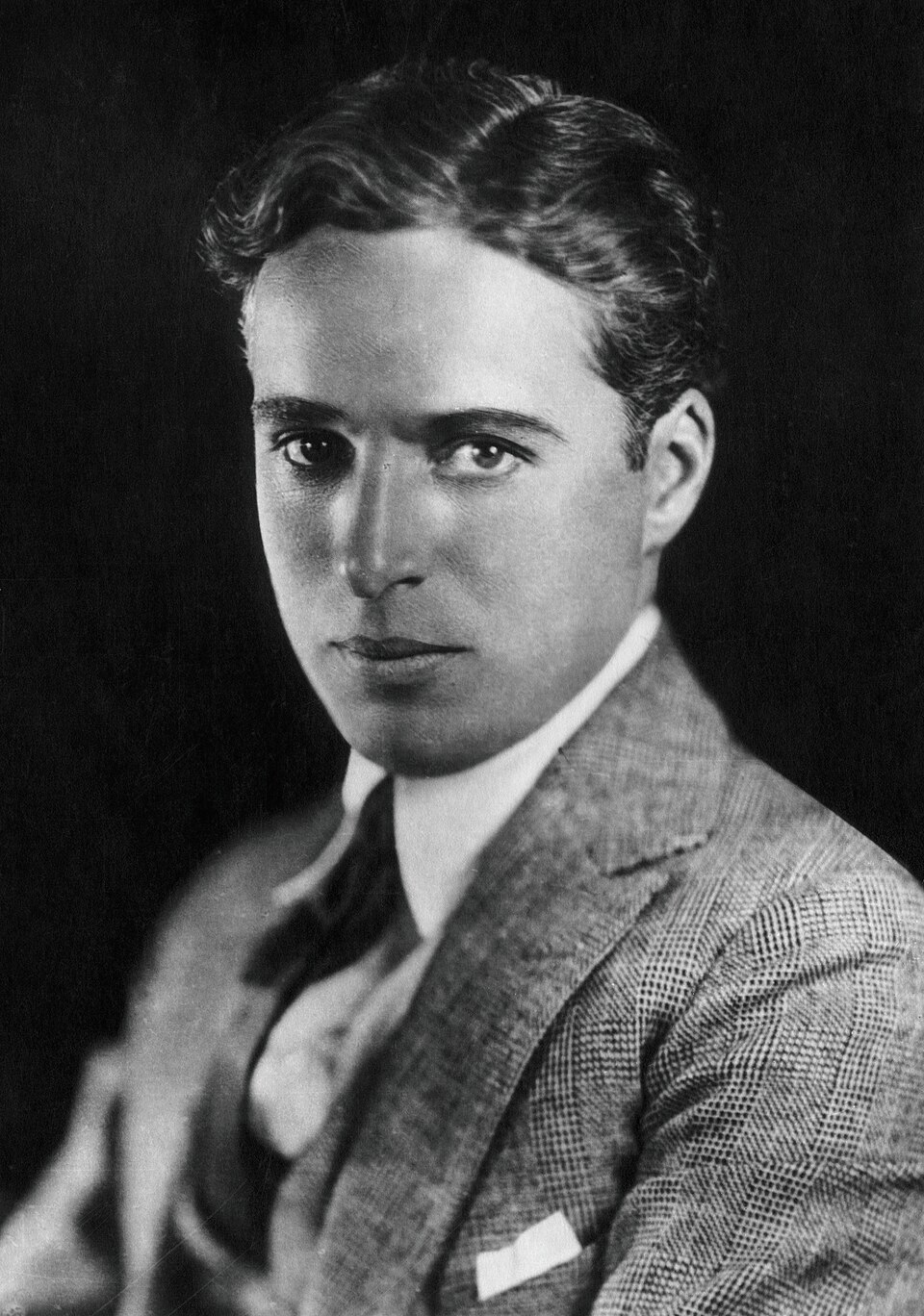
The comedian who turned silent film into a global language — and used the screen's most beloved clown to speak plainly about hunger, cruelty, and the dignity of the dispossessed.
Charlie Chaplin built the twentieth century's most recognisable screen persona from nothing — a battered bowler, a cane, splayed feet, and a dignity so precise it could survive any catastrophe. For nearly thirty years he was not only the world's most famous entertainer but one of its most influential film technicians, a writer, director, editor, and composer who controlled every element of his own work.
South London origins
Chaplin was born in Walworth, south London, in 1889 into a music-hall family of acute precariousness. His father, a singer, died young of alcoholism; his mother, also a performer, was intermittently committed to a workhouse and then a psychiatric institution. Chaplin and his half-brother Sydney grew up in poverty that bordered on destitution — orphanages, workhouses, and street survival were formative experiences rather than backstory. When he joined Fred Karno's pantomime company as a teenager, he was already a professional who understood comedy as a survival mechanism.
The Tramp and silent cinema
Chaplin arrived in America with the Karno troupe in 1910 and signed with Mack Sennett's Keystone studio in 1913. Within months he had created the Tramp: the little man with the cane, too proud to admit his poverty, too nimble to be entirely defeated. The character's appeal was its moral precision — the Tramp was not merely funny but recognisably human, a figure whose failures were never quite his fault and whose small dignities were always worth defending.
By 1915 Chaplin was producing and directing his own two-reelers at Mutual, exercising a control over filmmaking that was nearly unprecedented. At United Artists, which he co-founded with Mary Pickford, Douglas Fairbanks, and D.W. Griffith in 1919, he had complete creative and financial independence. He used it to take years over a single feature film, refining each scene until the gag and the emotion were inseparable.
The feature films
His major feature films — The Kid (1921), The Gold Rush (1925), City Lights (1931), Modern Times (1936), The Great Dictator (1940) — each extended the Tramp's range. City Lights arrived years into the sound era yet remained silent, trusting mime over dialogue to carry a love story. Modern Times addressed industrial alienation with physical comedy of extraordinary inventiveness. The Great Dictator, his first sound film, was a direct satire of Adolf Hitler — risky at the time and, by the film's own final speech, openly political.
We think too much and feel too little.
Exile and late recognition
Political pressures — Chaplin was never an American citizen and was accused of Communist sympathies during the McCarthy era — led to his effective exile in 1952, when US authorities revoked his re-entry permit. He settled in Vevey, Switzerland. In 1972 he accepted an Honorary Academy Award in Hollywood, his first return to the United States in twenty years. He was knighted in 1975. He died in Vevey on Christmas Day, 1977.