Charlotte Brontë
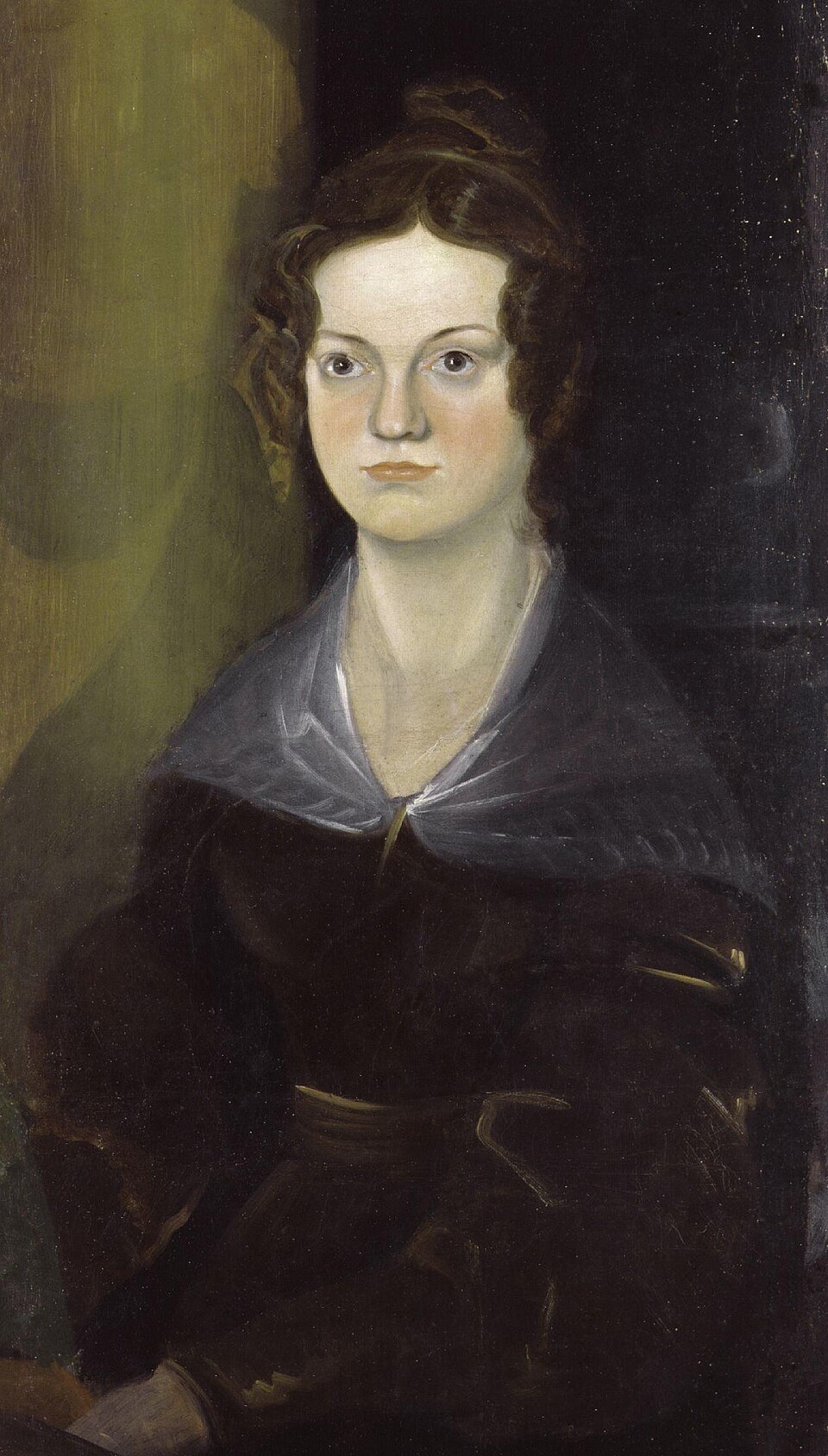
The Yorkshire novelist who published as a man, wrote as herself, and produced one of the most radical first-person voices in English fiction.
Charlotte Brontë published Jane Eyre under the name Currer Bell in 1847 and became famous before anyone knew she was a woman, a clergyman's daughter, or living in the West Riding of Yorkshire. When London discovered all three, it was already too late to reduce her.
Haworth and the pseudonym
The Brontë children grew up in the parsonage at Haworth, a mill village on the edge of the Yorkshire moors. Their father Patrick Brontë was the perpetual curate; their mother died when Charlotte was five. The siblings educated themselves through voracious reading and a vast shared mythology — the imaginary kingdoms of Angria and Gondal — that produced millions of words of juvenilia before any of them published.1
The decision to publish as Currer, Ellis, and Acton Bell — neutral initials, ambiguous names — was pragmatic. Charlotte wrote later that they were aware that authoresses are liable to be looked on with prejudice, and that the strategy allowed their work to be read before it was judged.
Poems by Currer, Ellis, and Acton Bell (1846) sold two copies. The sisters turned to novels.
Jane Eyre
Jane Eyre (1847) was an immediate sensation. Its first-person voice — direct, passionate, morally exacting — was unlike anything the market had seen. The novel's insistence on a plain woman's inner life as the proper subject of fiction, and on her right to refuse what diminished her, struck readers as both thrilling and disturbing.
The identity of Currer Bell became the literary gossip of the season. Thackeray, to whom the second edition was dedicated, was embarrassed by the dedication because his own wife was confined to an institution — a coincidence that generated unwanted rumour.
I am no bird; and no net ensnares me; I am a free human being with an independent will.
Shirley and Villette
Charlotte's later novels turned outward. Shirley (1849), written while Emily was dying and Anne was dying, concerned the Luddite uprisings in the Yorkshire textile trade — a social novel, researched, historical. Villette (1853) returned to the interior: a autobiographical account of a woman teaching in Brussels, lonelier and more psychologically complex than Jane Eyre, less satisfying to contemporary readers, more valued by later ones.
She married Arthur Bell Nicholls, her father's curate, in June 1854. She died in March 1855, possibly of complications of early pregnancy.
Footnotes
- The Angria saga (Charlotte and Branwell) and Gondal (Emily and Anne) together ran to several million words of manuscript, much of it written in a minuscule hand that required magnification to read. ↩