Cindy Sherman
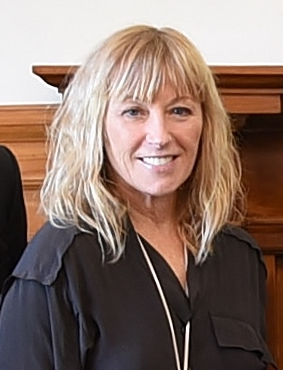
A photographer who turned herself into everyone else — Sherman's self-portraits expose the constructed nature of identity, femininity, and the image itself.
Cindy Sherman has spent five decades constructing personas — the ingenue, the centerfold, the society matron, the clown — and photographing herself inside each one. Her work is never autobiography; it is anatomy, laying bare how culture scripts gender, class, and the gaze.
From Buffalo to the Pictures Generation
Sherman studied painting at Buffalo State College, New York, switching to photography after finding the camera better suited to her conceptual instincts. In the late 1970s she moved to New York and fell in with a circle of artists — including Robert Longo and David Salle — who would be grouped under the label the Pictures Generation. Where her peers often worked with appropriated images, Sherman produced her own, but the critique was the same: images do not reflect reality, they manufacture it.
Untitled Film Stills
Between 1977 and 1980 Sherman produced Untitled Film Stills, a series of 69 black-and-white photographs in which she performed stock female characters drawn from B-movies, Italian neo-realism, and film noir. None of the stills correspond to real films; they invoke cinematic memory rather than document it. The women in the images — the suburban housewife, the working girl, the femme fatale — are simultaneously recognisable and elusive, generic enough to feel borrowed.1 The series entered the Museum of Modern Art's collection and remains the work most frequently cited as Sherman's breakthrough.
Method and Disguise
Sherman serves as director, make-up artist, costume designer, and sole subject in virtually every image she makes. Prosthetics, wigs, and digital manipulation have grown more elaborate over decades, but the underlying procedure has changed little: she devises a character, constructs it on her body, and photographs the result. The absence of a "real" Cindy Sherman behind the masks is not a limitation of the work — it is the argument. Later series extended the method into art-history pastiche (History Portraits, 1988–90), fashion photography (Untitled Film Stills-era commissions for Interview), and grotesque tableaux (Sex Pictures, 1992) that pushed the body toward the abject.
Legacy and Market
Sherman's influence runs through contemporary photography, video art, and performance — artists working with self-staging, identity play, and the politics of representation trace a direct line to her practice. Her work has been exhibited at the Museum of Modern Art, the Broad in Los Angeles, and major institutions across Europe. In 2011 a single print from the Centerfolds series sold at Christie's for $3.89 million, then a record for a photograph at auction.
I'm really just using the mirror to summon something I don't even know is inside me.
Footnotes
- The series title withholds even a numbering key — each work is simply "Untitled," followed by a frame number, resisting any external narrative anchor. ↩