Claire Denis
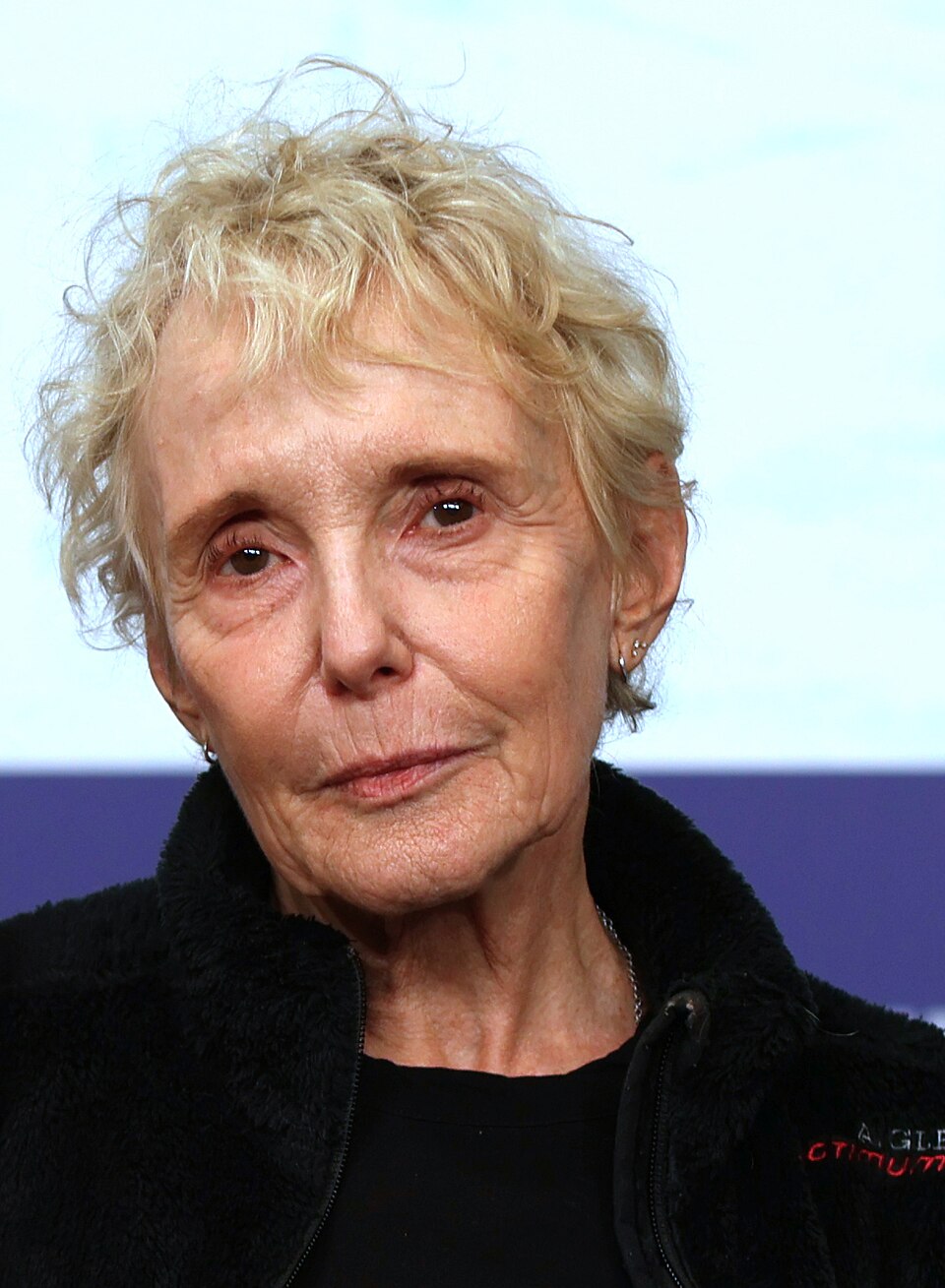
The French director whose films — sensory, elliptical, and resistant to explanation — made her one of the defining cinematic voices of post-colonial European experience.
Claire Denis grew up in colonial West Africa — Cameroon, Senegal, Djibouti — moving between territories as her civil-servant father was posted; she returned to France for school feeling permanently displaced. That experience of belonging nowhere with absolute certainty became the emotional substrate of a cinema built on physical sensation, fragmented narrative, and the unspoken textures of bodies in proximity.
Formation and colonial inheritance
Denis studied at the Institut des hautes études cinématographiques (IDHEC) in Paris, then worked as assistant director to Costa-Gavras, Jim Jarmusch, and Wim Wenders. Her debut feature, Chocolat (1988), drew directly on her African childhood: a white French woman revisits a Cameroon she knew as a girl, and the film maps colonial power through domestic space and the charged distance between bodies. It was selected for the Cannes Official Selection.
The African experience recurs throughout her work — not as nostalgia or guilt but as structural condition, a set of spatial and racial relations that shape how people inhabit the same room without quite occupying the same world.
Beau Travail
Beau Travail (1999), an adaptation of Herman Melville's Billy Budd relocated to the French Foreign Legion in Djibouti, is widely regarded as her masterwork and one of the defining films of the 1990s. It is built around the body — the daily choreography of military exercise, the economy of male rivalry, the landscape of the Horn of Africa — and communicates its drama through gesture and movement rather than dialogue. The final sequence, in which the lead character dances alone in a nightclub, became one of the most discussed endings in recent film history.
The film's ellipsis and sensory density influenced a generation of directors working in what came to be called "slow cinema."
Method and collaborators
Denis works in long-term creative relationships: cinematographer Agnès Godard shot most of her major films, developing a tactile, body-close visual style; the post-rock band Tindersticks composed music for several projects, producing scores that function as emotional counterweight rather than illustration.
Her scripts avoid conventional exposition; characters' histories and motivations are implied through rhythm and proximity rather than stated. She has described her films as attempts to render something prior to language — a state of attention rather than a sequence of events.
I don't tell stories about people. I make films about how people are with each other when words aren't enough.
Recognition
Beau Travail appeared on multiple lists of the greatest films of the century; a 2022 Sight & Sound poll placed it at number one among films directed by women. Denis received the Silver Bear for Best Director at the Berlin International Film Festival in 2022 for Both Sides of the Blade. She remains a central figure of French and European art cinema.