Clarice Lispector
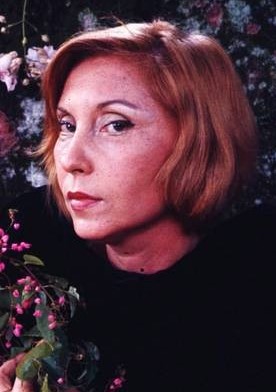
A Ukrainian-born Brazilian novelist whose interior fiction dismantled the boundary between consciousness and prose, making her one of the most formally radical writers of the twentieth century.
Clarice Lispector arrived in Brazilian literature as an event without precedent. Where her contemporaries were building a social realism of the streets, she turned fiction inward — writing novels that tracked the exact texture of a mind in crisis, a body encountering an object, a self on the verge of dissolution. Her work has been compared to Virginia Woolf and Katherine Mansfield, though it owes its particular strangeness entirely to her own circumstances: immigrant, Jewish, multilingual, perpetually in transit.
Arrival and Formation
Born in 1920 in what is now Ukraine, Lispector was brought to Brazil as an infant by a family fleeing antisemitic violence. She grew up in Recife and later Rio de Janeiro, acquiring Portuguese as the language of her interiority — a language she felt she was, in some sense, inventing as she wrote. She studied law in Rio and worked as a journalist, publishing her first novel at twenty-two.
Near to the Wild Heart (1943) announced a distinctive sensibility immediately. Its protagonist, Joana, moves through the world in a state of heightened, almost unbearable attention — to sensation, to language, to the gap between what can be thought and what can be said. Brazilian critics invoked Joyce; others simply noted that nothing quite like it had appeared in Portuguese before.
The Interior Turn
Lispector spent much of the 1940s and 1950s abroad, following her diplomat husband to Europe and the United States. This expatriate period — she lived in Naples, Berne, Washington, and other cities — deepened her sense of estrangement, which she converted into her most formally experimental fiction.
The Passion According to G.H. (1964) is the work most cited as her masterpiece. A bourgeois Rio woman, alone in the apartment of a former maid, crushes a cockroach and enters a prolonged meditation on disgust, God, nothingness, and the animal substrate of existence. The narrative unfolds in a single sustained interior monologue of great difficulty and strange beauty. It is, in the tradition of phenomenological prose, an attempt to think thought itself.1
| Novel | Year | Central concern |
|---|---|---|
| Near to the Wild Heart | 1943 | Consciousness and becoming |
| The Apple in the Dark | 1961 | Language and guilt |
| "The Passion According to G.H." | 1964 | Mysticism and disgust |
| "An Apprenticeship, or The Book of Delights" | 1969 | Love and self-possession |
| The Hour of the Star | 1977 | Poverty and narrative authority |
The Hour of the Star
Her final novel, published weeks before her death from cancer, marks a formal turn. The Hour of the Star is the story of Macabéa, a desperately poor typist from the Brazilian northeast, narrated by a male writer who admits he cannot fully see her. The novel foregrounds its own construction, asking who has the right to tell whose story and whether literature can represent a life it has not lived. It has been read as a departure from interiority into social criticism — though characteristically, Lispector manages both at once.
Writing is the only form I have to face the world.
Footnotes
- The novel's title echoes Christian mystical language; G.H. describes her experience as a "living hell" that becomes, paradoxically, a form of communion with bare being. Lispector herself described the book as dangerous to read without adequate philosophical preparation. ↩