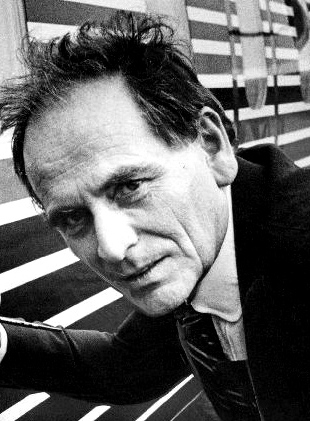
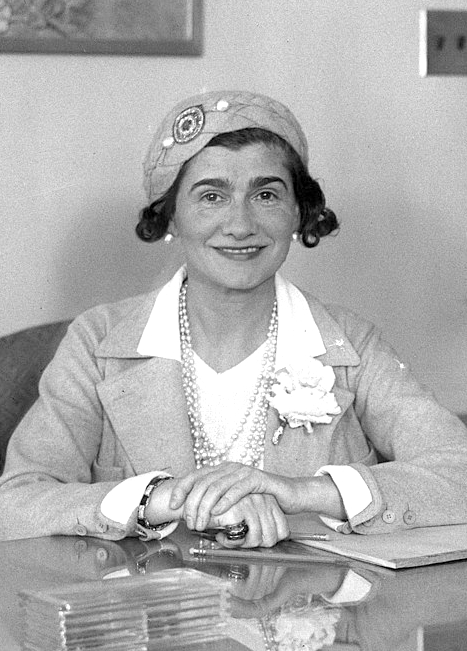
Cristóbal Balenciaga
The Basque couturier who redrew the silhouette of the twentieth century, earning the unqualified respect of every major designer who came after him.
Cristóbal Balenciaga is the couturier by whom others measured themselves. Christian Dior called him "the master of us all." Coco Chanel said he was "the only couturier in the truest sense of the word." He could cut, construct, and sew a garment himself — a complete mastery of the métier that was already rare in the 1950s and is essentially extinct today.
A Basque beginning
Balenciaga was born in Getaria, a small fishing village on the Basque coast of Spain. His mother was a seamstress; from her he learned to sew. By his early twenties he had opened dressmaking establishments in San Sebastián and Madrid, dressing the Spanish aristocracy. The Spanish Civil War forced him to close these houses in 1937, and he relocated to Paris, opening on the Avenue George V. Within a season he was regarded as a serious force in couture.
Reinventing structure
Where most couturiers of the postwar period — Dior above all — celebrated the hourglass, Balenciaga pursued the opposite: the semi-fitted silhouette, the cocoon coat, the sack dress, the tunic. Each departed from the waist as the organising element of the female figure. His 1957 chemise dress, releasing the garment entirely from the body, was regarded at the time as a provocation. It became the basis of most casual fashion that followed.
Haute couture is like an orchestra, and Balenciaga was its conductor.
His construction was legendary. He was said to be able to look at a fabric and know immediately how it would hang, fall, and hold — an intuition built on decades of physical handling of silk gazar, crisp organdie, and heavy wool. He designed his own fabrics with Swiss mills. His finishing was architectural: a sleeve set so that it allowed the arm to move without pulling the jacket; a stand-away collar that framed the face without touching it.
Withdrawal and legacy
In 1968, abruptly and without public explanation, Balenciaga closed his house. He retired to Spain. The announcement sent a shock through the fashion world. He died four years later. The house bearing his name was revived under new ownership in 1986 and continues; but the couture operation he ran — where every garment was made by hand to measure in his Paris atelier — ended with his retirement. On the day of his death, Women's Wear Daily ran the headline "The King is Dead."